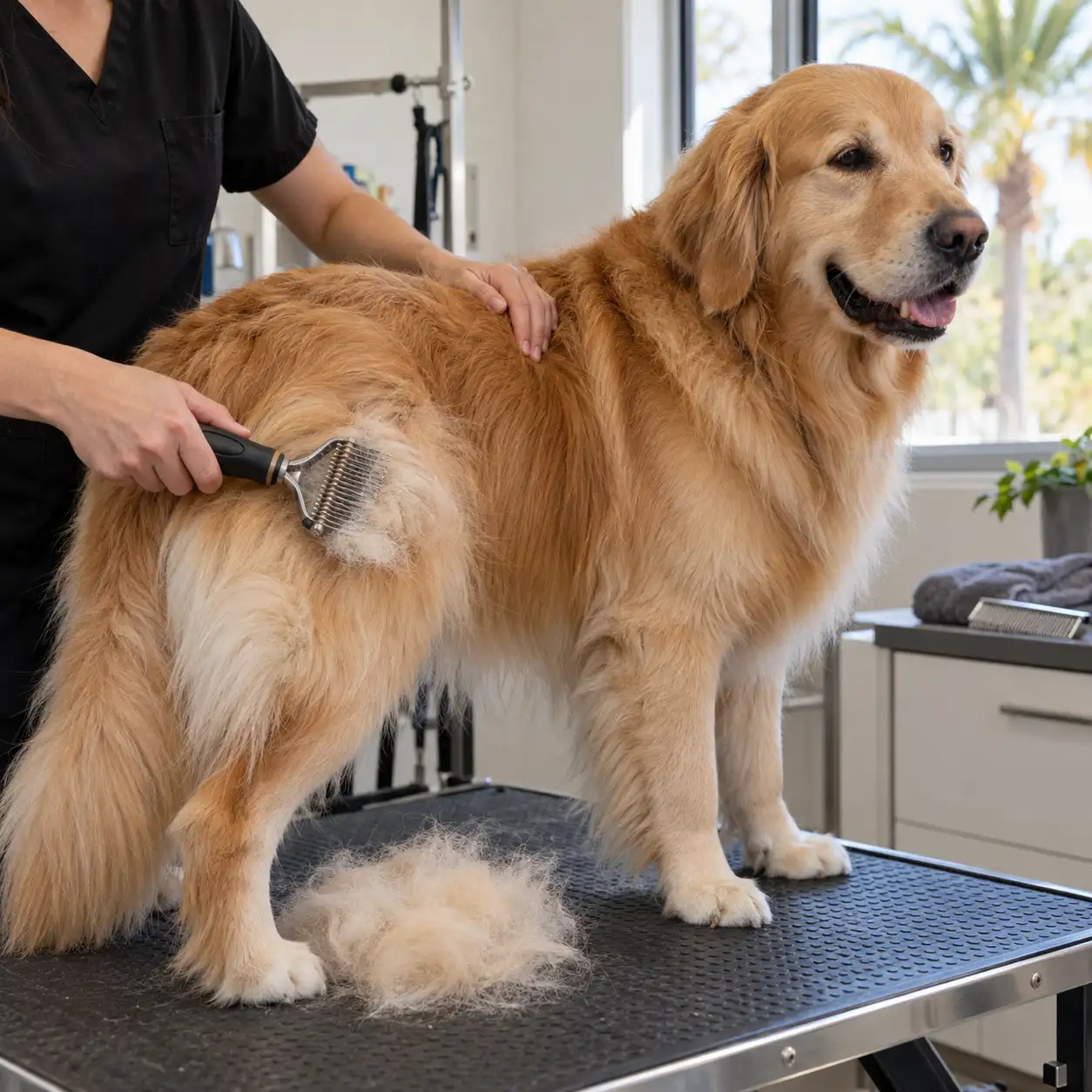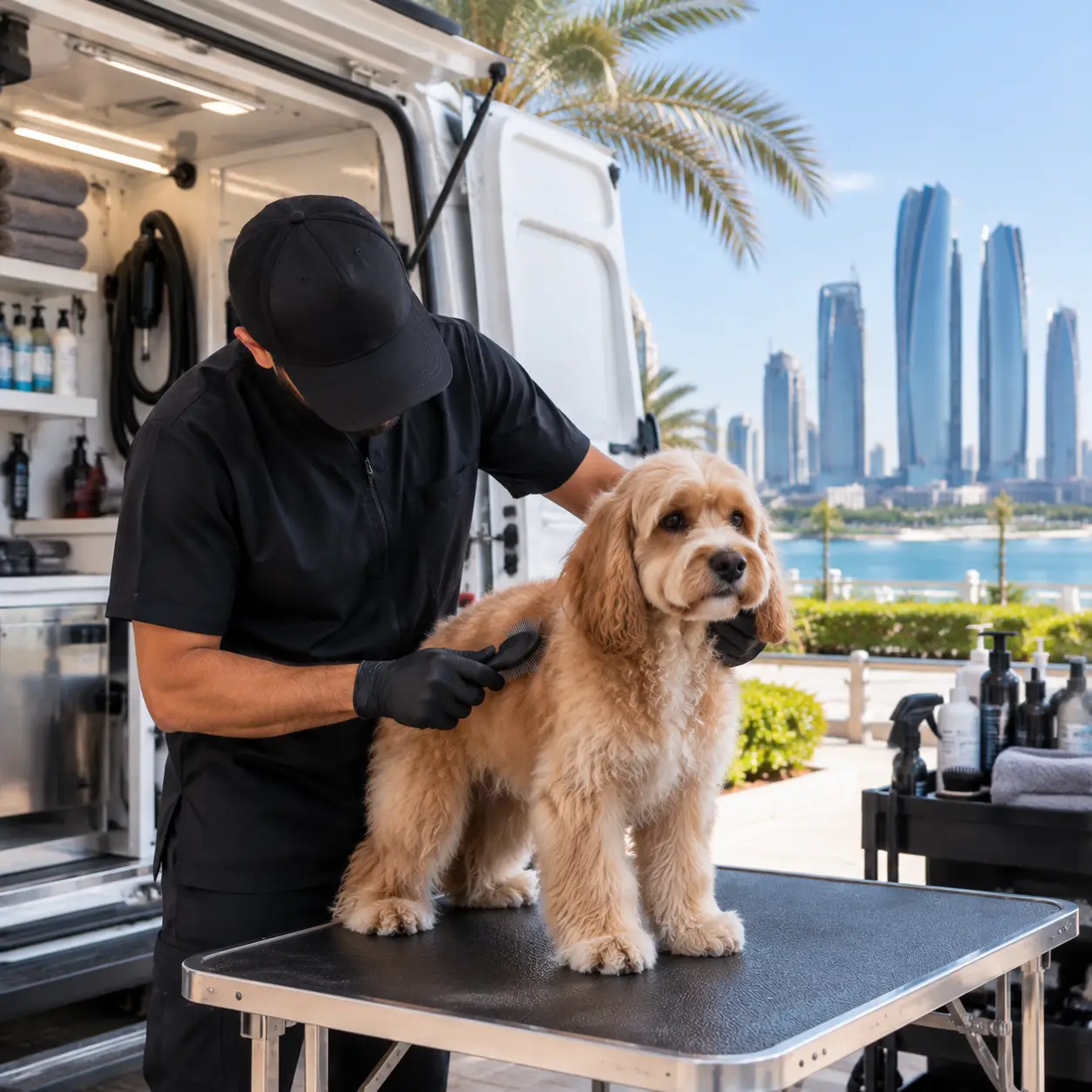

Last summer, a client brought her Golden Retriever into our Abu Dhabi salon with a coat so matted behind the ears that it had to be shaved down to the skin. Her first question was, “But I bathe him every week, how did this happen?” That’s usually the moment we realize the problem was never a lack of effort. It was the how.
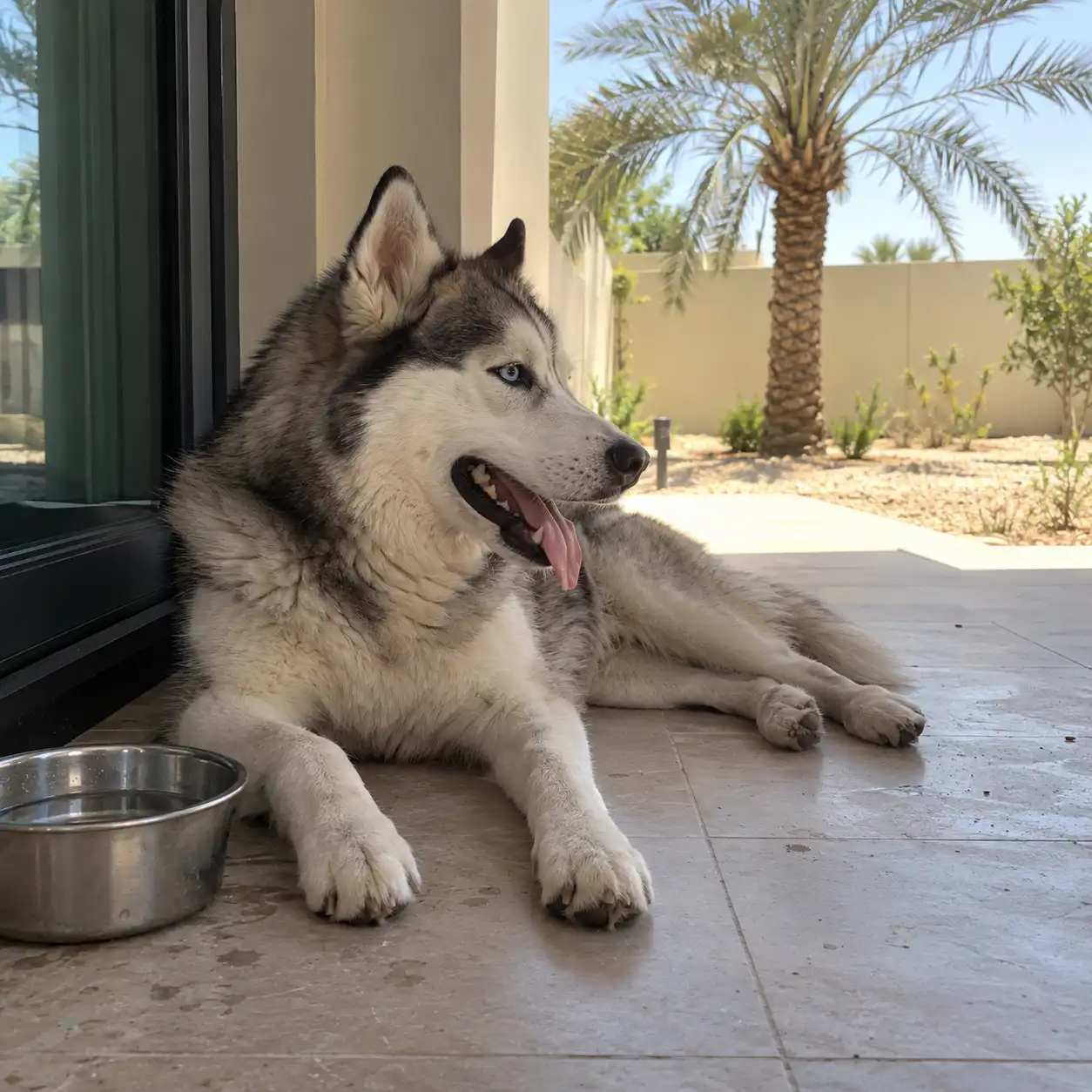
Bathing a pet looks simple. Wet them, lather, rinse, done. But get one or two steps wrong, especially in a climate like Abu Dhabi’s, where heat, dust, and hard tap water all work against a healthy coat, and bath time quietly causes more damage than it prevents. After years of grooming dogs, cats, and small pets across the city, these are the seven mistakes we see most often, and what actually fixes them.
1. Using the Wrong Shampoo for Your Pet’s Skin
This is the single most common mistake we see walk through the door. A pet’s skin sits at a different pH than human skin, roughly 6.2–7.4 for dogs and cats versus about 5.5 for humans, according to veterinary dermatology references. Human shampoo, even “gentle” baby shampoo, disrupts that balance and strips the natural oils that protect the skin barrier.
What this looks like in practice:
- Flaking or dandruff appearing within days of a bath
- A coat that feels dry or straw-like instead of soft
- Increased scratching, sometimes mistaken for fleas
The fix: Use a shampoo formulated specifically for your pet’s species and coat type, anti-shedding, medicated, hypoallergenic, or flea-specific, depending on the issue. If you’re not sure which one your pet needs, that’s exactly the kind of thing a groomer checks during a proper session, cat grooming in Abu Dhabi or a dog grooming visit, rather than guessing at home.
2. Getting the Bathing Frequency Wrong (In Either Direction)
Abu Dhabi’s heat pushes pet parents toward two opposite mistakes: bathing too often because the pet “feels dirty” in the humidity, or skipping baths because it feels like a hassle in a small apartment.
| Over-bathing signs | Under-bathing signs |
| Dry, flaky skin | Strong, persistent odor |
| Dull, brittle coat | Greasy or oily fur |
| Excessive scratching | Visible dirt or dust buildup |
| Increased shedding | Matting starting to form |
As a general guide, most dogs do well on a 3–6 week bathing cycle, while cats typically need far less, since they self-groom, unless they’re elderly, overweight, or long-haired. Pets that spend time outdoors in Abu Dhabi’s dust and heat may need to move toward the shorter end of that range.
3. Skipping the Pre-Bath Brush
Water tightens tangles instead of loosening them. A mat that could have been brushed out dry in two minutes becomes a solid, skin-tight knot once it’s wet, which is exactly how the Golden Retriever mentioned earlier ended up needing a shave-down rather than a trim.
Before every bath:
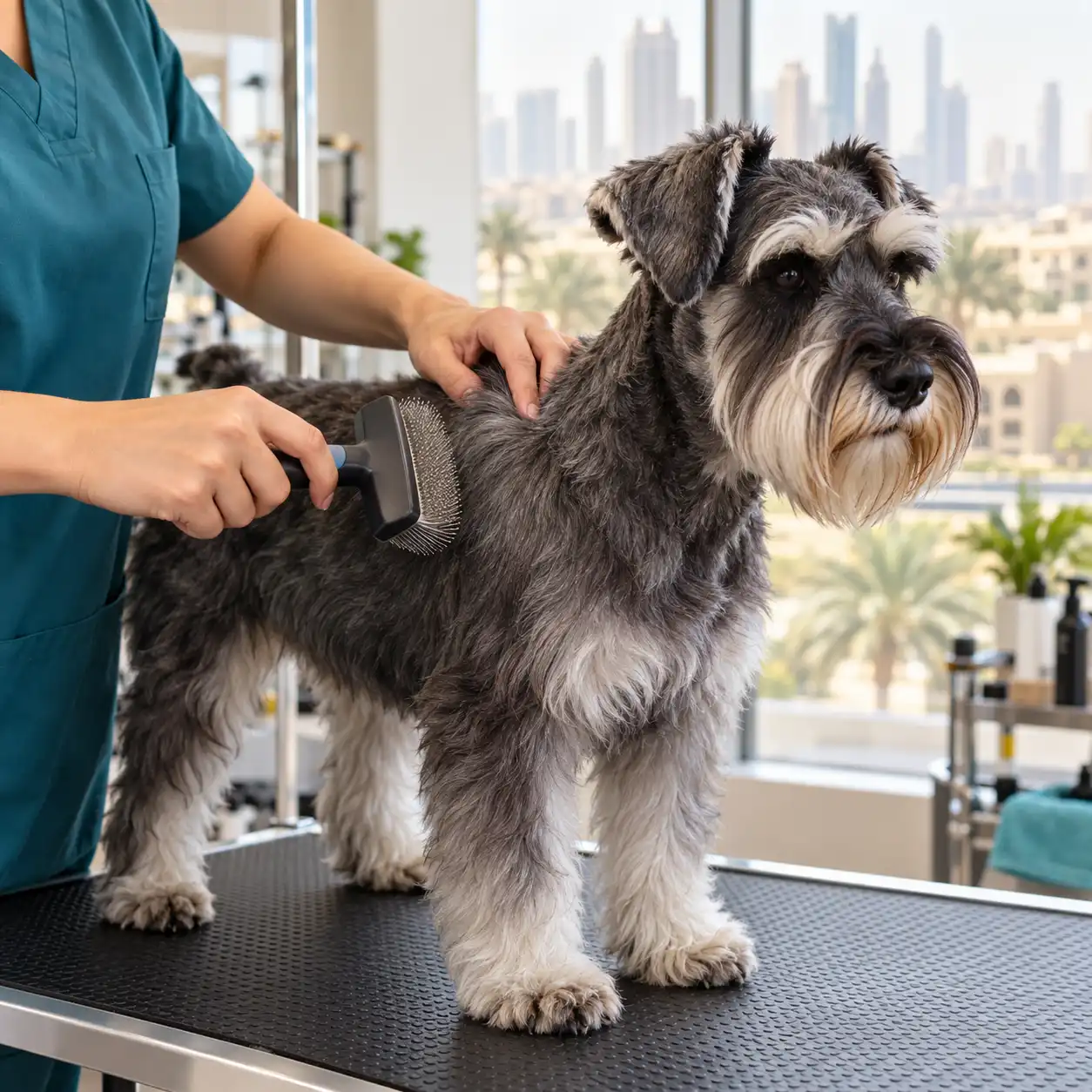
- Run a slicker brush through long or medium coats to clear loose fur and early tangles
- Use a grooming glove for short-haired pets to lift dead hair before it clogs the drain
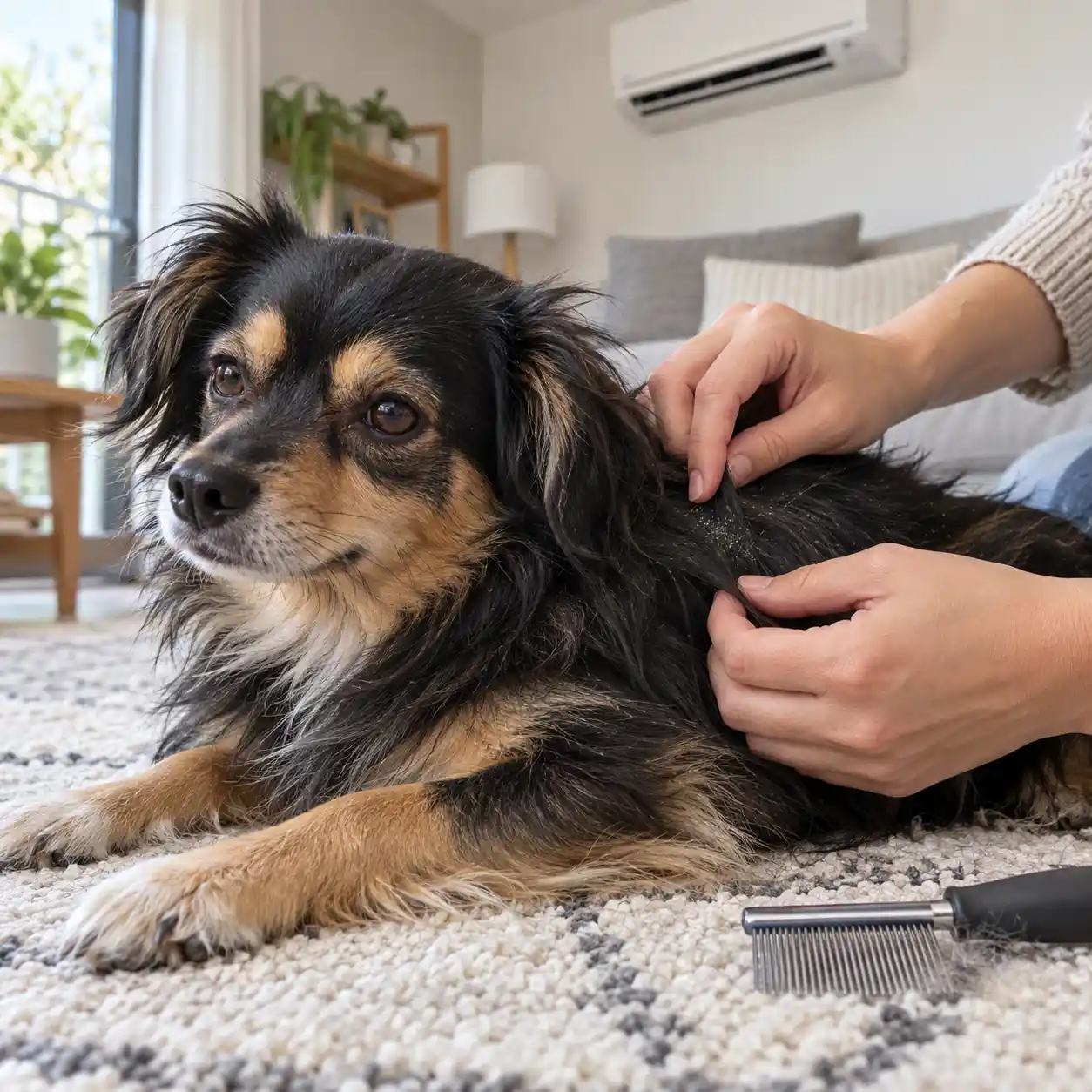
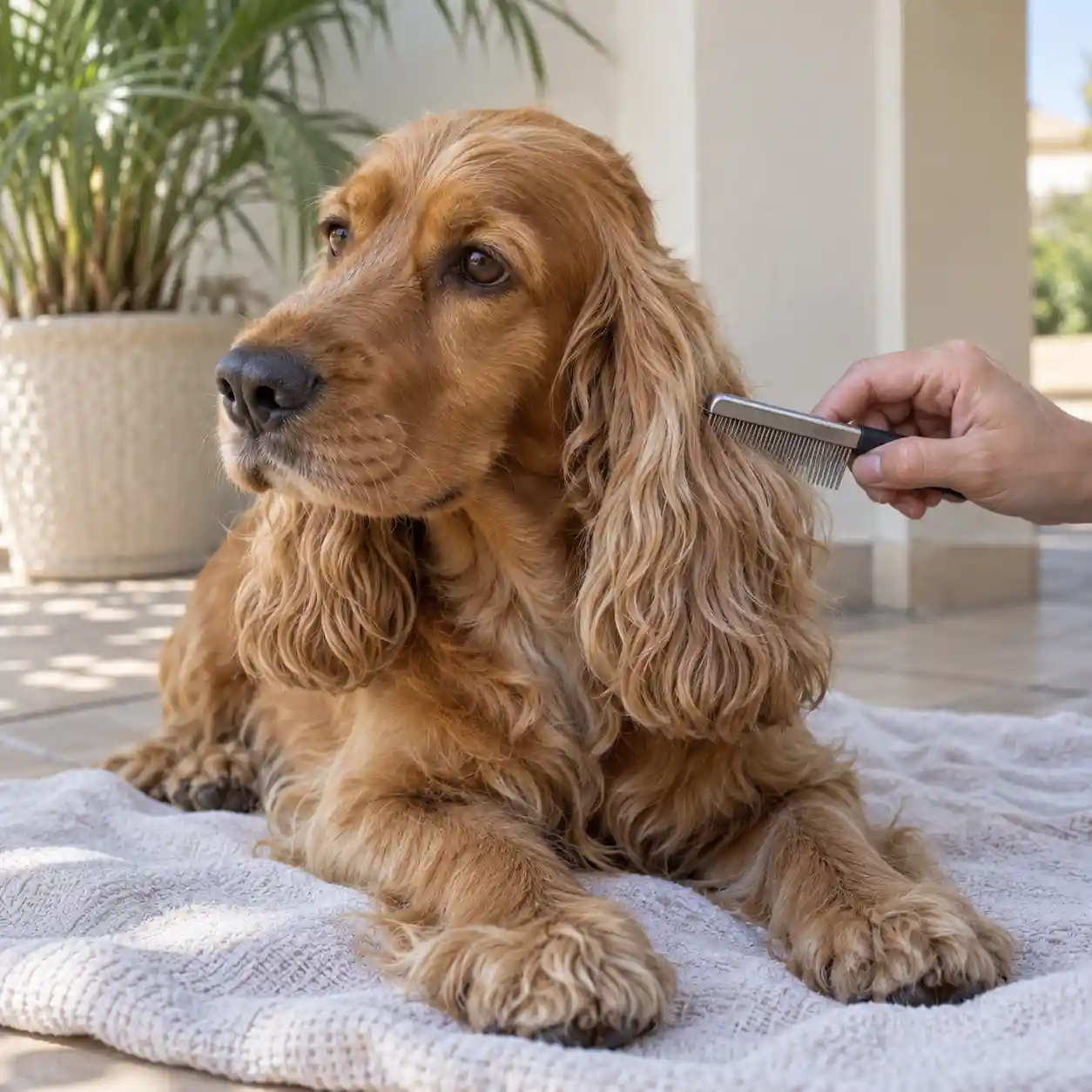
- Work gently around the ears, armpits, and belly, where mats form fastest and skin is most sensitive
Skipping this step is also one of the fastest ways to end up needing a full mat removal or de-shedding treatment that a five-minute brush at home could have prevented entirely.
4. Using Water That’s Too Hot or Too Cold
This one seems minor until you consider it from the pet’s side: sudden temperature shock is one of the fastest ways to turn a calm pet into an anxious one, and that anxiety tends to carry into every bath after it.
The right approach:
- Water should feel lukewarm on the inside of your wrist, similar to a baby’s bath temperature
- Test the water before your pet is anywhere near it, not after they’re already in
- Keep water pressure gentle around the face and ears specifically
5. Rushing (or Skipping) the Drying Process
A damp coat left to air-dry, especially in an air-conditioned Abu Dhabi apartment, is a near-perfect environment for bacteria and yeast to take hold, particularly in skin folds, paw pads, and ears. We see this most often in longer-coated breeds where the undercoat stays wet long after the topcoat feels dry to the touch.
Do this instead:
- Towel-dry thoroughly first to remove as much moisture as possible
- Follow with a pet-safe dryer on low heat for thicker coats, never a human hair dryer on high heat
- Brush while drying to prevent the coat from matting as it dries
6. Turning Bath Time Into a Stressful Event
Pets read tension. A rushed, impatient, or forceful bath doesn’t just make that one session harder, it teaches the pet to dread the next one, and the one after that. Over enough repeat visits, we’ve seen this turn a previously easygoing pet into one that needs specialized handling for anxiety during grooming.
What actually keeps pets calm:
- Speaking in a steady, low tone throughout, not just at the start
- Using a non-slip mat so they’re not fighting for footing on a slick tub
- Rewarding calm behavior with a treat immediately after, not at the end of the whole session
- Starting with shorter sessions for nervous pets and building up gradually
7. Skipping Species- and Coat-Specific Adjustments
A bathing routine built for a short-haired Labrador does not work for a Persian cat or a long-coated Poodle, and using the same approach for every pet in a multi-pet household is a mistake we still see often. Coat type changes everything: how often to bathe, which brush to use, how long drying takes, and even which shampoo is safe.
If you’re managing more than one pet, or a breed with specific coat needs, it’s worth reading through how grooming differs for short-haired and long-haired pets before assuming one routine fits all of them.
When to Stop DIY-ing It
Home baths work well for routine maintenance. But certain situations are genuinely safer left to a professional: mats too tight to comb through, a pet that becomes aggressive or panicked during bathing, or skin that looks irritated, red, or unusually flaky. Trying to force these at home is one of the most common ways pets get accidentally hurt during a well-meaning bath.
For those cases, especially with Abu Dhabi’s heat making skin issues progress faster than owners expect, booking a mobile pet grooming visit means a trained groomer handles the harder parts at your doorstep, without the stress of a car ride on top of everything else.
The Bottom Line
None of these seven mistakes are about effort; every pet parent we’ve met genuinely wants their pet clean and comfortable. They’re about technique, and small adjustments (the right shampoo, brushing before wetting the coat, proper drying, a calmer approach) are usually enough to turn bath time from a wrestling match into a routine your pet actually tolerates well. When a coat or skin issue has already gone past what a home bath can fix, that’s exactly what professional pet grooming in Abu Dhabi is there for.
Frequently Asked Questions
How do I know if my pet’s shampoo is wrong for them?
Watch for flaking, dryness, or scratching that starts within a day or two of a bath. If it happens consistently, the shampoo, not the pet, is usually the issue.
Is it normal for my dog to shed more after a bath?
Some shedding is normal as loose fur releases in water, but excessive shedding often points to a missed pre-bath brush or a coat that needs professional de-shedding.
Can I use the same shampoo for my dog and cat?
No. Cats groom themselves by licking their coat, so ingredients safe for dogs aren’t always safe for cats to swallow. Always use a species-specific formula.