Grooming an anxious or aggressive cat requires a calm, controlled approach that prioritizes the cat’s safety, comfort, and individual stress signals. Hissing, growling, hiding, scratching, or attempting to escape can indicate fear rather than simple aggression, so rushing the process can increase stress and make future grooming more difficult. Professional grooming should involve gradual handling, appropriate restraint when necessary, regular breaks, and techniques suited to the cat’s temperament, coat condition, and grooming needs. For Abu Dhabi owners, choosing experienced cat grooming in Abu Dhabi can help ensure anxious or difficult cats are handled patiently and safely rather than being forced through a stressful grooming session.
What Should Abu Dhabi Owners Know About Grooming Anxious or Aggressive Cats?
Anxious or aggressive cats need slower, shorter grooming sessions, calm handling techniques, and a groomer trained to read stress signals before they escalate. In Abu Dhabi’s heat, mats and skin issues build up fast, so avoiding grooming altogether isn’t a safe option. The right approach reduces stress while still keeping the coat and skin healthy.
Why Some Cats React Badly to Grooming
Most cats aren’t aggressive by nature during grooming. What looks like aggression is almost always fear, and fear has a cause.
- Past negative experience — a rough grooming session, a vet visit that involved restraint, or early handling that skipped socialization
- Pain or sensitivity — mats that pull on the skin, arthritis in older cats, or an ear or skin issue that makes touch uncomfortable
- Lack of early handling — cats that weren’t touched on paws, ears, or belly as kittens often react defensively as adults
- Overstimulation — too much handling in one session, especially for cats already sensitive to noise or new environments
In my experience, the cats labeled “impossible to groom” are usually cats nobody took the time to understand. Once you know the trigger, the session gets easier.
Signs a Cat Is Getting Overwhelmed During Grooming
Reading a cat’s body language before it escalates is one of the most important skills a groomer develops over years of hands-on work. The early signs are quiet, and most owners miss them at home.
- Flattened ears pressed sideways or back, not fully pinned yet
- Tail flicking or thumping, even a slow, low movement
- Dilated pupils in normal lighting conditions
- Low growling or a stiff body, before any hissing starts
- Repeated attempts to pull away rather than active struggling
Catching these signs early means a groomer can pause, reposition, or take a short break before the cat feels the need to escalate to biting or scratching.
How Professional Groomers Handle Anxious or Aggressive Cats
Over the years, I’ve adjusted my approach for these appointments in a few consistent ways that make a real difference.
- Shorter sessions, done in stages — instead of one long groom, we break the work into shorter blocks with breaks in between
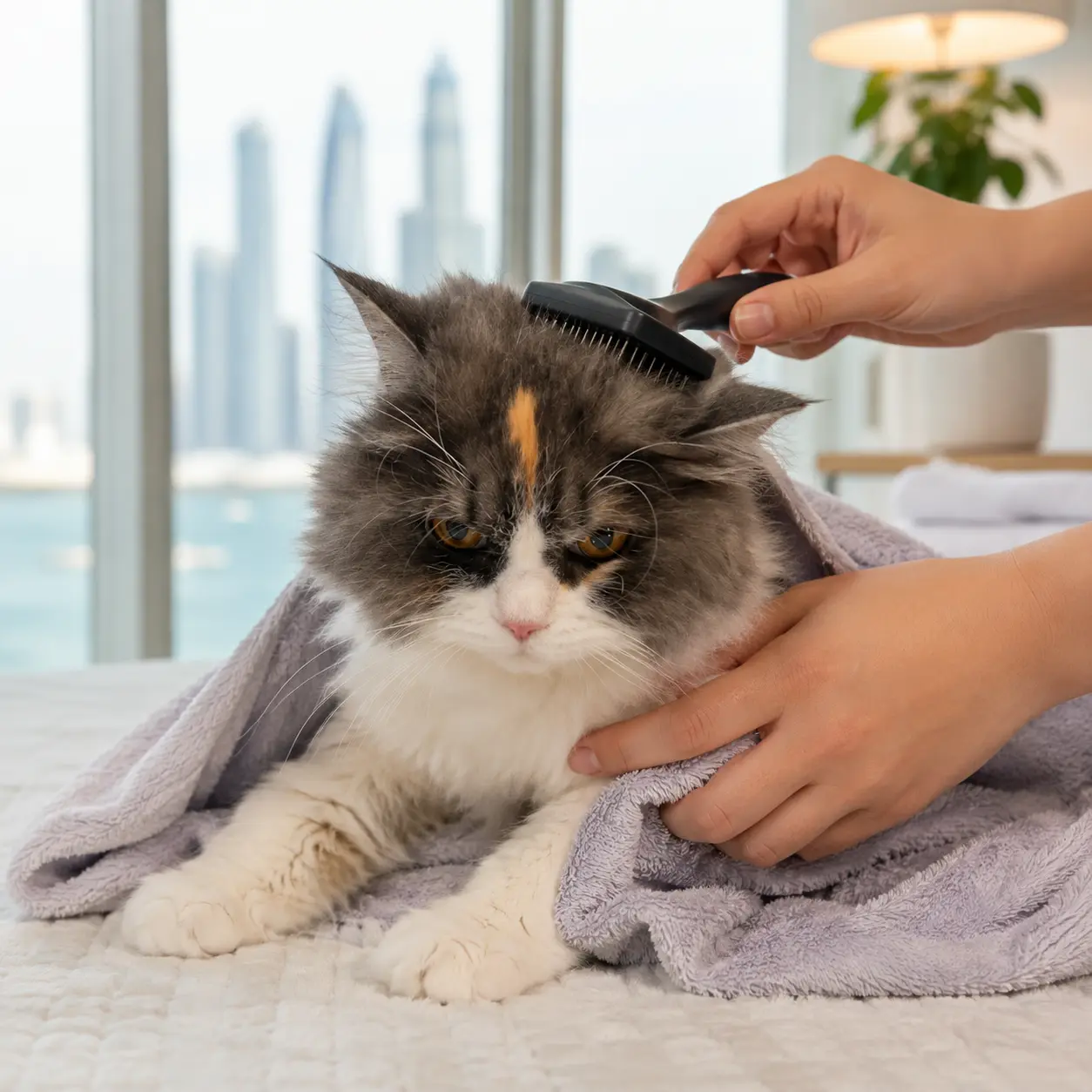
- Towel wrapping techniques — a snug towel wrap (sometimes called a “purrito” hold) keeps a cat feeling secure without full restraint
- Working with the cat’s position — letting the cat stay in a crouched or sitting position instead of forcing a full stretch-out hold
- Calm, quiet environment — low noise, no rushing, and no other pets nearby during the session
- Reading the room before starting — a five-minute settling period before any tools come out, especially for first-time clients
None of this is guesswork. It’s a technique built from repeated hands-on experience with cats who’ve had a hard time with grooming before.
Mobile Grooming vs Salon Visits for Anxious Cats
This is one of the most common questions I get from Abu Dhabi cat owners, and the honest answer is: it depends on the cat.
| Factor | Salon Visit | Mobile Grooming |
| Travel stress | Carrier ride, unfamiliar space | No travel, familiar environment |
| Other animals nearby | Possible, depending on salon layout | None |
| Equipment access | Full range of tools | Compact, still professional-grade |
| Best for | Cats that settle once out of the carrier | Cats that panic from travel or new spaces |
For a fuller breakdown of how salon and home visits compare for cats specifically (not just anxious ones), see our salon vs. home visit guide.
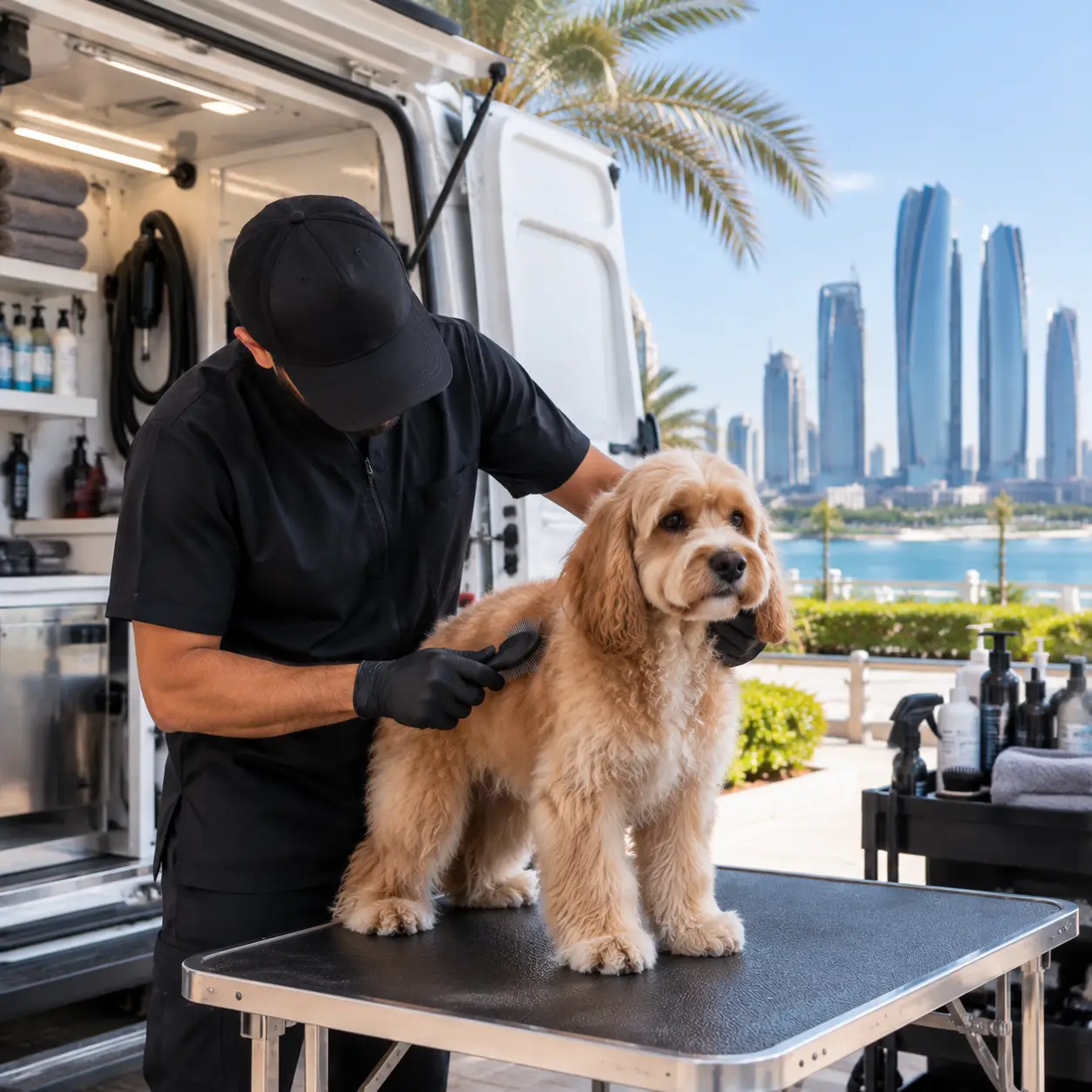
For most anxious or aggressive cats, working with a mobile pet grooming service in Abu Dhabi removes a major stress trigger before the grooming even starts. Cats that never fully relax in unfamiliar environments often do noticeably better when the session happens somewhere they already feel safe.
What Abu Dhabi Owners Can Do Before the Appointment
A few things at home genuinely make a difference before the groomer even arrives.
- Get your cat used to being touched on paws, ears, and belly in short daily sessions, not just before an appointment
- Leave the carrier out at home so it stops being a “bad news” object that only appears before stressful trips
- Avoid feeding a large meal right before grooming, since stress and a full stomach don’t mix well
- Mention any past incidents honestly, including scratching or biting, so the groomer can plan the session accordingly
If you’re still assessing whether your cat needs professional attention at all, these 7 signs your cat needs a professional groom are a useful starting point.
What the Data and Experience Say
Feline behavior researchers have long noted that cats process handling stress differently than dogs, largely because cats are both predator and prey in the wild, which makes unfamiliar restraint feel more threatening to them. This lines up with something I’ve seen consistently in years of practice: cats that are given control over their positioning during grooming, rather than being fully restrained, show noticeably fewer stress signals throughout the session. It’s not a shortcut; it’s a documented behavioral pattern that shapes how professional groomers are trained to approach difficult cases.
When to Involve Your Vet
Not every grooming challenge is a grooming issue. If a cat’s aggression is sudden, severe, or paired with other changes like reduced appetite or hiding, it’s worth ruling out a medical cause before assuming it’s purely behavioral.
- Sudden aggression in a previously calm cat often points to pain, not personality.
- Aggression focused on one specific area (like the lower back or a paw) can signal localized discomfort.
- Ongoing severe reactions despite gentle handling may benefit from a vet-prescribed calming approach before grooming resumes.
A good groomer and a good vet often work together on these cases, not separately.
Choosing the Right Pet Grooming Provider in Abu Dhabi
Not every groomer has experience with anxious or aggressive cats, and that’s fine to ask about directly before booking. When I talk to new clients, I always recommend asking a pet grooming in Abu Dhabi how they specifically handle a stressed or reactive cat, not just what services they offer. The answer tells you a lot about whether they’ve actually done this work before.
Anxious and aggressive cats aren’t difficult cats. They’re cats communicating discomfort the only way they know how. With the right pacing, handling, and a groomer who’s done this work before, most cats settle into grooming far more easily than their owners expect.
FAQ: Cat Grooming for Anxious or Aggressive Cats in Abu Dhabi
Q: Is it safe to groom an aggressive cat at home?
A: Basic brushing can often be done at home in short, calm sessions. For matting, nail trims, or full grooming, a professional trained in low-stress handling is safer for both you and the cat.
Q: Will my cat need to be sedated for grooming?
A: Most anxious cats don’t need sedation. Experienced groomers use pacing, positioning, and towel-wrapping techniques first. Sedation is typically reserved for severe cases and only under veterinary guidance.
Q: How can I tell if my cat is anxious versus genuinely aggressive?
A: Anxiety usually shows up as flattened ears, tail flicking, and attempts to escape before any aggression appears. True unprovoked aggression without these warning signs is far less common and worth discussing with a vet.
Q: Does mobile grooming really help anxious cats more than salon visits?
A: For many cats, yes. Removing the car ride and unfamiliar environment often reduces the biggest source of stress before grooming even begins.