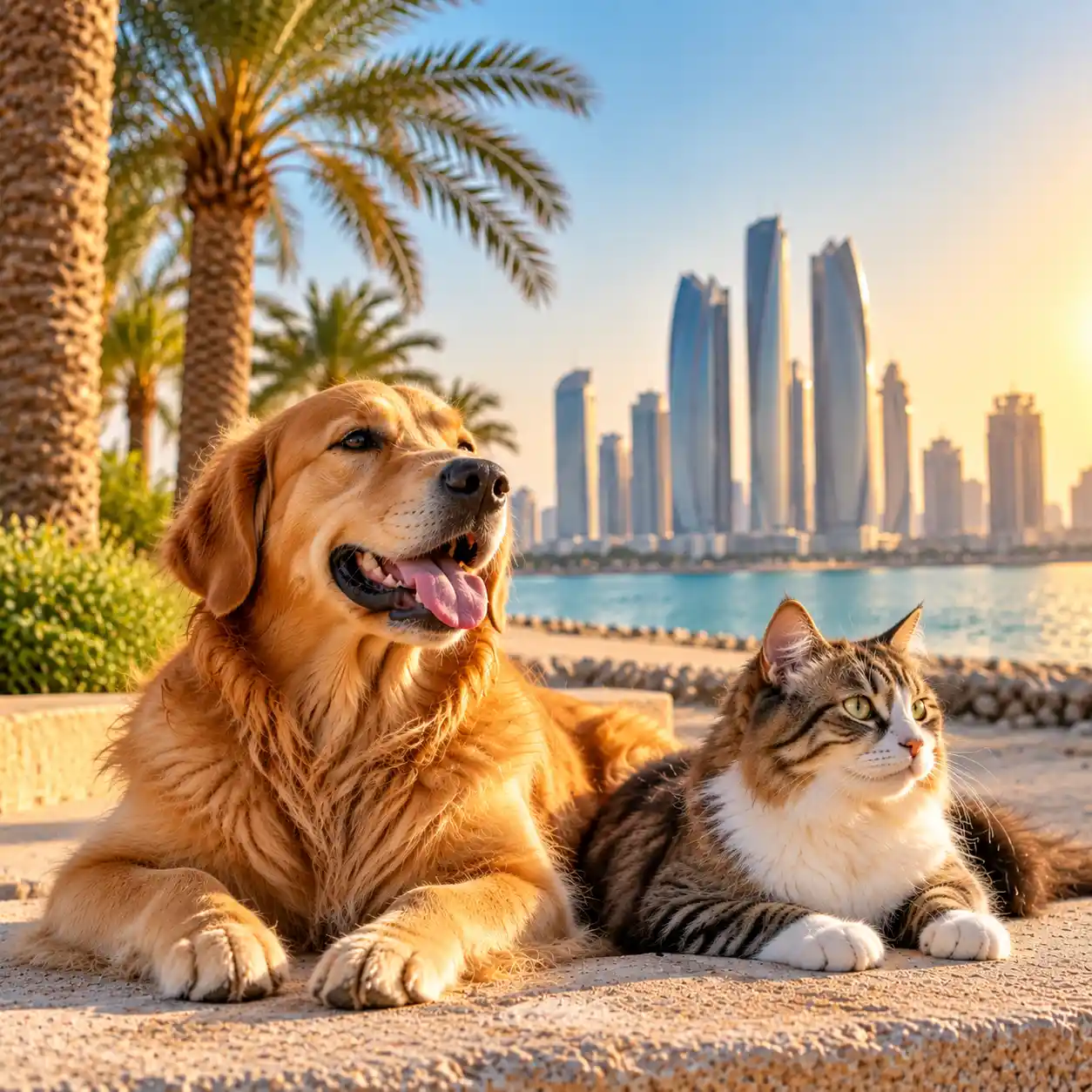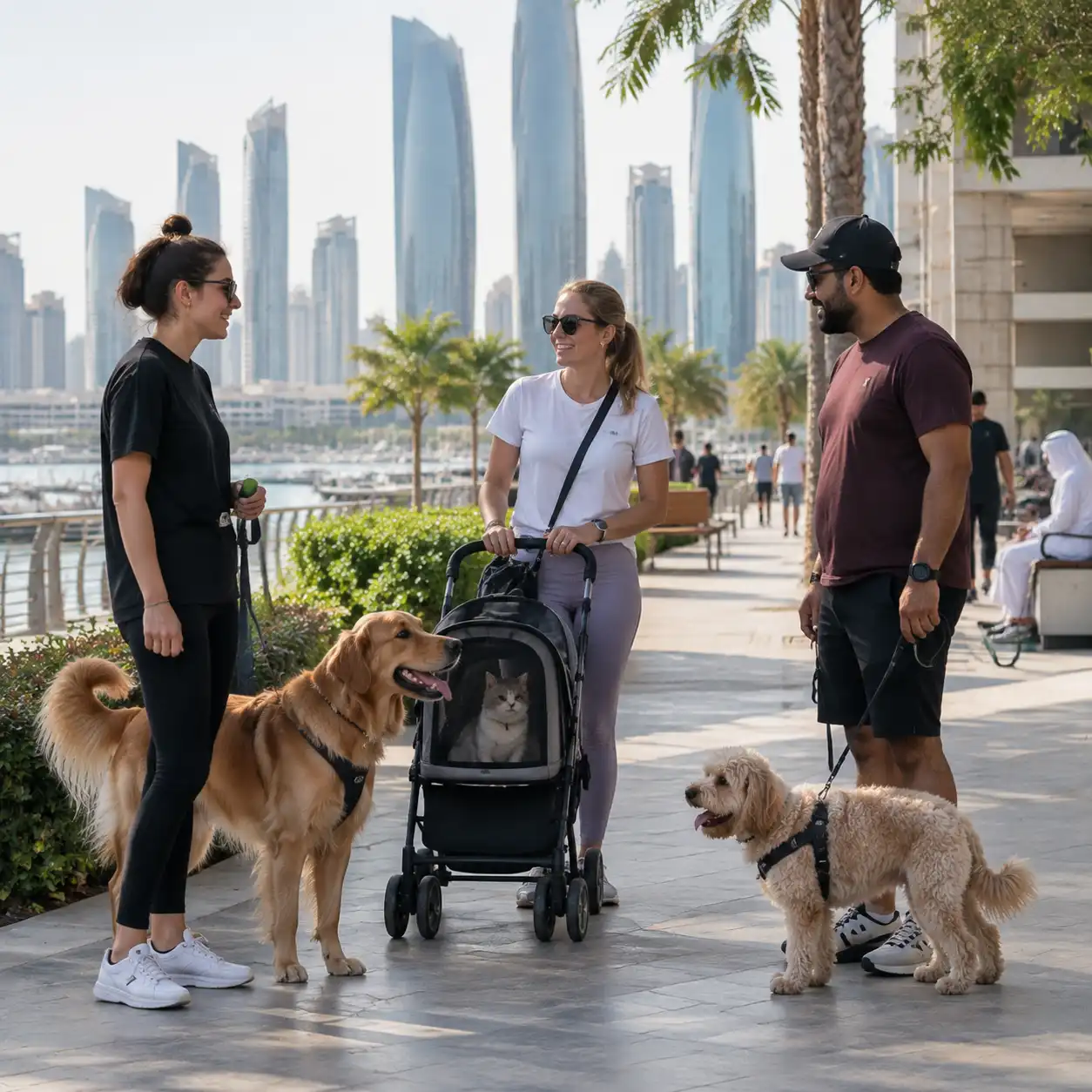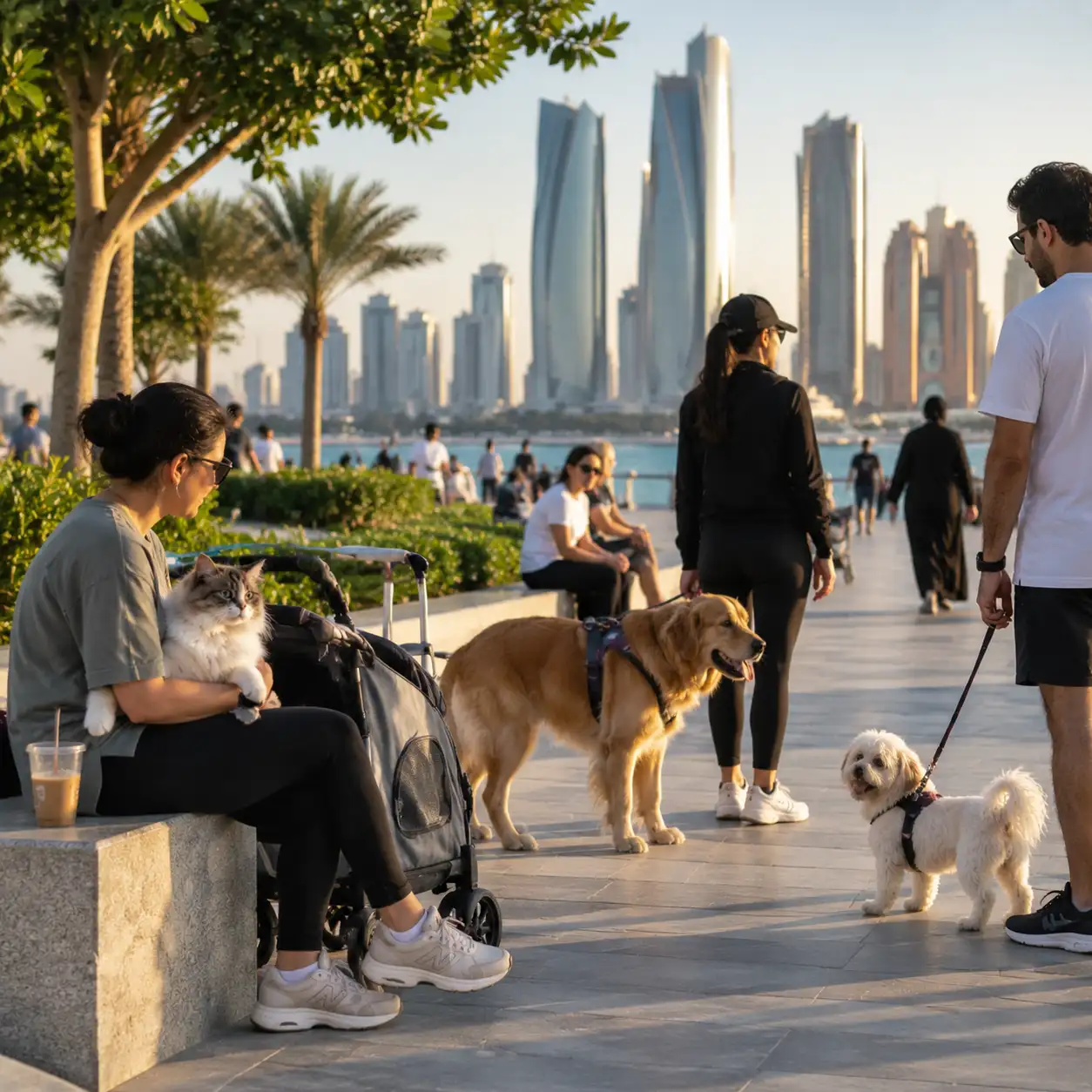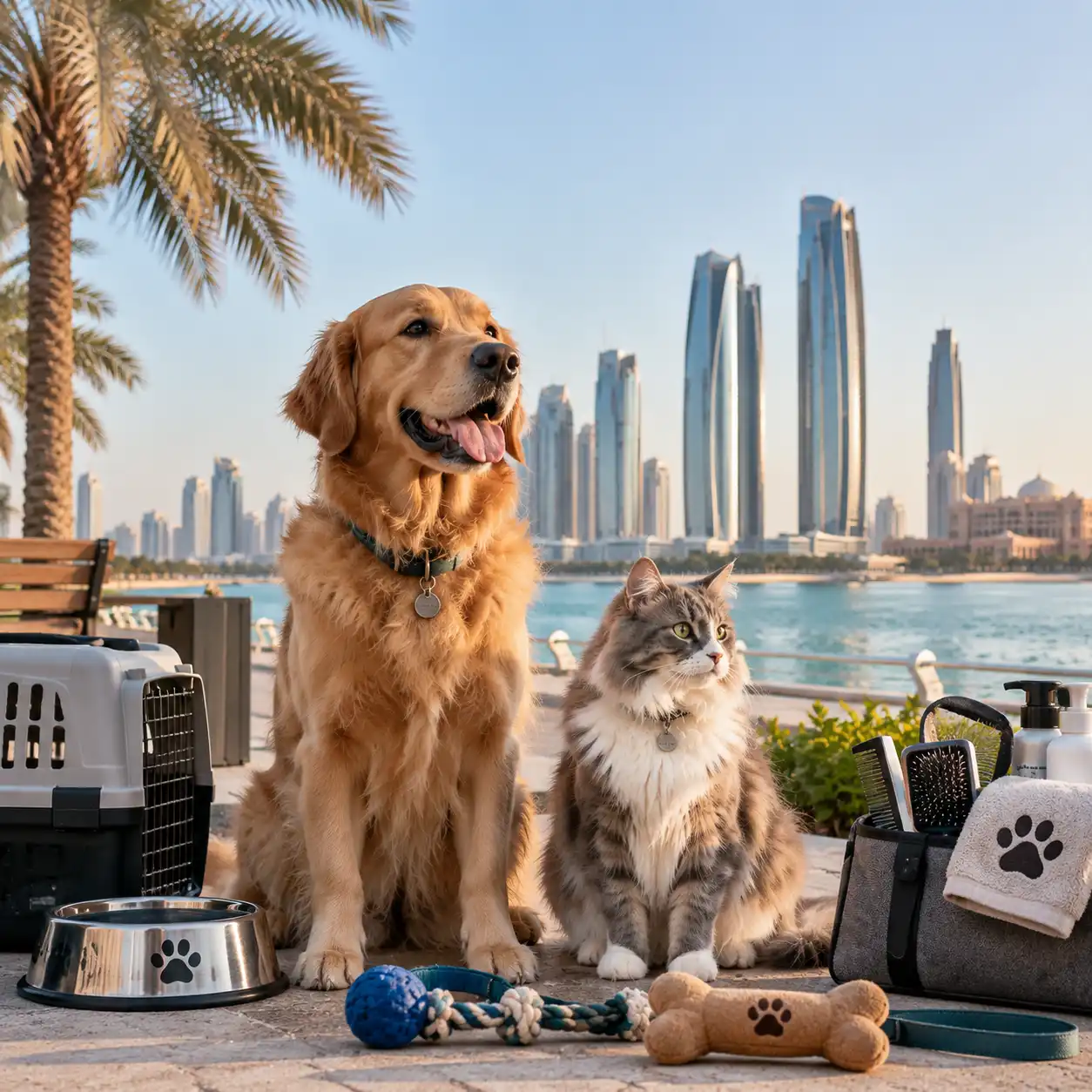
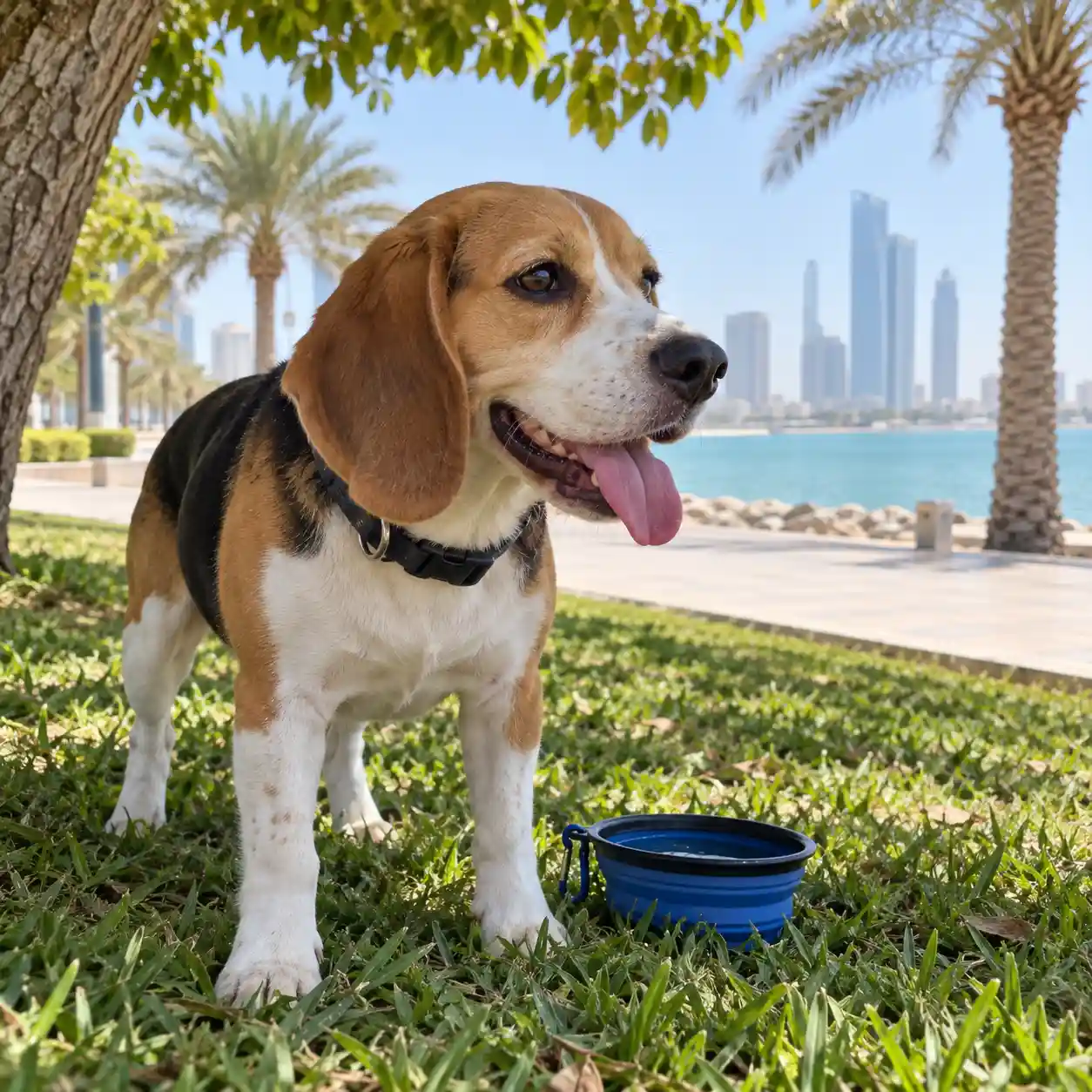
By mid-June, most dogs in Abu Dhabi have found the coolest tile in the house and claimed it. Cats disappear into bathtubs and under beds. Owners often put this down to summer laziness, but it is the visible part of a body working overtime to get rid of heat. With daytime temperatures that regularly pass 45°C and coastal humidity that slows cooling, heat stress here is not an occasional risk. It is a condition pets live with for four or five months every year. Heat is the most urgent part of Abu Dhabi’s desert climate and pet grooming needs, and veterinary research gives a clear picture of what it does to dogs and cats, which pets are most vulnerable, and which daily habits make the biggest difference.
Heat Stress and Heatstroke Are Not the Same Thing
Heat stress is the body struggling to lose heat as fast as it builds up. The pet feels it, pants more, moves less and looks for cool surfaces, but its core temperature stays close to the normal range of about 38 to 39°C.
Heatstroke is what happens when that struggle fails. Once body temperature climbs past roughly 41°C, cells start to break down, and organs such as the kidneys, liver and gut can be damaged within hours. Cats tend to hide discomfort until late, so the warning signs of heatstroke in cats often appear only once the situation is already serious.
The gap between the two is where owners have the most control. Shade, water and rest can reverse heat stress in minutes. Heatstroke needs a vet.
Why Pets Lose the Cooling Battle Faster Than We Do
People cool down by sweating across the whole body. Dogs and cats have working sweat glands almost only in their paw pads, and those release very little heat.
Dogs rely on panting. Rapid, shallow breaths move air over the moist tongue and airways, and the evaporation carries heat away. Cats lick their fur and let the saliva dry, rest more, and stretch out on cool surfaces. A cat that pants with its mouth open is not cooling normally. It is showing distress.
Both methods depend on evaporation, and evaporation slows as the air gets wetter. On a humid August night along the Abu Dhabi coast, a panting dog can move plenty of air and still lose far less heat than it would in dry desert air at the same temperature. That is why many owners notice their pets struggling more on sticky evenings than on hotter, drier afternoons.
Body shape adds another layer. A healthy coat holds a thin layer of air that shields the skin from direct sun, while a coat packed with dead undercoat traps heat against the body. Face shape, body size and fur density all influence how different coat types respond to extreme heat, which explains why two dogs on the same walk can react so differently.
What the Research Shows
The most detailed data on heat illness in dogs comes from the Royal Veterinary College’s VetCompass programme, which analyses anonymised records from thousands of UK veterinary clinics.
- A 2020 study found Chow Chows had about 17 times the odds of heat-related illness compared with Labradors. Bulldogs had about 14 times the odds and French Bulldogs about 6 times.
- Flat-faced (brachycephalic) breeds as a group had roughly twice the risk of breeds with normal-length muzzles, and heavier dogs faced higher risk than lighter ones.
- Exercise triggered around three in four cases. Hot cars, often seen as the main danger, accounted for far fewer.
- An earlier VetCompass study found that about one in seven dogs treated for heat-related illness died.
Two lessons matter most for Abu Dhabi. These figures come from a mild climate, so the same risk factors meet far longer and hotter summers here. And the biggest trigger was not a locked car but an ordinary walk or play session at the wrong time of day, which is the one factor almost every owner controls.
Cats have been studied much less. In day-to-day practice, vets most often see serious feline cases when a cat is trapped somewhere it cannot escape the heat: a closed room after an AC failure, a car, or a sun-facing balcony.
How Ongoing Heat Affects the Body
A single hot walk is easy to spot. The effects of weeks of heat load build quietly.
| Effect | What you may notice |
| Dehydration | Dry or sticky gums, thick saliva, less urine |
| Lower appetite | Smaller meals, gradual weight loss over summer |
| Less activity | Shorter play, more sleep, reluctance to walk |
| Restless sleep | Moving between rooms, panting at night |
| Paw pad damage | Red, blistered or peeling pads after walks |
| Dull coat | Less energy goes into skin and hair repair |
Because these changes are gradual, many owners only notice them in September. Keeping an eye on water intake, appetite and energy from May onwards makes them much easier to catch early.
Early Signs to Watch For
In dogs:
- Heavy panting that does not settle after a few minutes in the shade
- A wide, tense mouth with the tongue stretched far out
- Thick, ropy drool
- Lagging behind, lying down on walks or refusing to move
- Pressing the belly flat against cold floors
In cats:
- Open-mouth breathing or panting
- Frantic grooming in a warm room
- Hiding in sinks, bathtubs or on tiles
- Restlessness followed by unusual tiredness
- Skipping meals on hot days
Vomiting, diarrhoea, bright red or pale gums, stumbling, confusion or collapse mean the pet needs a vet immediately.
Everyday Heat Traps in Abu Dhabi
Most heat stress does not come from extreme situations. It comes from routine ones.
- Pavement and sand heat up far more than the air on summer afternoons and can burn paw pads within seconds. Pressing the back of your hand on the ground for seven seconds is a simple test.
- Cars heat up quickly even in shade, and an idling car with a failing AC is not a safe place to wait.
- Balconies with glass panels and pale tiles reflect and trap heat.
- Power cuts or AC breakdowns can turn a closed apartment dangerous within a few hours.
- Trips to appointments add stress and heat at the same time, especially for anxious pets in carriers.
Where Grooming Fits In
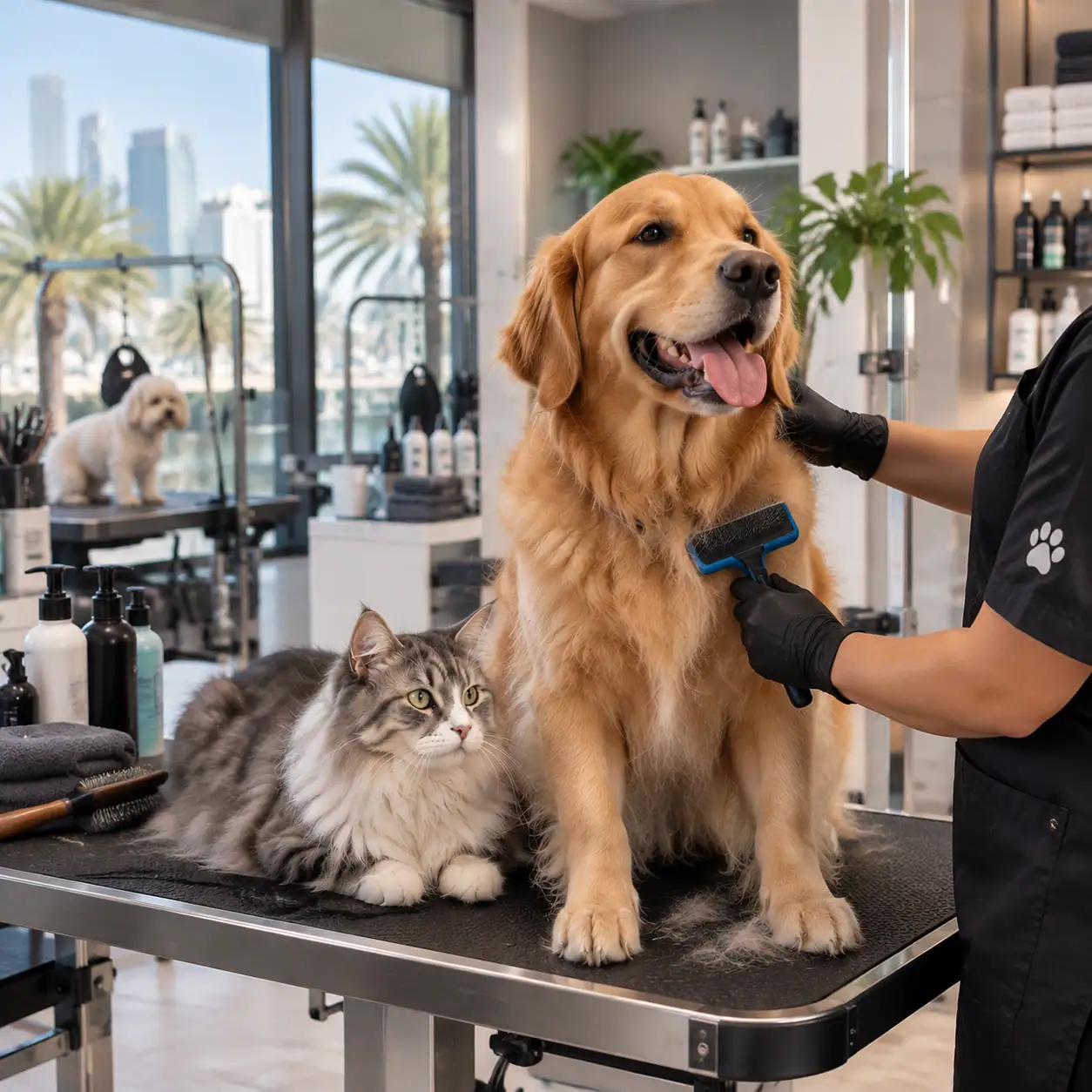
A well-kept coat is part of your pet’s cooling system. When you book pet grooming in Abu Dhabi during summer, the focus should be on letting heat escape rather than on appearance.
- Removing dead undercoat opens the coat so air can reach the skin.
- Trimming fur between the paw pads helps those small sweat glands work and stops hot sand from packing in.
- Tidying belly fur lets dogs shed heat when they lie on cool floors.
- Keeping the coat instead of shaving it protects the skin from strong sun.
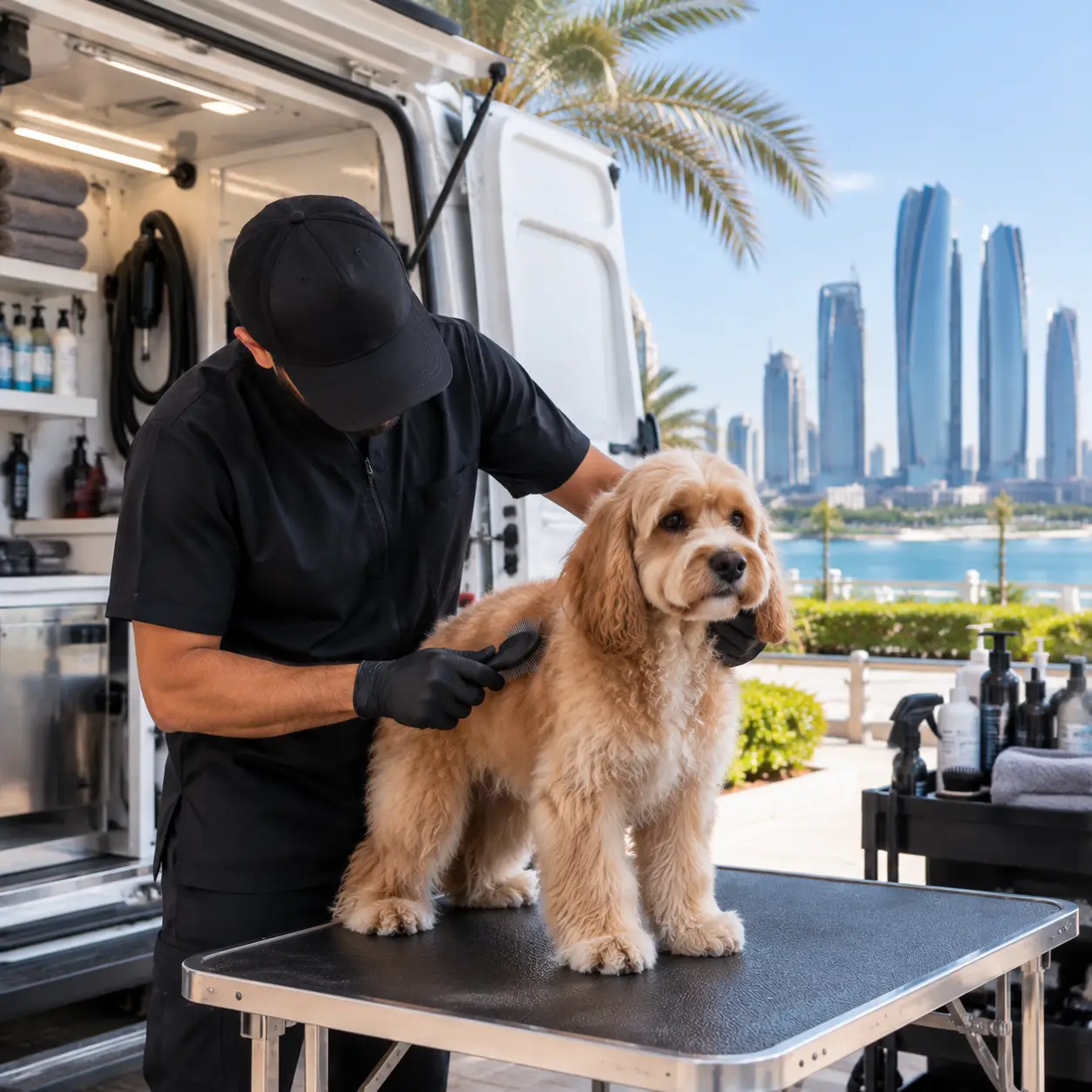
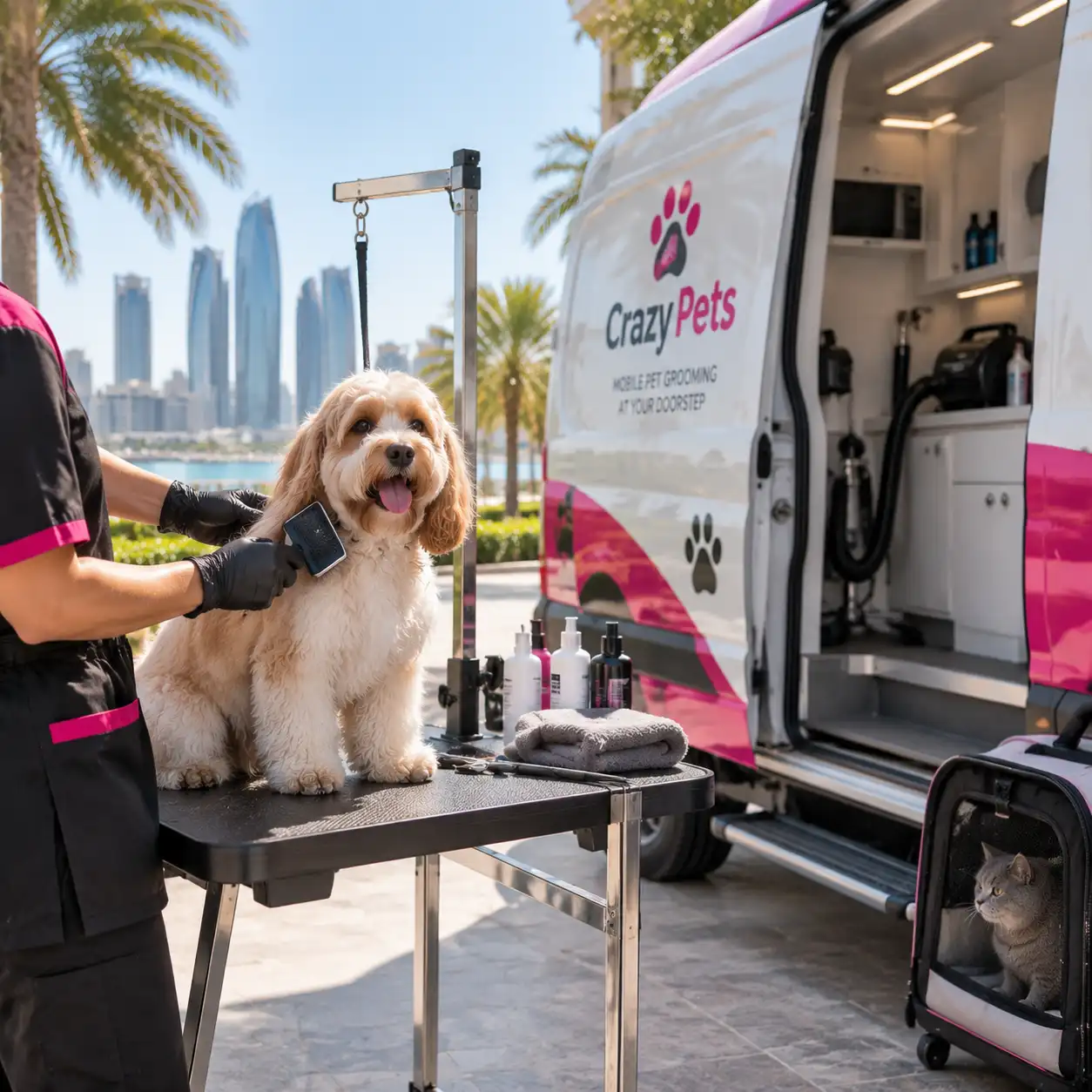
The grooming session itself can add heat load if it is done badly. Long drying with hot air, crowded waiting areas and midday car journeys all raise body temperature. Early slots and cool drying help, and for flat-faced breeds, senior pets and nervous cats, mobile grooming at home removes the hot journey altogether.
A Summer Routine That Works
| Time | What to do |
| Before 7 am | Main walk or play session |
| 11 am to 5 pm | Indoors, no exercise, water in several spots |
| After sunset | Short walk once the ground has cooled |
| Weekly | Brush out loose undercoat, check paw pads |
| Every 4 to 6 weeks | Professional groom focused on de-shedding and paw care |
Frequently Asked Questions
What temperature is too hot to walk my dog in Abu Dhabi?
There is no single temperature that is safe for every dog. Humidity, breed, age, health, and fitness can all affect heat tolerance. From May to September, avoid the hottest part of the day and choose early morning or after-sunset walks instead.
Can indoor cats get heat stress?
Yes. Indoor cats can still be affected by excessive heat, especially in poorly ventilated rooms, during AC failures, or on hot balconies. Older, overweight, and flat-faced cats may be more vulnerable to heat-related problems.
Should I shave my dog to prevent heat stress?
Usually, no. A healthy coat helps protect a dog’s skin from direct sunlight and heat. For double-coated breeds, regular brushing and removal of loose undercoat can help manage excess fur without removing the protective outer coat.