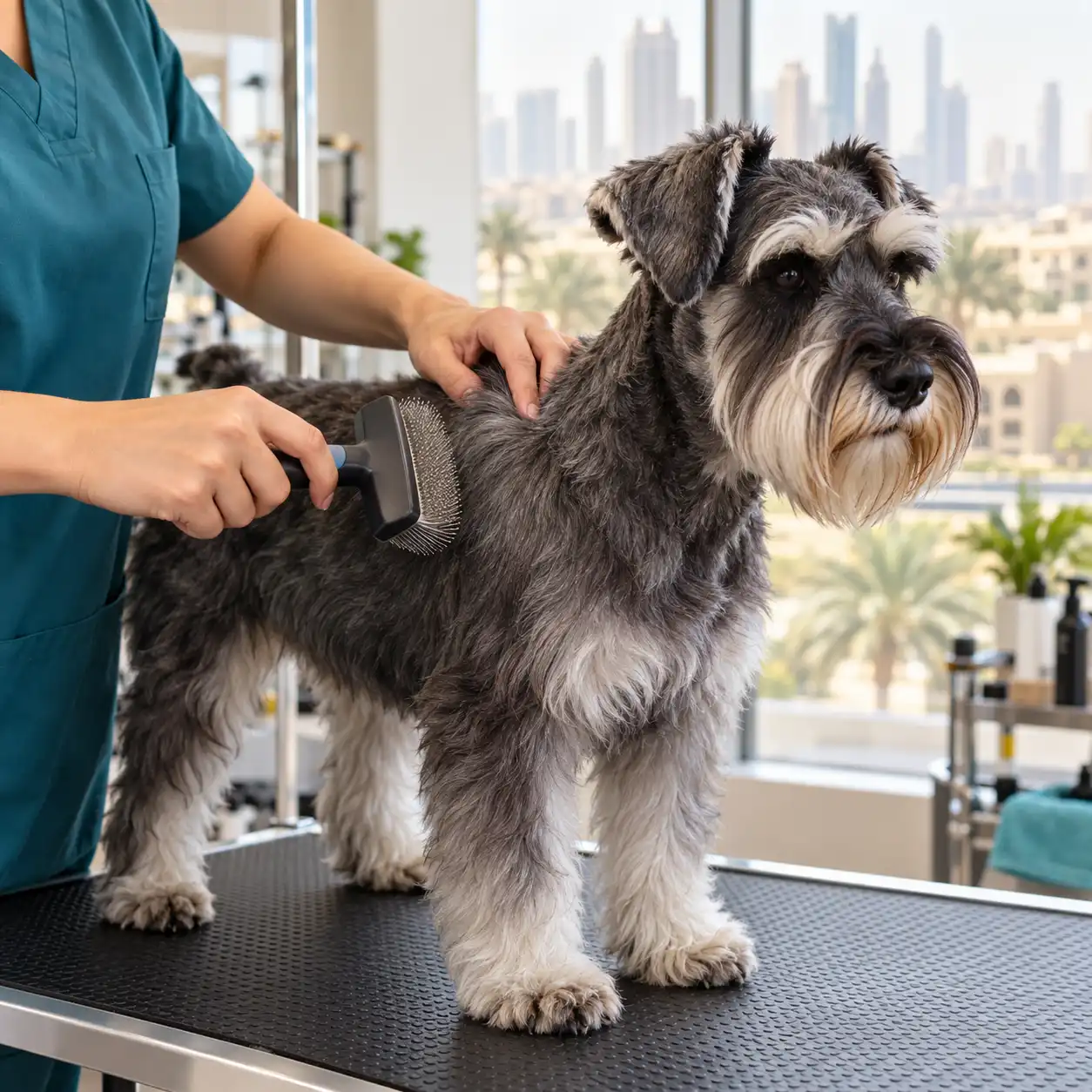
You bathe your dog on Friday, and by Sunday the musty smell is back. Your cat’s fur feels oily along the spine, and small knots keep appearing behind the ears. Many owners blame sweat, but dogs and cats barely sweat through their skin. The real driver is moisture in the air. Along the Abu Dhabi coast, humidity often climbs above 80 to 90% on summer mornings and nights, and a coat that never fully dries creates ideal conditions for yeast, bacteria and mats. Humidity is only one part of how the UAE climate affects pet skin and coat health, but it is behind most of the odour, hot spots and stubborn tangles owners deal with from July to October, and it calls for a different approach to grooming.
Do Dogs and Cats Actually Sweat?
They do, but not the way people do, and not in a way that helps much with cooling. Pets have two kinds of sweat glands:
- Eccrine glands sit mainly in the paw pads. They release a small amount of watery sweat, which is why a nervous dog at the vet sometimes leaves damp paw prints on the floor. They help with grip and a little cooling, not much more.
- Apocrine glands are spread across the skin beside the hair follicles. They release an oily secretion that carries the pet’s individual scent. It does nothing to cool the body.
Add sebum, the natural oil made by glands in the skin, and you have the mix behind the “sweaty dog” smell. In dry air, these secretions stay in balance. In humid air, they sit on warm, damp skin for hours, and the bacteria and yeast that feed on them multiply quickly.
What Humidity Does to a Coat
A coat works like a layered fabric. The closer you get to the skin, the less the air moves. In a dense or double coat, that inner layer stays warm and still, and in humid weather it hardly dries at all.
Three things happen together during an Abu Dhabi summer:
- Moisture comes in from the air and settles into the undercoat, even without a bath or a swim.
- Oil production rises with the heat, so the hair feels greasy and dust sticks to it.
- Drying slows down, so water from baths, pools, drool, and wiping stays trapped for hours.
The top of the coat can feel dry to your hand while the skin underneath stays damp until the next day. That hidden moisture is where most humidity-related problems begin.
The Coat Problems That Follow
Yeast overgrowth. A yeast called Malassezia lives on healthy skin in small numbers and thrives in warm, damp, oily conditions. The sweet, musty smell many owners describe as paws that smell like corn chips is often the first sign, followed by greasy ear discharge, darkened skin between the toes and constant paw licking.
Hot spots. Acute moist dermatitis shows up as a red, wet, painful patch that can grow noticeably in a single day. It usually starts where moisture sits against the skin, often after a swim or bath that was never fully dried, and spreads as the dog licks and scratches.
Skin fold infections. Bulldogs, Pugs, Shar Peis and Persian cats have folds that hold heat and moisture. In humid months, those folds become warm, damp pockets where bacteria and yeast build up fast.
Odour that returns within days of a bath. This usually means the coat is not drying fully or yeast is already active on the skin. Bathing more often rarely fixes it and can leave the skin more irritated.
Mats. Damp hair swells slightly and tangles more easily. Add dust and skin oil, and loose hairs bind into tight mats close to the skin, which then hold even more moisture. In double coats, mats usually begin with dead undercoat that never shed out, which is why de-shedding in hot and humid climates prevents more tangles than extra baths do.
Why Standard Grooming Advice Fails Here
Most grooming advice online was written for cooler, drier countries, where a coat left to air dry is dry within an hour or two. In UAE humidity, the same habits leave pets damp, smelly and itchy.
| Standard advice | What works better in UAE humidity |
| Towel dry and let the air finish the job | Dry fully to the skin with a cool or low-heat pet dryer |
| Bathe whenever the coat looks dirty | Bathe on a planned schedule, only when you can dry completely |
| Brush once a week | Brush in short sessions several times a week |
| Any gentle shampoo is fine | Use pet-specific products; ask a vet about medicated options for yeast |
| Clean ears now and then | Check ears weekly and dry them after baths and swims |
Grooming Strategies That Work in UAE Humidity
Dry to the skin, every time. Part the coat on the chest, armpits and hindquarters to check the base is dry, not just the surface.
Bathe only when you can dry properly. In August, a bath followed by air drying often does more harm than skipping the bath altogether.
Brush little and often. A fresh tangle takes seconds to remove. A mat that has held moisture for a week can hide red, irritated skin underneath.
Keep moisture traps short. Trim the fur between paw pads, around the sanitary area and under the ears so water and sand have nowhere to sit.
Clean and dry skin folds daily on wrinkled breeds through the summer, and check ears once a week.
Treat every swim like a bath. Pool water left in a thick coat is one of the most common starting points for hot spots.
Shorten the gap between grooms for thick and long coats from July to October, often to every three or four weeks.
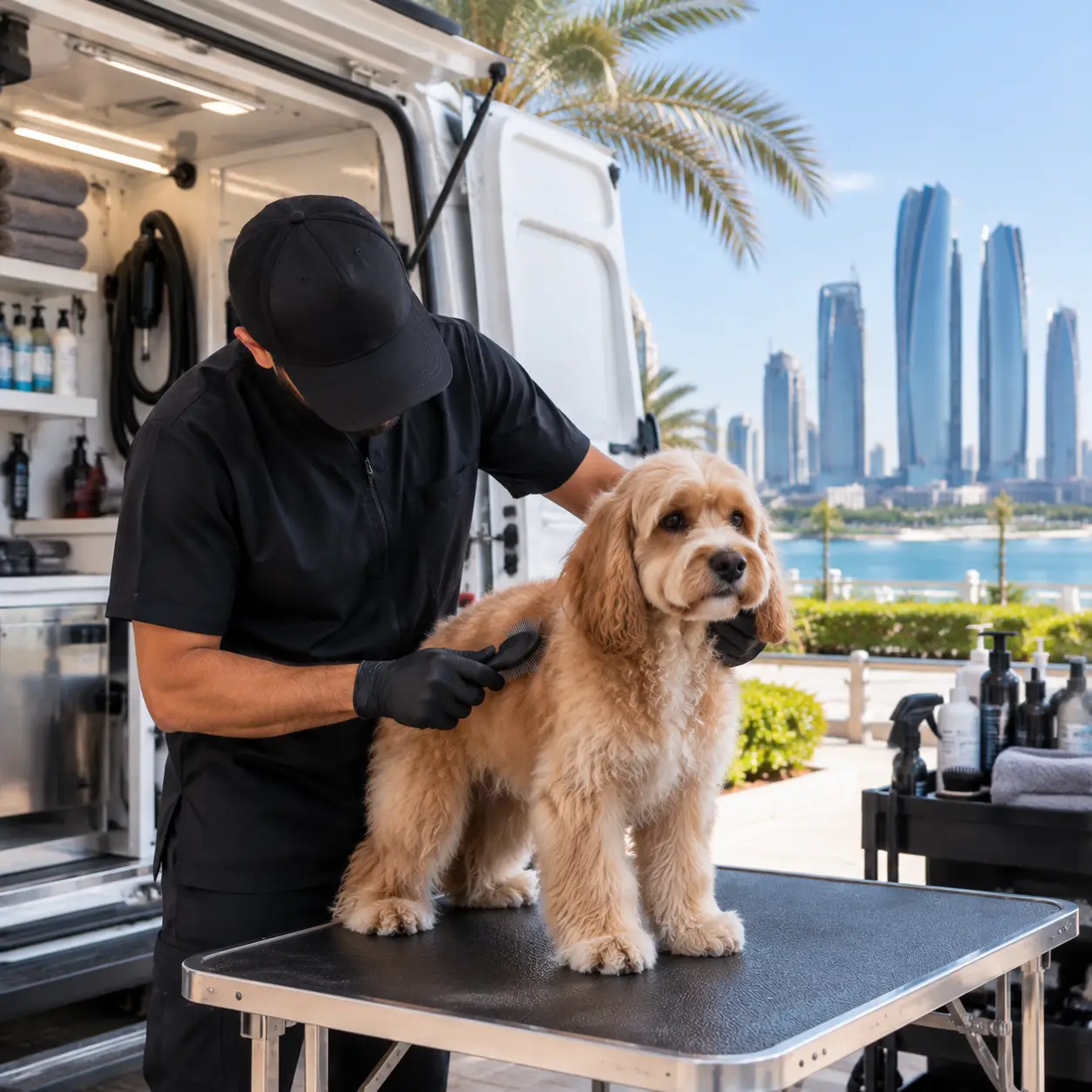
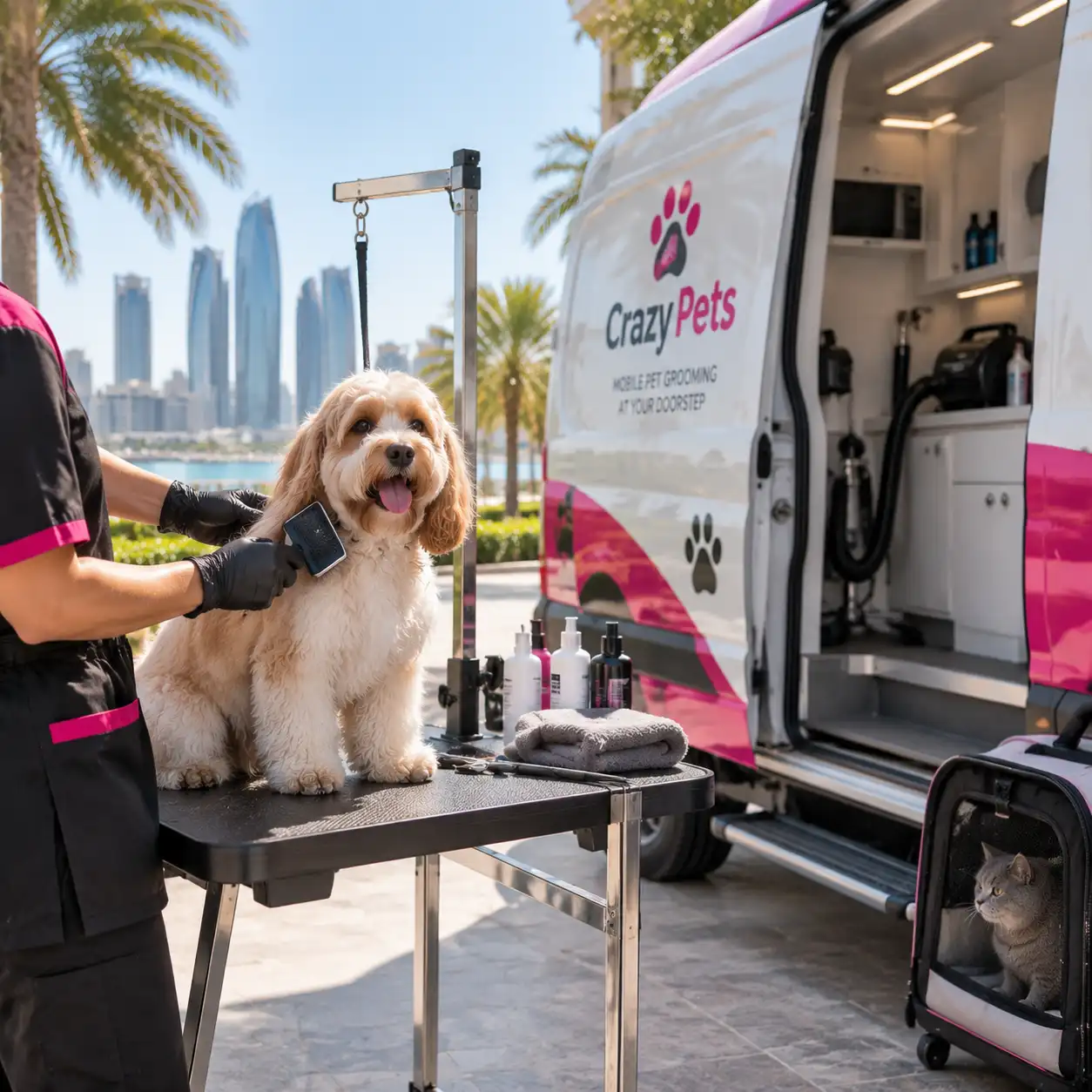
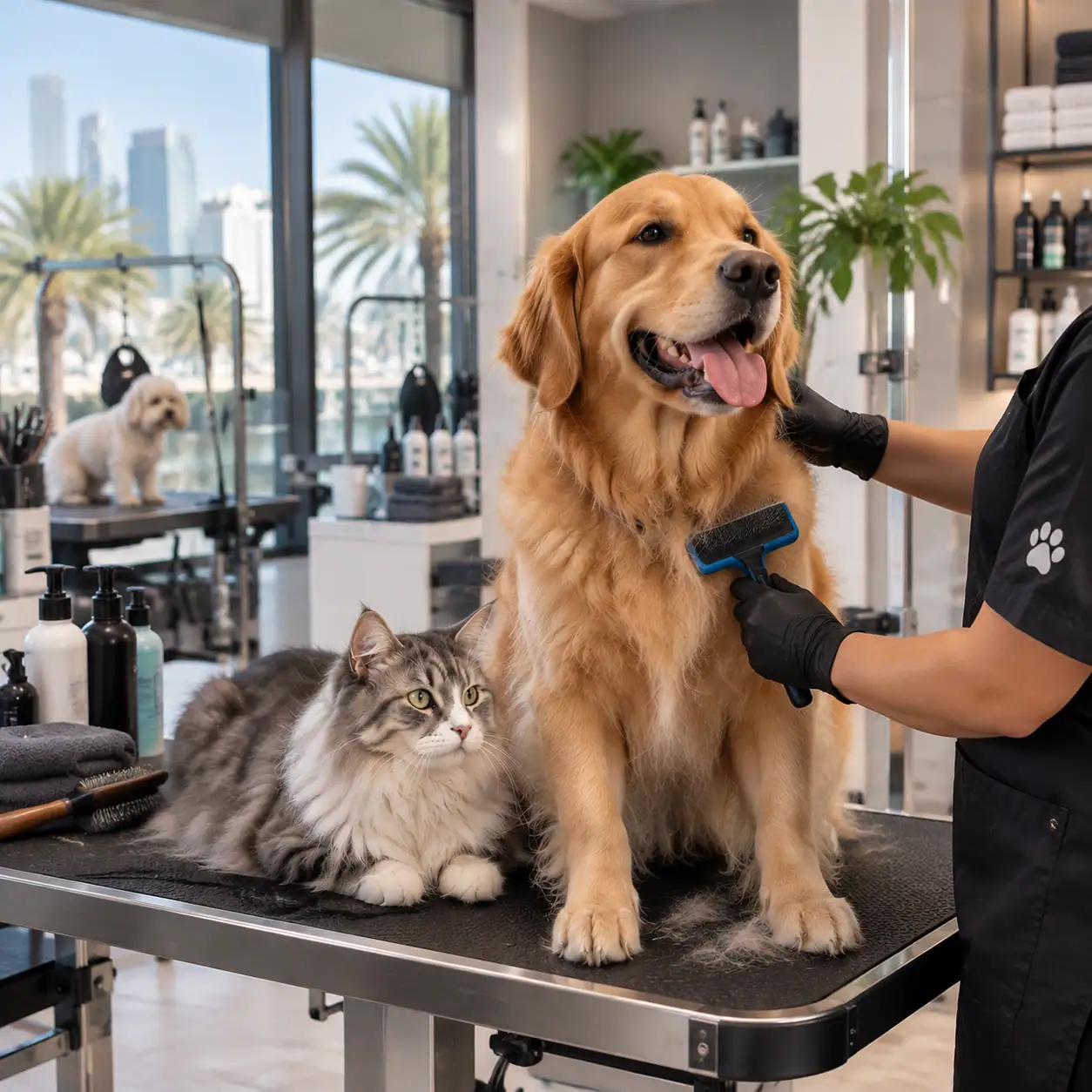
Professional dog grooming in Abu Dhabi during the humid months should include a thorough high-velocity dry, a check of the skin under the coat, and attention to paws, ears and folds rather than a quick wash and trim. Long-haired cats face the same trapped-moisture problems, and careful cat grooming in Abu Dhabi for breeds like Persians and Maine Coons focuses on gentle mat removal and complete drying rather than frequent baths.
When It Needs a Vet
Grooming prevents a lot of humidity-related trouble, but it cannot treat an active infection. A vet visit is needed for:
- Raw, weeping or bleeding patches
- Ear pain, head shaking or a strong smell from the ears
- Hair loss with red, thickened or blackened skin underneath
- Itching that keeps your pet awake at night
Frequently Asked Questions
Why does my dog smell worse in summer?
Heat can increase skin oil, while high humidity keeps the coat damp for longer. This warm, moist environment can encourage yeast and bacteria to multiply, which may contribute to a stronger odour.
Do dogs sweat more when it is humid?
Not in a way that significantly cools the coat. Dogs release a small amount of sweat through their paw pads, but the dampness you notice on the coat is mainly caused by moisture in the air and slower drying.
How often should I bathe my dog in humid weather?
Many dogs can be bathed every two to four weeks, depending on their coat, skin condition, and lifestyle. Always dry the coat thoroughly after bathing, as leaving it damp can create a warm, moist environment that may contribute to skin problems.