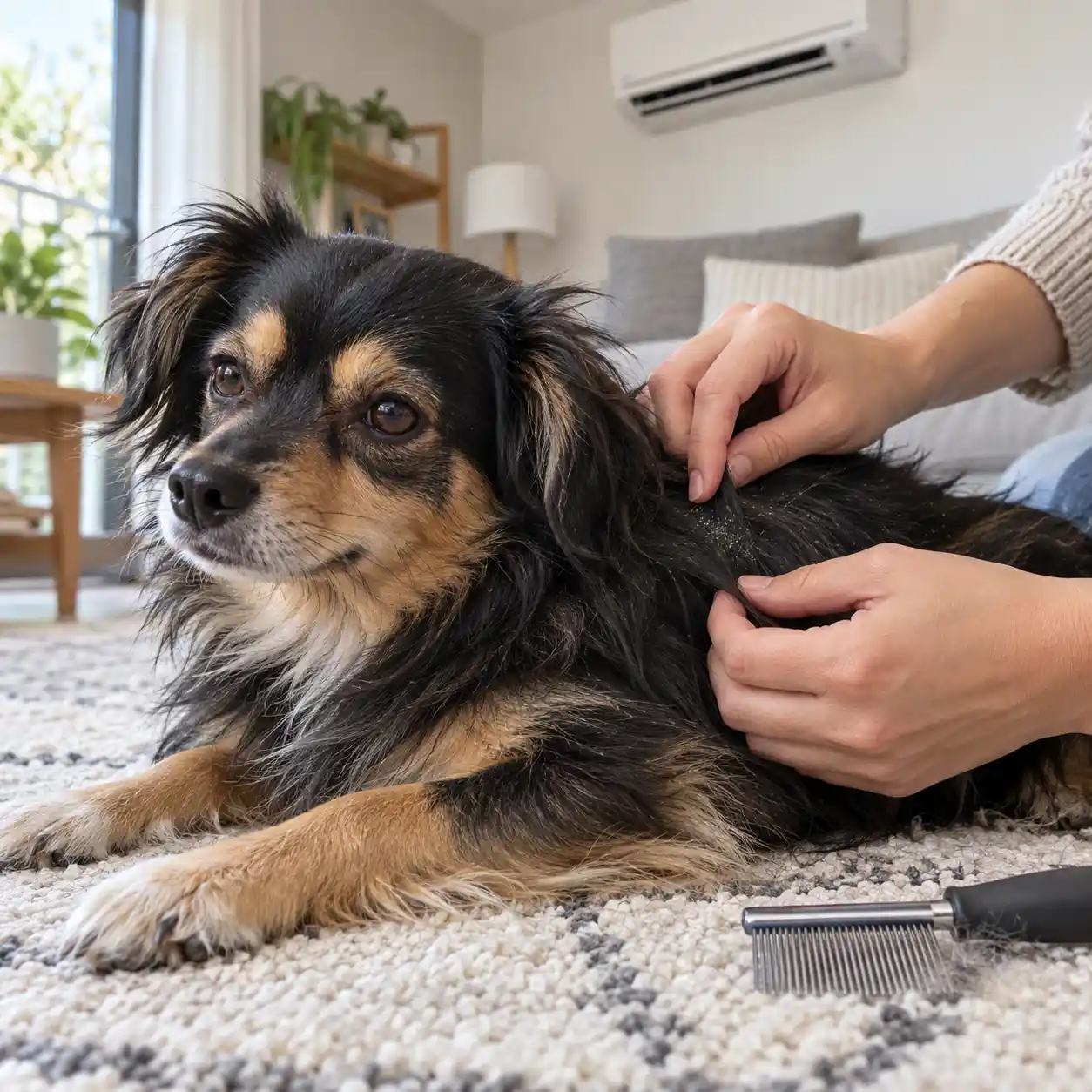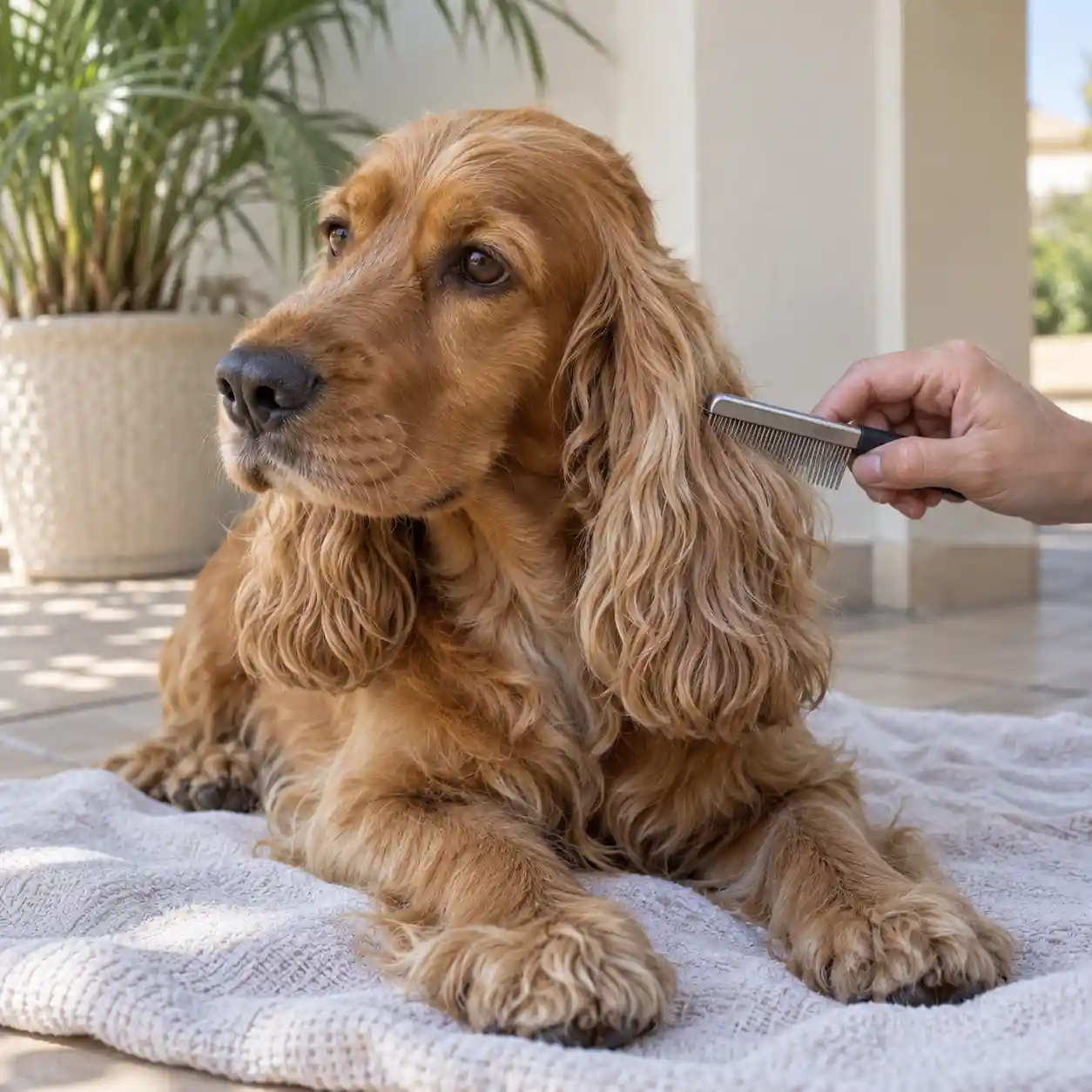

Your cat has never set a paw outside. Your small dog only goes out for short walks at dawn. So why the constant scratching, the licked paws, and the red patches on the belly? Many owners assume an indoor life protects pets from the desert, but walls and windows only filter the climate. They do not block it. Fine dust drifts in through balconies, window frames and AC vents. Intense sunlight pours through large windows. And the strong cleaners, sprays and fragrances used to keep dust and odour under control end up on the floors pets lie on all day. Indoor living does not switch off how Abu Dhabi’s climate changes pet skin and grooming needs. It changes which parts of that climate reach the skin, and how constantly.
Why Indoor Pets Often React More, Not Less
It sounds backwards, but vets and groomers regularly see more sensitive skin in indoor pets than in pets who spend time outdoors. Several things stack up:
- Constant exposure. An indoor pet spends almost every hour with the same dust, fabrics and cleaning residues, with no break from them.
- Slower coat turnover. Movement, fresh air and natural light help an outdoor coat shed dead hair and skin. Indoors, that debris stays in the coat unless it is brushed out.
- A weakened skin barrier. Months in cool, dry rooms thin the skin’s protective outer layer. Understanding how air conditioning contributes to dry skin explains a lot here, because once that barrier is flaky and thin, dust, product residue and allergens get into the skin far more easily.
- Sudden temperature swings. Stepping from a 22°C living room onto a 45°C balcony and back again stresses skin that is already under pressure.
- Close contact with surfaces. Pets lie belly-down on freshly mopped floors, sprayed sofas and washed bedding, so anything left on those surfaces goes straight onto the skin.
How the Desert Climate Brings Irritants Indoors
Fine Desert Dust
Desert dust is finer than ordinary household dust. It slips through gaps in windows and balcony doors, settles on floors, rugs and pet beds, and clings to the coat. It dries the skin, rubs at it like a fine abrasive, and often carries pollen and mould spores along with it. Pets that sleep on the floor collect the most.
What helps: damp-mop rather than dry-sweep, vacuum rugs often, wash pet bedding weekly, and wipe the coat with a damp cloth after dusty days.
Strong Sunlight Through Glass
Floor-to-ceiling windows are common in UAE apartments, and pets love a sunny spot. Ordinary window glass blocks much of the UVB that causes sunburn, but a large share of UVA passes through. Over months, long naps in strong window sun can damage thin or pale skin on the nose, ear tips and belly.
White and light-coloured cats, short-coated dogs with pink skin, and pets with sparse belly fur are most exposed. Hairless breeds have no coat to shield them at all, which is why skin care for hairless cats puts so much weight on sun protection, even indoors.
What helps: sheer curtains or UV-filtering window film where your pet naps, and a shaded bed near the window instead of bare tiles in full sun.
Anti-Dust Cleaning Routines
Keeping a home clean in a dusty climate usually means frequent mopping with strong cleaners, disinfectant sprays, air fresheners and, in many homes, incense or bakhoor. Residue stays on floors and fabrics, ends up on paws and bellies, and cats lick it off while grooming.
What helps:
- Rinse floors with plain water after using strong cleaners
- Keep pets out of rooms until floors are fully dry
- Wash pet bedding with fragrance-free detergent and an extra rinse
- Avoid burning incense or bakhoor in rooms where pets sleep
Fabrics and Bedding
Wool rugs, rough synthetic fibres and bedding washed in heavily scented detergent can cause contact irritation, usually on the chin, belly and paws, the parts that touch those surfaces most.
What helps: cotton bedding, mild detergent, and rotating between two beds so one is always freshly washed.
Allergens in Sealed Homes
Homes that stay closed and air-conditioned for most of the year hold on to allergens. Dust mites live in carpets and soft furnishings, and mould can grow in bathrooms and in AC units with neglected filters. Allergic itching tends to show on the face, paws, armpits and belly.
Grooming can lower the allergen load sitting on the coat, and a sensible routine for grooming pets with allergies relies on gentle, regular washing and very thorough rinsing.
What helps: clean AC filters on schedule, ventilate bathrooms, and wash soft toys and throws regularly.
Signs of Sensitive Skin in Indoor Pets
- Licking or chewing the paws
- A red chin, belly or armpits
- Rubbing the face along carpets or furniture
- Over-grooming in cats, sometimes leaving thin or bald patches on the belly or legs
- Small bumps, scabs or flaky patches
Grooming Sensitive Indoor Skin
| Grooming step | Why it helps indoor pets |
| Regular brushing | Lifts dust and allergens out of the coat before they reach the skin |
| Fragrance-free, gentle shampoo | Cleans without adding new irritants |
| Very thorough rinsing | Stops shampoo residue from sitting on the skin |
| Plain water paw wipes | Removes cleaning residue picked up from floors |
| Skin checks during grooming | Catches redness or bumps early |
More bathing is rarely the answer. Frequent washing strips the oils that protect the skin and can make sensitivity worse.
Cats are often the hardest to help, because they react to both the products and the handling. Gentle cat grooming in Abu Dhabi for sensitive cats relies on fragrance-free products, short sessions and careful combing rather than frequent baths.
When to See a Vet
Book a vet visit if itching lasts more than a week or two, if you see open sores, hair loss or swelling, or if your pet stops eating. Ongoing sensitivity can point to allergies or infection that need proper diagnosis and treatment.
Frequently Asked Questions
Can indoor cats get skin allergies?
Yes. Dust mites, mould, cleaning products, fragrances and some foods can all cause allergic skin in indoor cats.
Is incense or bakhoor safe around pets?
Smoke and strong scents can irritate both skin and airways. The safest approach is to keep pets out of rooms where they are used.
Can my pet get sun damage indoors?
Pets that lie in strong window sunlight for long periods can suffer skin damage over time, especially light-coloured and hairless pets.