My neighbor spent almost an hour last month trying to bathe her Persian cat in the kitchen sink. She came out with three scratches on her arm, a soaked T-shirt, and a cat that still had a mat the size of a coin behind its ear. The bath hadn’t touched the real problem. That mat needed to be worked out with proper tools, not water and shampoo.
This is where many cat owners get stuck when looking for reliable cat grooming in Abu Dhabi. They assume a bath at home covers everything a cat needs. For short-haired, low-maintenance cats, that’s often true. But there are specific signs that mean your cat needs more than soap and water; it needs an actual groom. Knowing the difference can save your cat from skin problems, save your furniture from fur, and save you from a few scratches of your own.
Here are the seven signs to watch for, and what each one usually means.
1. Matting You Can’t Comb Through
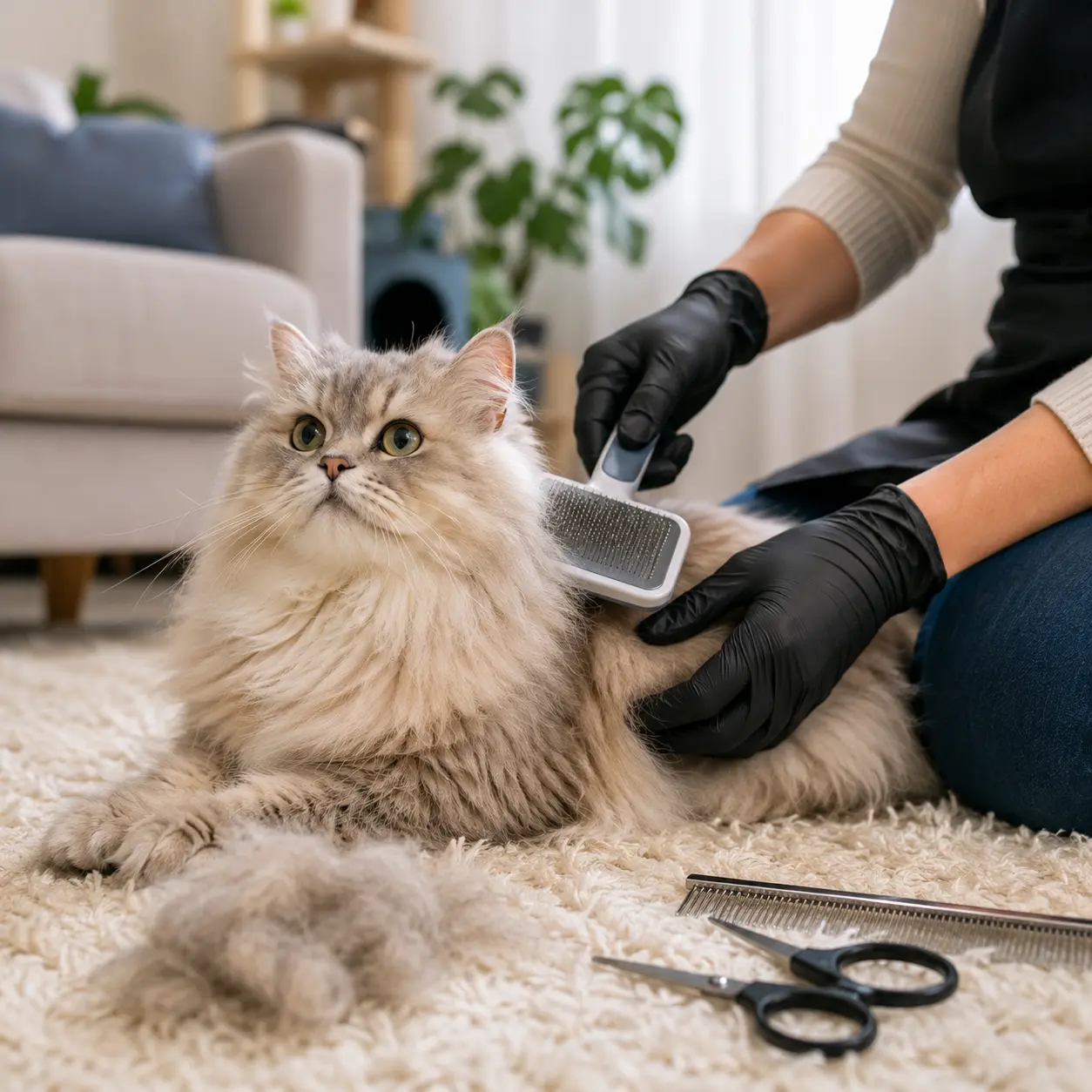
Matting is the most common reason cat owners end up booking a professional groom. A mat forms when loose fur tangles with new fur growth, and once it tightens close to the skin, a comb just glides over the top without actually separating it. For long-haired breeds like Persians, prevention matters as much as fixing the problem — see our guide on grooming a Persian kitten to build good habits early.
If you’ve tried combing a knot for more than a minute and it hasn’t budged, stop. Pulling on a tight mat hurts the cat and can tear the skin underneath, especially on thin-skinned areas like behind the ears, under the arms, and around the belly. Long-haired breeds like Persians and Maine Coons mat the fastest, but any cat with a thick undercoat can develop mats during shedding season.
A professional groomer uses de-matting tools and clippers designed to work close to the skin without nicking it. Trying to cut a mat out with household scissors is one of the most common ways cats get accidentally injured at home.
2. A Strong Odor That Doesn’t Go Away After a Bath
Cats are naturally clean animals, so a persistent smell usually points to something specific rather than general dirtiness. It could be oil buildup in the coat, a dirty anal gland, ear wax buildup, or trapped debris in a mat that’s holding onto moisture and bacteria.
A home bath washes the surface but doesn’t address glands, ears, or matted sections where the smell is actually coming from. If the odor comes back within a day or two of bathing, that’s a sign the cause hasn’t been treated, only masked.
3. Excessive Shedding or a Dull, Greasy Coat
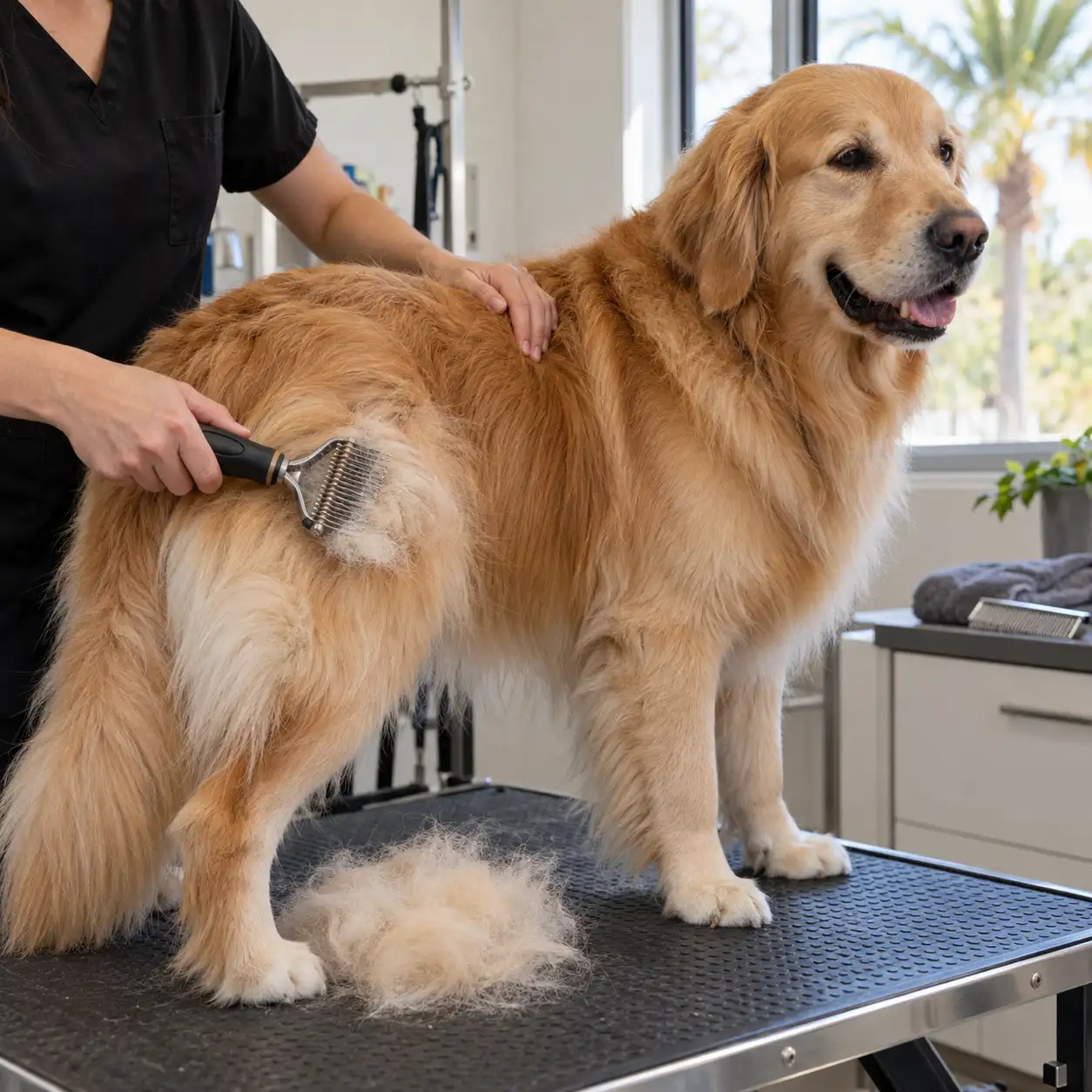
Some shedding is normal, especially with the heat in Abu Dhabi pushing cats to blow their coat more than they might in cooler climates. But if you’re finding fur everywhere, the coat looks dull instead of glossy, or it feels greasy no matter how often you brush, the undercoat likely needs proper de-shedding.
A professional deshedding treatment removes the loose undercoat that regular brushing at home tends to miss. This isn’t just cosmetic. A cat that ingests too much loose fur while self-grooming is at higher risk of hairballs and, in some cases, intestinal blockages.
4. Overgrown, Curling Nails
Indoor cats don’t wear their nails down the way outdoor cats do, so nails that curl inward and start digging into the paw pad are more common than owners expect. You’ll usually notice it as limping, reluctance to walk on hard floors, or a cat that seems more irritable when its paws are touched.
Nail trims sound simple, but cats can be surprisingly hard to hold still for one, and cutting too close to the quick causes bleeding and pain. If your cat has ever bitten or scratched during a nail trim attempt, a groomer with proper restraint technique and the right tools makes this far safer for both of you.
5. Skin Irritation, Flaking, or Visible Parasites
Excessive scratching, red patches, flaky skin, or small black specks in the fur (a sign of flea dirt) all point to a skin or coat issue that a bath alone won’t resolve. Abu Dhabi’s climate, hot and humid for much of the year, creates conditions where skin irritation and parasites can develop quickly if not caught early.
A groomer will often spot these issues during a full-body check, something that’s easy to miss during a rushed home bath. Catching it early usually means a quicker, cheaper fix than waiting until the irritation spreads.
6. Your Cat Won’t Let You Groom Them at Home
Some cats tolerate brushing for thirty seconds before they’ve had enough. Others won’t allow it at all. If every grooming attempt turns into a wrestling match, that’s a sign to bring in someone trained to handle a nervous or resistant cat, not a reason to give up on grooming altogether.
This is especially true for cats that become anxious or defensive during handling. A groomer experienced with nervous cats can read their body language, work in shorter sessions, and use calming techniques to make grooming more manageable. Specialized anxious cat grooming can be particularly helpful for pets that struggle with routine handling.
7. It’s Been More Than 6-8 Weeks Since the Last Groom
Even a cat with no obvious problems benefits from a grooming check every six to eight weeks, longer-haired breeds may need it more often. This is less about waiting for a visible sign and more about staying ahead of one. Nails, ears, and coat condition can go from fine to overdue in a matter of weeks, especially with the heat and dust common in Abu Dhabi.
Sticking to a routine schedule also means shorter, easier sessions each time, instead of a long, difficult one because everything built up at once.
Home Bath vs. Professional Groom: What Each One Actually Covers
| Task | Home Bath | Professional Groom |
| Surface dirt and light odor | Yes | Yes |
| De-matting close to the skin | No | Yes |
| Undercoat de-shedding | Partial | Yes |
| Nail trimming | Difficult, risky | Yes |
| Ear cleaning | Rarely done properly | Yes |
| Anal gland check | No | Yes |
| Skin/parasite check | Easy to miss | Yes |
| Safe handling of anxious cats | Depends on owner | Yes |
What a Professional Cat Groom in Abu Dhabi Usually Involves
A full groom typically covers a proper bath and blow-dry, de-shedding, de-matting where needed, nail trimming, ear cleaning, and a general health check of the skin and coat. Some cats need all of this every visit, others just need the basics topped up. A groomer will usually assess the coat first and tell you what’s actually needed rather than running through a fixed checklist regardless of condition. If you’re looking into what a standard session covers, Cat Grooming in Abu Dhabi breaks down the process and what’s included at each visit.
Before choosing a grooming option, consider whether cat grooming at home in Abu Dhabi or a salon appointment would be more suitable for your cat’s temperament and routine.
For cat owners across the city. Pet grooming in Abu Dhabi covers both salon and mobile options, so you’re not stuck choosing between convenience and quality.
When to Book Instead of Waiting
If you’re seeing two or more of the signs above, especially matting, odor, or skin irritation, it’s worth booking sooner rather than later. These issues tend to get harder and more uncomfortable for the cat to fix the longer they’re left. A cat that’s overdue for grooming for months often needs a longer, more involved session than one that’s kept on a regular schedule.
For cats that don’t do well with car rides or unfamiliar spaces, mobile pet grooming in Abu Dhabi brings the groomer to your home instead, which tends to be a calmer experience for cats that get stressed easily.
Frequently Asked Questions
How do I know if my cat’s mats are too severe to comb out myself?
If a mat doesn’t loosen after gentle combing for about a minute, or if it’s tight against the skin, stop and let a groomer handle it. Forcing it can tear the skin, which is more common than most owners realize.
Can I just shave my cat instead of dealing with mats?
A full shave (a “lion cut”) is sometimes the safest option for severe matting, but it should be done by a professional with clippers designed for skin safety. Scissors at home are a common cause of accidental cuts.
Is professional grooming safe for older cats?
Yes, in most cases. Older cats often benefit more from professional grooming since they groom themselves less effectively and are more prone to matting, especially around the hips and lower back. A groomer can also work in shorter, gentler sessions if the cat has joint stiffness.
How often should indoor cats get professionally groomed?
Most indoor cats do well with a groom every 6-8 weeks. Long-haired breeds, or cats prone to matting, may need it every 4-6 weeks.
Does professional grooming help with hairballs?
It can. Regular de-shedding removes loose fur before the cat ingests it during self-grooming, which is one of the main contributors to hairballs.