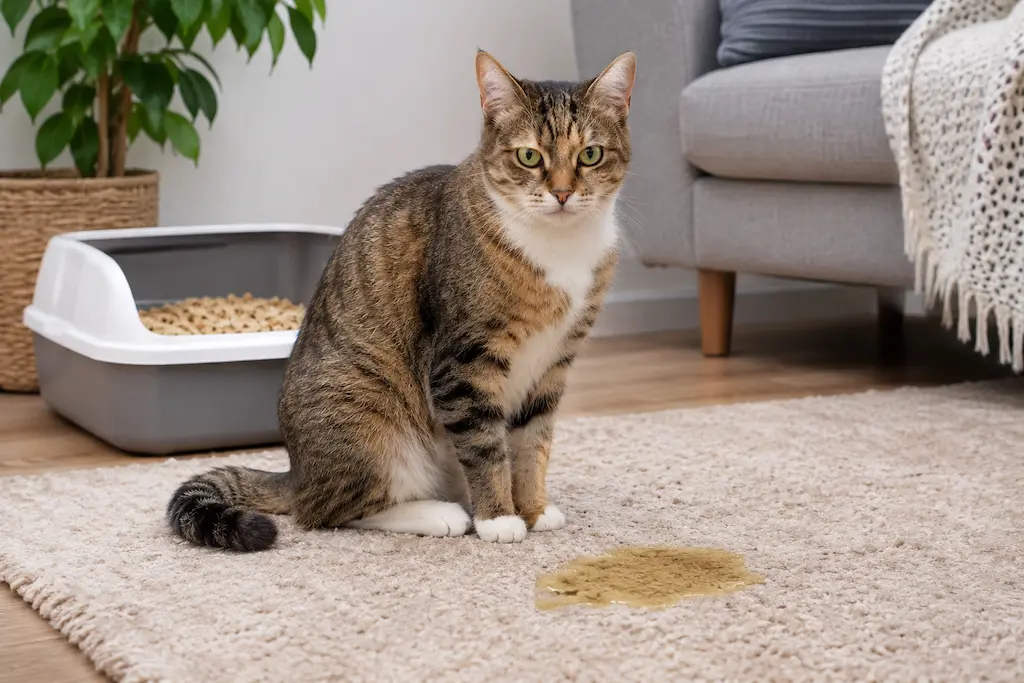
Finding urine on your sofa, bed or floor when your cat has always used the litter box can be frustrating and concerning. While it may seem like a behavioural issue, inappropriate urination can sometimes indicate an underlying health problem that needs attention.
Consider a two-year-old ginger cat from Khalifa City, Abu Dhabi. His owner noticed small puddles beside the sofa and initially suspected he was reacting to new furniture. However, during a routine grooming visit, the groomer noticed that he flinched when his abdomen was touched and frequently licked himself. His owner subsequently arranged a veterinary examination to investigate the behaviour.
Cats rarely stop using their litter boxes without a reason. Urinary discomfort, stress, changes in their environment and litter box preferences can all contribute to this behaviour.
Understanding why your cat is peeing outside the litter box is the first step towards addressing the problem. This guide explains the common causes, warning signs that require veterinary attention, and practical ways to help your cat return to consistent litter box habits.
What Are the Most Common Causes of a Cat Peeing Outside the Litter Box?
The reasons generally fall into three categories: medical conditions, litter box problems and behavioural changes. Some cats may experience more than one contributing factor.
Medical causes:
- Urinary tract infections: Infections can cause discomfort and frequent urination, making it difficult for cats to use their litter boxes normally.
- Cystitis: Bladder inflammation, sometimes associated with stress, can cause pain and frequent attempts to urinate.
- Bladder crystals or stones: These can irritate the urinary tract and interfere with normal urination.
- Kidney disease: Changes in kidney function can increase thirst and urine production.
- Diabetes: Increased thirst and urination may lead to more frequent accidents.
- Arthritis or joint pain: Older cats may struggle to climb into high-sided litter boxes.
- Constipation or digestive problems: Discomfort can affect a cat’s litter box habits.
- Hyperthyroidism: This condition, particularly in older cats, can contribute to changes in drinking and urination habits.
Litter box problems:
- The box is not cleaned frequently enough.
- A new litter type or strong fragrance makes it unpleasant.
- The box is too small, too deep or covered.
- The location is noisy, busy or difficult to access.
- There are not enough litter boxes for the number of cats in the household.
Stress and behavioural factors:
- Moving home, introducing new furniture or welcoming a new baby or pet.
- Conflict with another cat in the household.
- Territorial marking or spraying, particularly in unneutered cats.
- Anxiety or changes in daily routines.
- Insufficient environmental enrichment or stimulation.
Indoor cats can also be affected by changes in their surroundings. New furniture, household routines, unfamiliar smells and changes in their living environment may contribute to stress-related litter box problems.
How Do You Stop a Cat From Peeing Outside the Litter Box?
Before making changes to your cat’s behaviour or litter box, rule out possible medical causes. Once your veterinarian has assessed your cat’s health, the following steps can help address the problem.
1. Book a Veterinary Check First
Peeing outside the litter box can be an early sign of urinary discomfort or another medical condition. Arrange a veterinary examination and explain what you have noticed, including how frequently your cat urinates, how much urine she passes and where the accidents occur.
Your vet may recommend a urine test or other examinations to identify the underlying problem. Avoid assuming the behaviour is simply a bad habit before medical causes have been ruled out.
2. Clean Accidents Properly
Cats may return to previously soiled areas if urine odour remains. Ordinary household cleaners do not always remove the compounds responsible for lingering urine smells.
Use an enzymatic cleaner specifically designed for pet urine. These products help break down urine residues and odours. Avoid ammonia-based cleaners because their smell can resemble urine and may encourage repeat marking.
3. Fix the Litter Box Setup
An unsuitable litter box can discourage even a well-trained cat from using it. Review the following factors:
- Number: Provide one litter box per cat, plus one extra. Place them in separate areas where possible.
- Size: Choose a box large enough for your cat to turn around comfortably, ideally around one and a half times her body length.
- Litter: Unscented, clumping litter is a good starting point for many cats.
- Cleaning: Scoop waste daily and wash the box regularly using mild soap and water.
- Location: Choose a quiet, accessible area away from noisy appliances and food bowls.
If you introduce a new litter type, mix it gradually with the existing litter to help your cat adjust.
4. Try an Uncovered Litter Box
Some cats dislike covered litter boxes because they feel enclosed or have difficulty monitoring their surroundings. If your cat uses a covered box, try removing the lid and observing whether her habits improve over the following weeks.
Providing an open alternative can help you determine whether the cover is contributing to the problem.
5. Make the Litter Box Accessible for Older Cats
Older cats and those experiencing joint pain may struggle with high-sided litter boxes. A low-entry box can make access easier and reduce discomfort.
If your home has multiple floors, consider placing a litter box on each level so your cat does not have to climb stairs whenever she needs to urinate.
6. Reduce Stress at Home
Changes in the household can affect a cat’s sense of security. Provide hiding places, elevated resting areas, scratching posts and quiet spaces where your cat can retreat when needed.
Try to maintain consistent feeding, play and resting routines. Short daily play sessions can also provide mental stimulation and help reduce boredom.
Synthetic feline pheromone diffusers may help some cats feel more comfortable, although their effectiveness varies.
7. Address Tension in Multi-Cat Households
Cats that appear comfortable together may still compete over important resources, including litter boxes, food and resting areas.
Provide separate litter boxes, feeding stations, water bowls and resting spaces. Place these resources in different parts of the home to reduce competition and prevent one cat from blocking another’s access.
8. Avoid Punishment
Shouting, scolding or rubbing your cat’s nose in urine will not resolve the underlying problem. Punishment can increase anxiety and make stress-related behaviours worse.
Instead, focus on identifying the cause, improving the litter box environment and rewarding positive habits without creating additional stress.
9. Manage Previously Soiled Areas
After cleaning an accident spot thoroughly, temporarily restrict access if possible. You can also change how your cat uses the area by introducing a resting or play space, depending on the location.
This may help discourage repeated accidents while you address the underlying cause.
10. Be Patient and Consistent
Improving litter box habits can take time, particularly when stress or environmental changes are involved. Keep a record of accidents, litter box changes and any improvements you notice.
Sharing these observations with your veterinarian can help identify patterns and determine whether further assessment is needed.
Signs It’s More Than Just a Litter Box Problem
Changes in urination can sometimes indicate a medical condition that requires prompt attention. Watch for the following warning signs:
- Straining to urinate: Repeated attempts to pee with little or no urine coming out may indicate a urinary blockage. This is a life-threatening emergency, particularly in male cats, and requires immediate veterinary attention.
- Blood in the urine: Pink, red or visibly bloody urine should be assessed by a veterinarian.
- Crying or yowling: Vocalising while using the litter box may indicate pain or discomfort.
- Excessive urination or thirst: Passing unusually large amounts of urine or drinking much more water than usual can indicate an underlying health condition.
- Frequent genital licking: Repeated licking around the genital area may be associated with urinary irritation or discomfort.
- Loss of appetite or vomiting: These symptoms, particularly alongside changes in urination, need veterinary assessment.
- Sudden behavioural changes: A cat that previously used the litter box consistently but suddenly starts having accidents may have an underlying medical or environmental issue.
- Panic or unusual behaviour: Hiding, restlessness or visible distress may accompany pain or stress-related problems.
- Eating non-food items: Consuming materials such as plastic, fabric or other objects may indicate pica and should be discussed with a veterinarian.
Repeated attempts to urinate, even when only a few drops come out, should never be ignored. If your cat is straining or unable to pass urine, seek emergency veterinary care rather than trying to resolve the problem at home.
When a Groomer Can Help
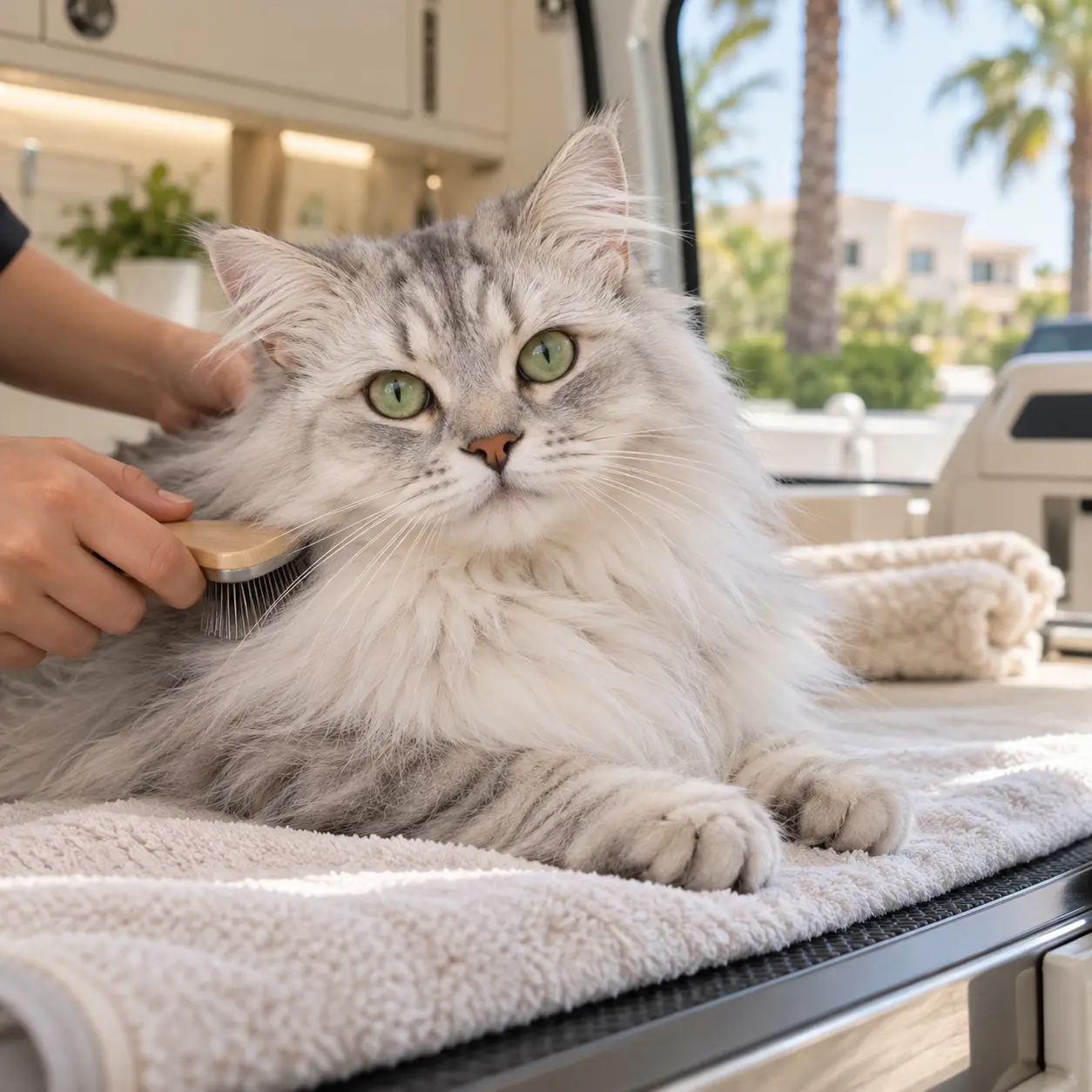
A groomer cannot diagnose urinary problems or treat their underlying causes. However, regular grooming provides an opportunity to observe changes in a cat’s coat, skin and hygiene that owners may sometimes overlook.
Urine staining around the hindquarters, matted fur, skin irritation or sensitivity to touch may indicate that your cat needs additional attention. These observations should be shared with a veterinarian when they accompany changes in urination or other signs of discomfort.
For cats that become anxious during car journeys or visits to unfamiliar environments, mobile cat grooming in Abu Dhabi offers grooming in a more familiar home setting.
During a grooming session, our team can:
- Gently clean urine-stained fur and address matting where appropriate.
- Check the coat and skin for irritation or visible abnormalities.
- Keep the grooming process calm and suited to the cat’s comfort.
- Recommend veterinary attention if something appears unusual.
If you would like to discuss your cat’s grooming needs, you can contact our team.
Conclusion
When a cat starts peeing outside the litter box, the behaviour usually has an underlying reason. Urinary discomfort, stress, changes in the home environment and unsuitable litter box conditions can all contribute.
Start with a veterinary examination to rule out medical problems. Once your cat’s health has been assessed, focus on keeping the litter box clean, providing a comfortable setup, reducing household stress and cleaning accident spots thoroughly.
Pay attention to changes in urination, especially straining or passing only small amounts of urine, as these can require urgent veterinary attention.
With the right approach and consistency, many cats can return to healthier litter box habits.
FAQs
Why is my cat suddenly peeing outside the litter box?
Sudden changes in litter box habits can indicate urinary discomfort, other medical conditions or stress. Arrange a veterinary check to identify the cause before making behavioural changes.
Is my cat peeing outside the litter box on purpose?
No. Cats generally do not urinate outside their litter boxes out of revenge. The behaviour is more often associated with medical discomfort, stress or dissatisfaction with the litter box setup.
How many litter boxes do I need?
A common recommendation is one litter box per cat, plus one extra. Place them in separate, quiet and easily accessible areas of your home.
What cleaner should I use on cat urine?
Use an enzymatic cleaner specifically designed for pet urine. These products help break down urine residues and odours. Avoid ammonia-based cleaners.
Can a mobile groomer help if my cat pees outside the litter box?
A mobile groomer cannot treat urinary problems but may notice urine-stained fur, skin irritation or other visible changes during grooming. A veterinarian should assess any changes in urination.