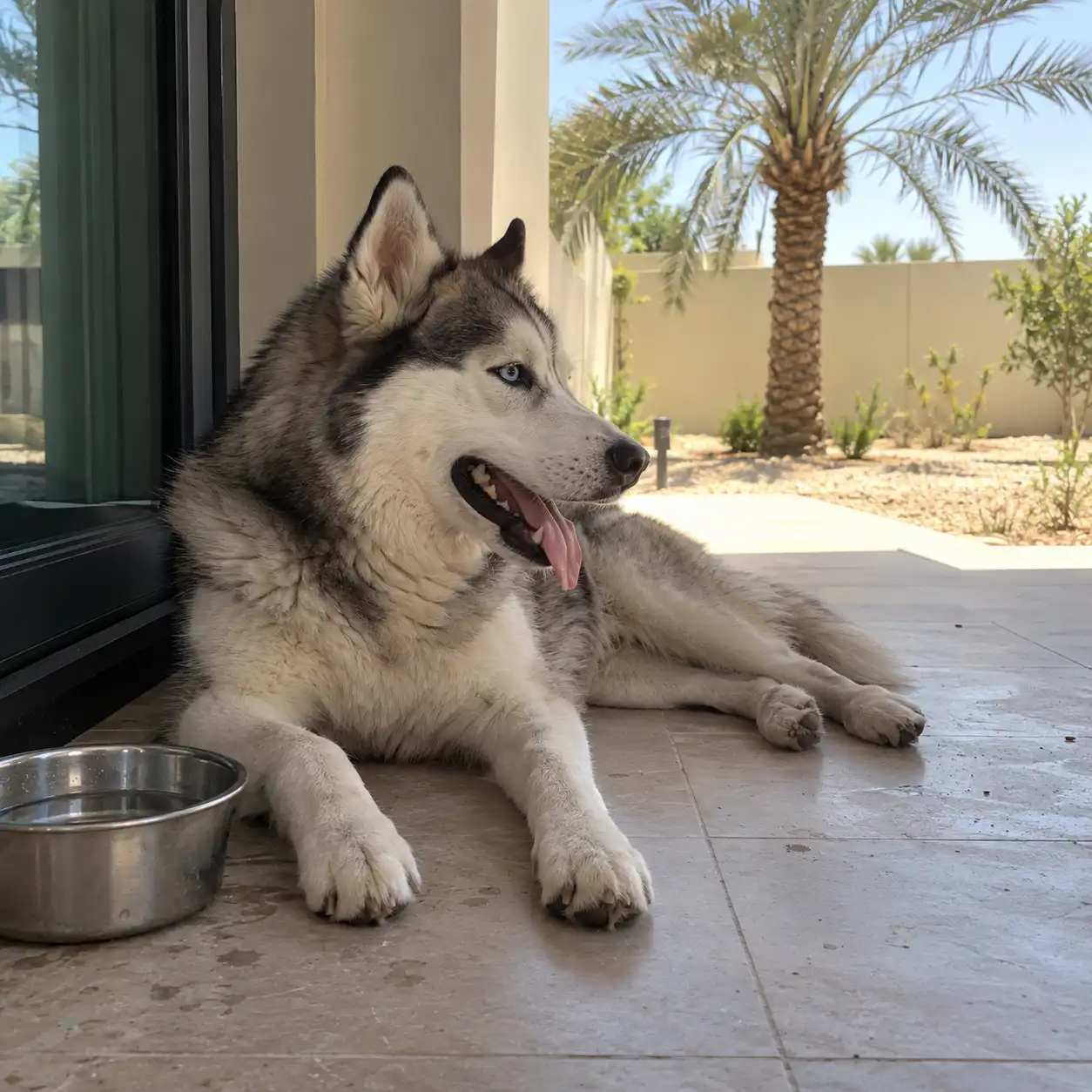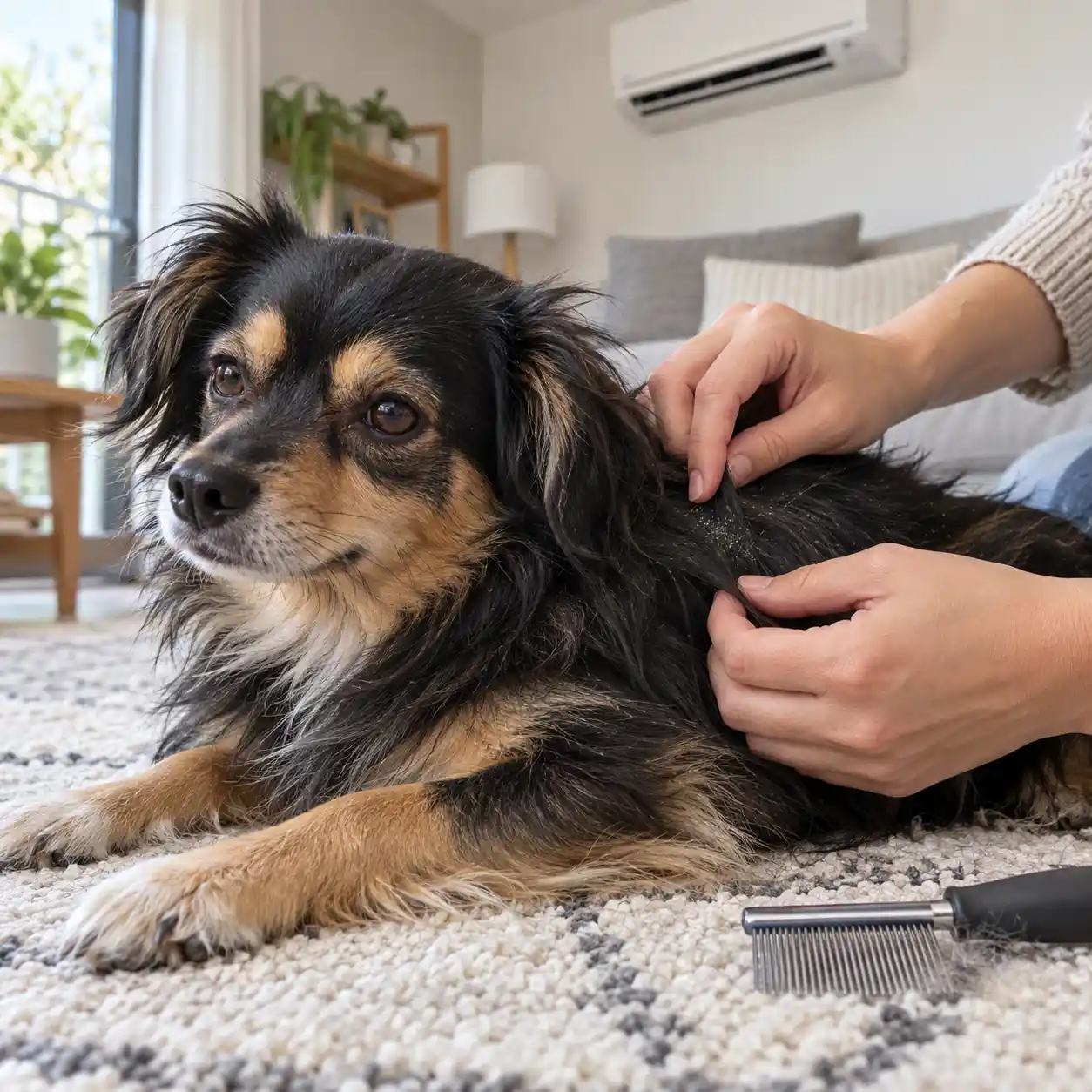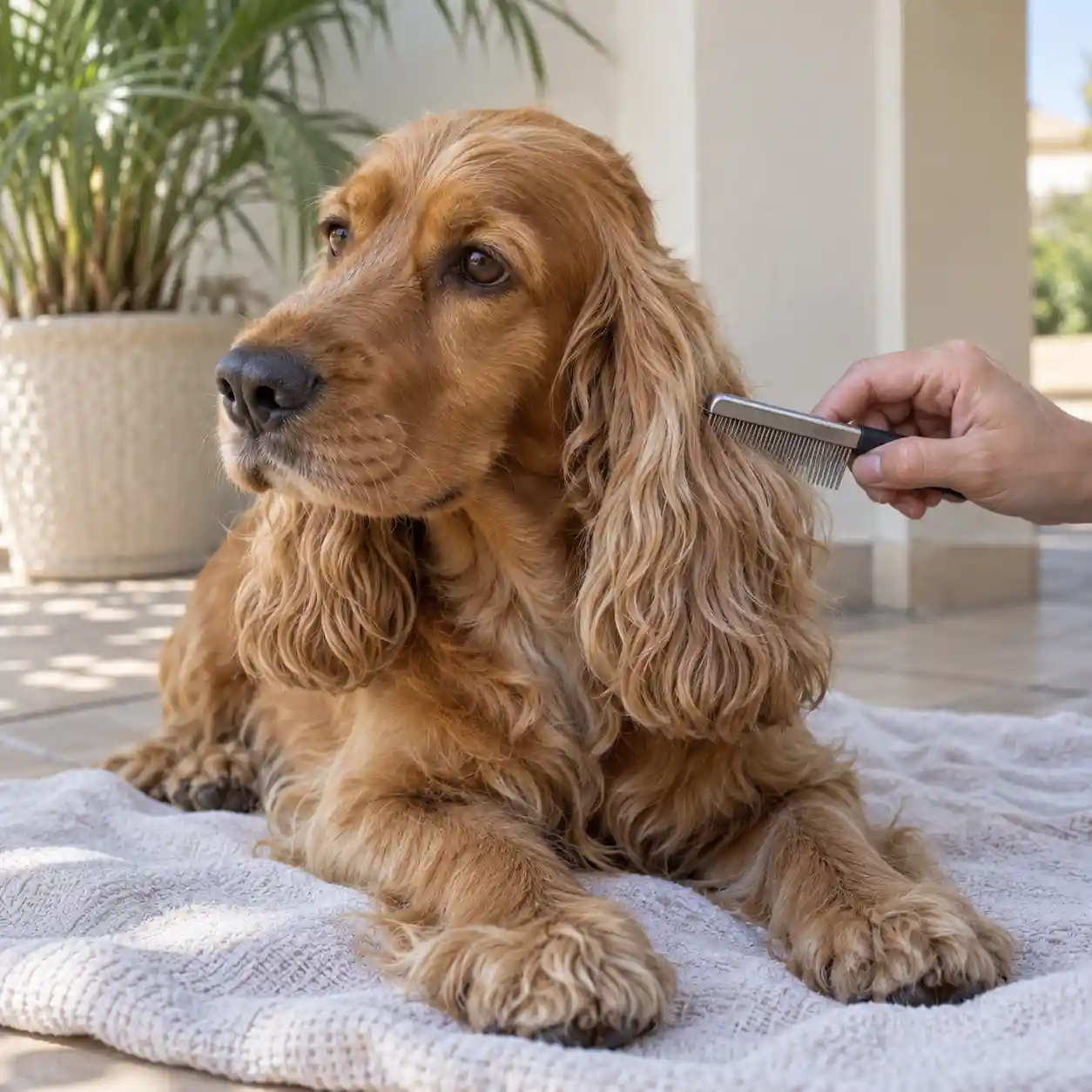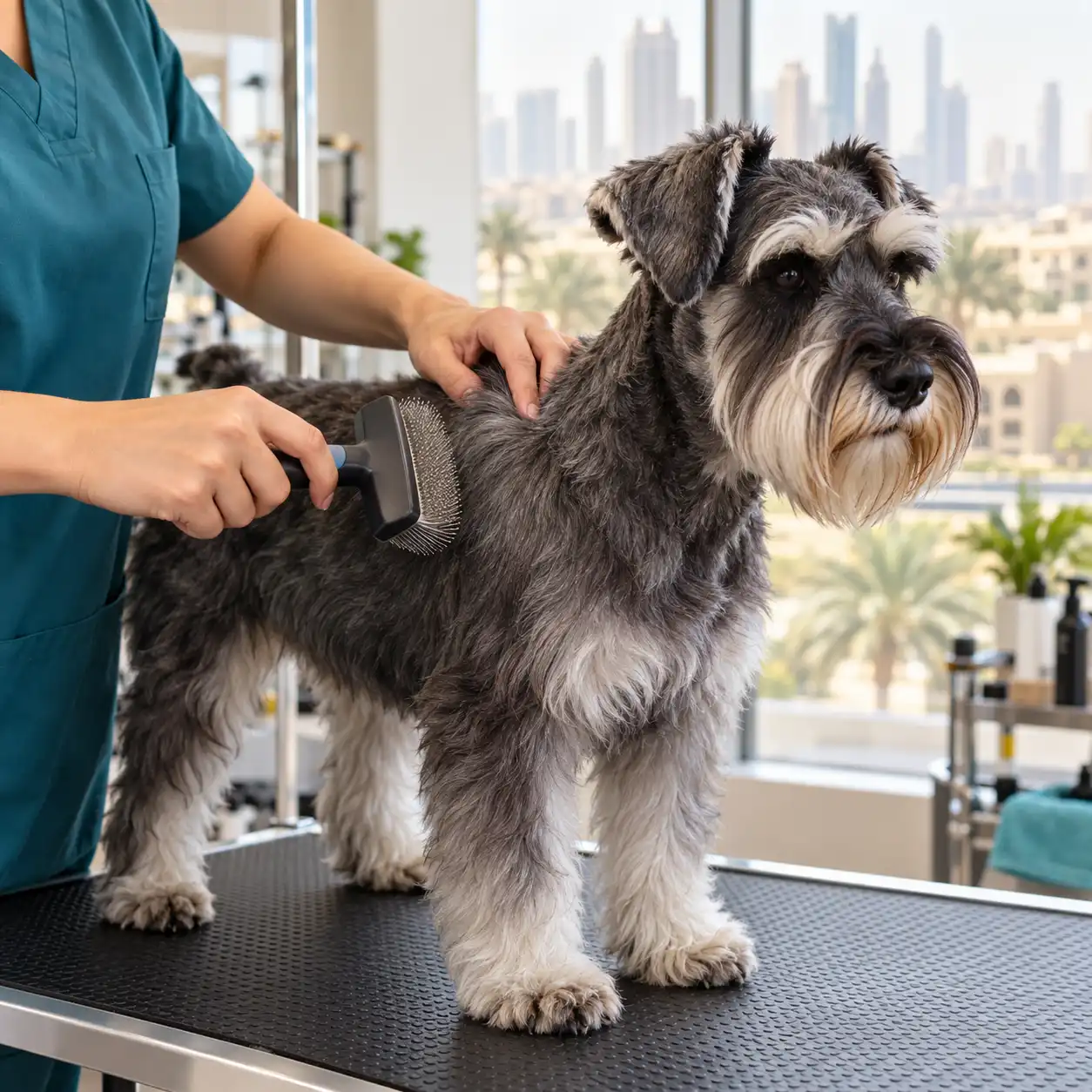
Living in a hot climate like the UAE can make shedding a year-round challenge, especially for double-coated breeds like Golden Retrievers and Huskies. Regular brushing helps, but it may not remove all the loose undercoat trapped beneath the surface. When dead hair builds up, it can contribute to tangles, matting, and reduced airflow through the coat. That’s where professional de-shedding comes in. By safely removing loose, dead undercoat while preserving the protective guard hairs, this specialized grooming technique helps maintain coat condition, manage shedding, and support better skin hygiene in the Gulf’s warm, humid climate.
How Hair Grows and Falls Out
Every hair on your pet moves through a natural growth cycle that determines when it grows, rests, and eventually sheds:
| Stage | What happens |
| Anagen | Growth phase; the hair is actively lengthening. |
| Catagen | A short transition phase; active growth stops. |
| Telogen | Resting phase; the hair remains in the follicle but no longer grows. |
| Exogen | Release phase; the old hair detaches and falls out. |
Neighbouring hairs sit at different stages of the hair growth cycle at the same time. This is why a healthy pet sheds some hair regularly rather than losing its entire coat at once.
Double-coated breeds add another layer of complexity. Many have compound hair follicles, where a longer, coarser guard hair grows alongside several finer undercoat hairs. The undercoat provides insulation, while the guard hairs help protect the skin from environmental exposure. Because undercoat hairs can accumulate within the dense coat, effective de-shedding focuses on removing loose undercoat without damaging the healthy outer coat.
What Controls Shedding
In many mammals, the hair cycle responds to environmental signals and internal biological factors. Two important external influences are:
- Day length. Changes in daylight can influence hormonal signals, including melatonin and prolactin, which play a role in regulating seasonal hair growth and shedding.
- Temperature. Seasonal temperature changes can influence coat development and shedding, although their effects vary by species, breed, and individual animal.
In cooler climates, many double-coated dogs experience noticeable seasonal shedding, often called “blowing the coat,” particularly in spring and autumn. However, the timing and intensity vary between breeds and individual dogs, and not every dog follows a strict two-shed pattern.
Why Hot Climate Countries Change the Pattern
Countries at lower latitudes, including the UAE and its Gulf neighbours, experience less variation in daylight duration throughout the year than many northern regions. In Abu Dhabi, daylight generally ranges from approximately 10.5 to 13.5 hours across the year. Indoor pets may also spend much of their time in air-conditioned environments under artificial lighting, reducing their exposure to natural seasonal temperature changes.
These conditions can contribute to less predictable shedding patterns in some dogs. Instead of experiencing two clearly defined shedding seasons, they may release loose hair more continuously throughout the year. However, climate and indoor living conditions are only part of the picture. Breed, age, nutrition, stress, allergies, and underlying skin conditions can also affect shedding. Understanding why dogs shed so much in Abu Dhabi’s heat helps pet owners distinguish normal coat renewal from excessive shedding that may need veterinary attention.
Why Dead Undercoat Is the Real Problem
Hair entering the shedding phase does not always fall away immediately. In a dense double coat, loose hairs can become trapped among growing hairs, particularly when regular brushing does not reach the undercoat. Over time, this buildup can contribute to several coat and skin problems:
- Reduced airflow. Packed undercoat and matting can reduce air circulation through the coat, particularly when the hair becomes dense or compacted.
- Trapped moisture. Damp, matted fur can retain moisture close to the skin, increasing the risk of irritation and creating conditions that may contribute to bacterial or yeast overgrowth.
- Mats and tangles. Loose undercoat can tangle around growing hairs, especially behind the ears, on the thighs, and beneath the collar.
- Poor coat condition. Accumulated debris, tangles, and uneven distribution of natural skin oils can leave the coat looking dull and feeling rough.
This is why undercoat management is an important part of understanding pet coat and grooming requirements in Abu Dhabi’s climate. Regular brushing and appropriate de-shedding help remove loose hair, prevent excessive undercoat buildup, and keep the coat easier to maintain. Although de-shedding does not replace cooling, shade, hydration, or other measures to prevent heat stress, maintaining a clean, well-managed coat can support skin hygiene and coat health in the Gulf’s warm climate.
How Professional De-shedding Works
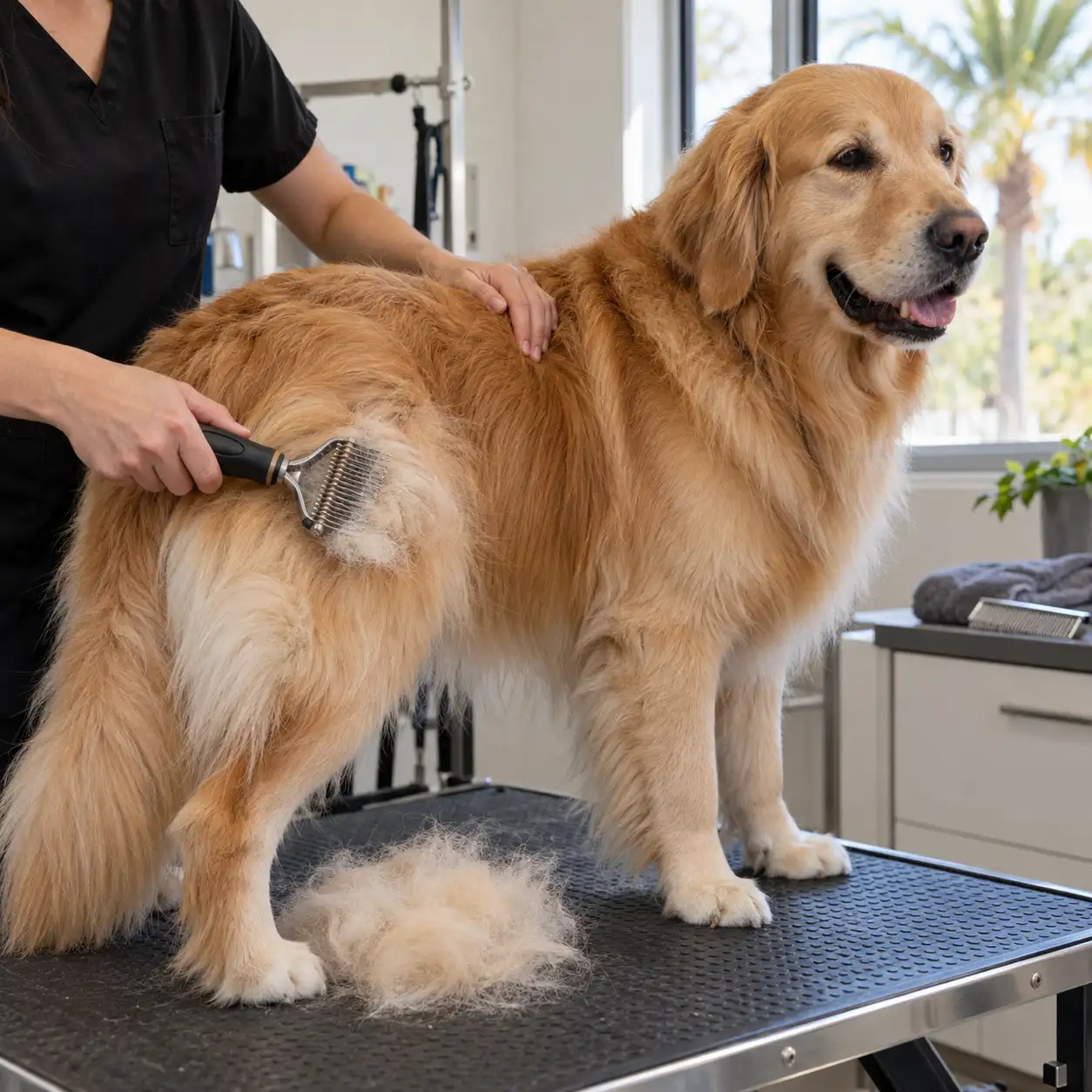
Professional de-shedding is designed to loosen and remove dead undercoat using appropriate bathing, drying, and brushing techniques rather than simply brushing harder. For suitable double-coated breeds, it can be a valuable part of professional pet grooming in Abu Dhabi.
A typical de-shedding treatment involves these steps:
- Pre-brushing. The groomer assesses the coat and gently works through loose hair and manageable tangles before bathing.
- Bathing with suitable shampoo and conditioner. Pet-safe products help cleanse the coat and improve manageability, allowing loose hair to be released more easily during drying and brushing.
- High-velocity drying. A controlled stream of air, with appropriate temperature and pressure, helps loosen and blow out dead undercoat. The groomer adjusts the technique according to the pet’s coat, skin condition, and tolerance.
- Undercoat rake and slicker brush. Suitable tools help remove remaining loose hair while minimising unnecessary pulling or damage to healthy guard hairs.
- Final comb-through. The groomer checks the coat for remaining tangles and compacted undercoat, paying particular attention to dense areas and the skin.
For heavily coated dogs, a single thorough session can remove a substantial amount of loose undercoat. The amount varies depending on breed, coat density, shedding stage, and the condition of the coat.
Tools for Home Maintenance
Choosing the right grooming tool depends on your pet’s coat type, hair length, and skin sensitivity. Using the correct tool and technique helps manage shedding without causing coat damage or skin irritation.
| Tool | Best for | Use with care |
| Undercoat rake | Suitable for double-coated breeds | Work gently in the direction of hair growth without scraping the skin. |
| Slicker brush | Many medium- and long-coated breeds | Use light pressure to avoid scratching or irritating the skin. |
| Metal comb | Checking for remaining tangles | Comb gently through the coat, checking down to the skin without forcing through knots. |
| Rubber curry brush | Many short-coated breeds | Useful for lifting loose surface hair during routine brushing. |
| Blade-style de-shedding tools | Selected coats when appropriate | Use sparingly and follow product guidance to avoid cutting or damaging healthy guard hairs. |
Common De-shedding Mistakes
- Shaving instead of de-shedding. Double-coated dogs generally should not be shaved simply to reduce shedding or help them cope with heat. Their guard hairs provide protection, and shaving can alter coat regrowth in some dogs. Severe matting or medical needs may require a different approach under professional guidance.
- Overusing blade tools. Excessive or aggressive use can damage healthy guard hairs, irritate the skin, and leave the coat uneven.
- Brushing only the surface. Brushing the top layer alone may leave loose undercoat trapped underneath. Use an appropriate tool to work gently through the coat in sections.
- Brushing a damp coat incorrectly. Dense or tangled fur that is not dried properly can mat, particularly in humid conditions. Follow coat-specific drying and brushing techniques to prevent pulling and breakage.
How Often to De-shed
The ideal de-shedding schedule depends on coat density, breed, shedding intensity, lifestyle, and skin health. The following table provides general starting points rather than a fixed schedule for every pet.
| Coat type | Home brushing | Professional de-shed |
| Thick double coat (Husky, Malamute) | 3–4 times a week, or as needed | Approximately every 4–6 weeks when appropriate |
| Medium double coat (Golden Retriever, German Shepherd) | 2–3 times a week, or as needed | Approximately every 6–8 weeks when appropriate |
| Short, dense coat (Labrador, Beagle) | Once or twice a week | Approximately every 8–12 weeks when appropriate |
| Long-haired cats | Daily gentle combing | As needed, often every 6–8 weeks for suitable grooming services |
These intervals should be adjusted according to the individual pet’s needs. Some animals require more frequent brushing during heavy shedding, while others need less intensive grooming. Cats may also need veterinary advice if they develop persistent tangles, skin irritation, or sudden changes in coat condition.
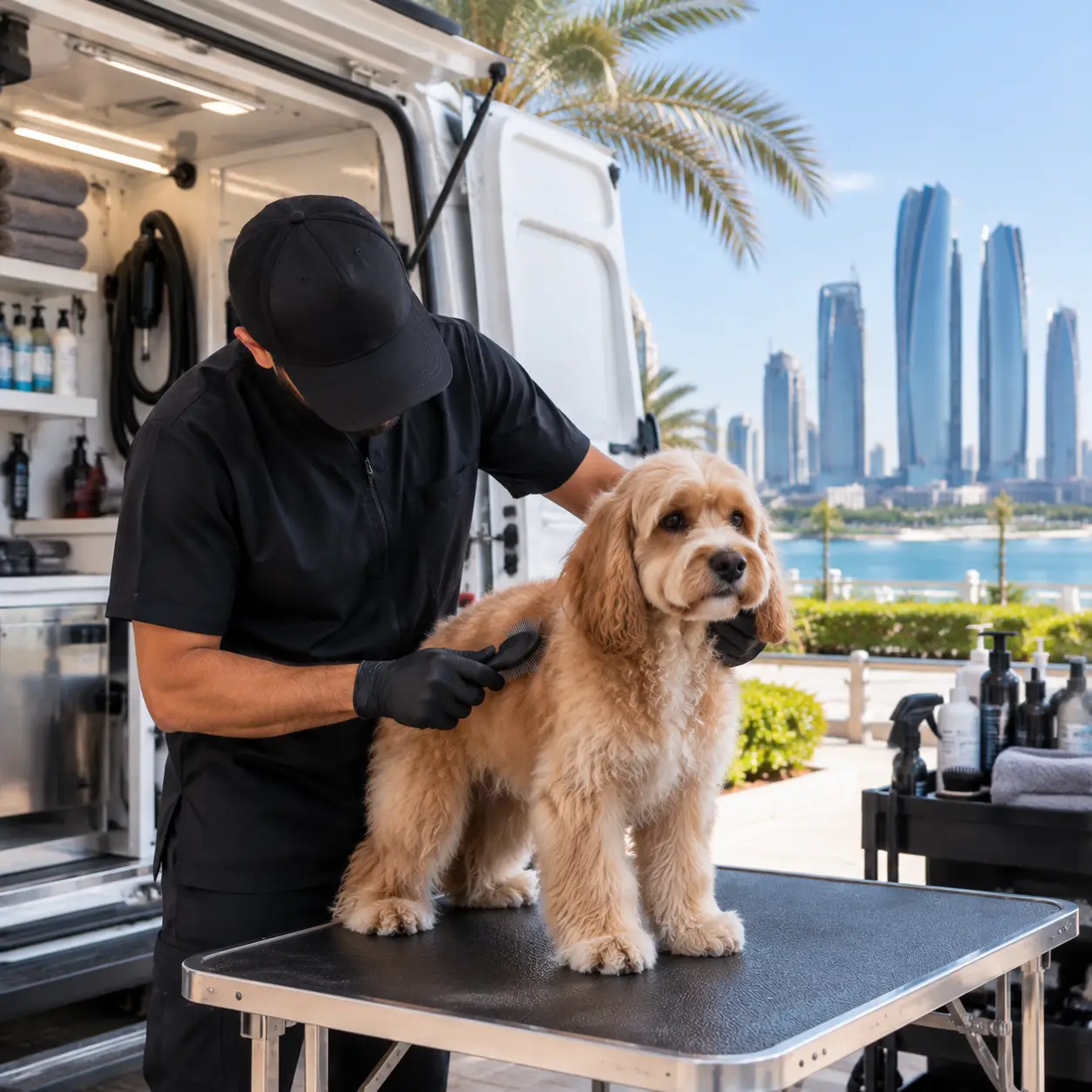
Understanding how grooming needs change with seasonal weather in the UAE can help you plan grooming sessions around changing coat conditions. Many double-coated dogs benefit from additional coat maintenance during heavier shedding periods, but the timing varies by breed and individual. Booking mobile pet grooming services can also make routine coat maintenance more convenient for pet owners across Abu Dhabi.
Frequently Asked Questions
Does de-shedding stop shedding completely?
No. Shedding is a natural part of the hair growth cycle, and no grooming treatment can stop it completely. De-shedding removes loose, dead undercoat in a controlled way, helping reduce the amount of loose hair around the home and prevent undercoat buildup.
Why does my dog shed all year in the UAE?
Some dogs shed throughout the year because coat renewal is influenced by breed, daylight exposure, indoor living conditions, and individual biology. Air conditioning and artificial lighting may contribute to less distinct seasonal shedding patterns, but persistent or sudden excessive shedding can also indicate nutritional, allergic, parasitic, or other skin-related problems.
Can cats be de-shed?
Yes. Cats can benefit from gentle, coat-appropriate grooming to remove loose hair and reduce tangles. Long-haired cats often need more frequent combing, which can also help reduce the amount of hair swallowed during self-grooming. Short-haired cats usually need less intensive maintenance. Avoid aggressive de-shedding tools, and consult a veterinarian if your cat develops mats, bald patches, or irritated skin.