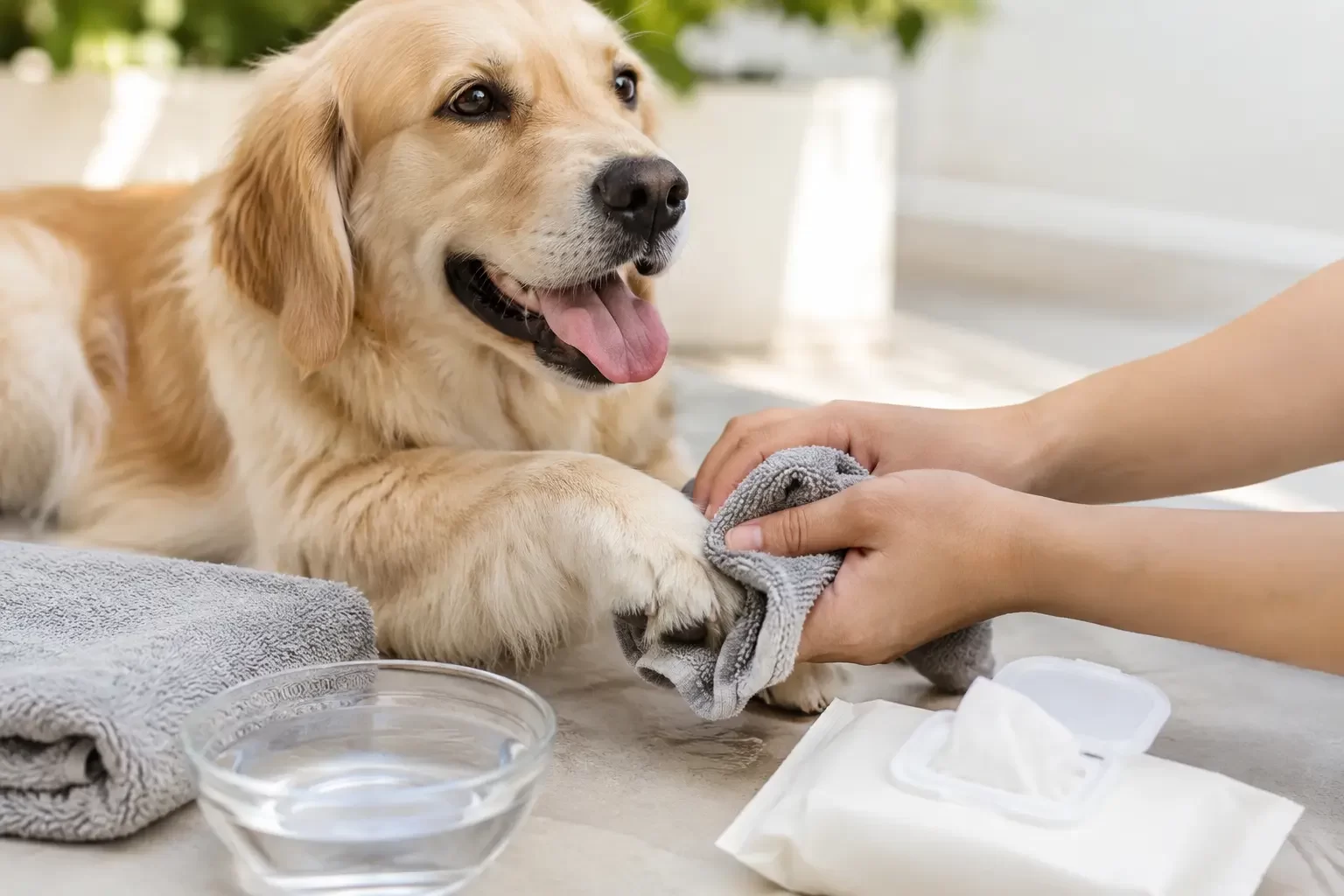
The safest way to clean your dog’s paws after walking on sand is to remove loose grains, rinse with fresh water, and dry carefully between the toes before getting into the car. Sand can collect around the paw pads and between the toes, where trapped grains may cause discomfort or irritation.
At Crazy Pets, we’ve been providing pet grooming in Abu Dhabi for over 20 years. Sandy paws are a familiar concern for dog owners who enjoy outdoor walks and beach visits. A simple cleaning routine can help keep your dog’s paws comfortable and prevent sand from spreading throughout the car and home.
This guide explains how to remove sand safely, what supplies to carry, and when your dog may need professional grooming or veterinary attention.
Why Sand Is Harder to Clean Than You Think
Sand doesn’t always sit on the surface of your dog’s fur. Fine grains can become trapped between the toes, around the paw pads, and within thick or curly coats. When mixed with moisture or saltwater, sand may cling to the fur and become harder to remove.
For dogs spending time around coastal areas such as Al Raha, regular paw cleaning is a useful part of waterfront pet care. Removing sand before it becomes trapped in the coat can reduce discomfort and make cleaning easier once you return home.
Dogs with long hair around their paws may need additional attention because sand can become caught in tangles. Gentle brushing followed by fresh-water rinsing usually removes loose sand without unnecessary scrubbing.
Cleaning Your Dog’s Paws Before Getting in the Car
Doing this at the beach means less mess in the car and less sand against your dog’s skin on the way home. Here’s a simple order that works:
- Brush or shake off the loose sand. Use your hands or a soft brush on the paws, legs and belly. Don’t rub hard, because dry sand is gritty and can scratch skin.
- Rinse with fresh water. Bring a bottle or two and pour water over the paws, working between the toes and pads. This also washes off salt water, which can dry out and irritate the skin.
- Dry properly. Use a towel and press it between the toes. Damp paws that stay wet for hours can get irritated, and trapped moisture is a common reason dogs start licking at their feet.
- Check the pads. Look for redness, small cuts, shell pieces, splinters or anything stuck between the toes. Sand can hide small things.
- Wipe with pet-safe wipes if needed. Choose unscented wipes made for dogs. Skip anything with strong fragrance or alcohol.
What to Keep With You
You don’t need much. These are enough for most beach trips:
- Two bottles of fresh water
- A couple of old towels (one for your dog, one for the car seat)
- A soft brush
- Pet-safe wipes
- A seat cover or blanket for the car
Do Dog Boots Help?
Properly fitted dog boots can help protect paws from hot surfaces, sharp debris, and sand getting trapped between the toes. However, some dogs need time to become comfortable wearing them, and poorly fitted boots can cause rubbing.
Introduce boots gradually at home before using them outdoors. Choose breathable materials and check the fit regularly.
Dog-safe paw balm may help moisturise dry paw pads, but it does not protect against burns from hot sand or pavement. Avoid hot walking surfaces even when your dog is wearing protective products.
Watch Out for Hot Sand
Sand and pavement in Abu Dhabi can become dangerously hot during the warmer months, particularly under direct sunlight.
Before allowing your dog to walk on sand, check the surface with the back of your hand. If it feels uncomfortably hot after a few seconds, avoid letting your dog walk on it. This is only a rough precaution, not a guarantee that the surface is safe.
Plan outdoor walks during cooler hours, choose shaded routes where possible, and watch for signs of discomfort.
If your dog starts limping, repeatedly lifting its paws, or refusing to walk, move it to a cooler surface immediately. Blisters, peeling skin, or suspected paw burns require prompt veterinary attention.
When Does Your Dog Need Professional Grooming After a Beach Walk?
Most dogs only need a thorough rinse, gentle brushing, and proper drying after walking on sand. However, professional grooming can help when sand becomes trapped deep within the coat or is difficult to remove at home.
Consider professional grooming if:
- Sand remains trapped in thick or curly fur after gentle brushing and rinsing.
- Your dog’s coat feels gritty even after cleaning.
- Sand becomes caught in matted dog hair.
- Long fur around the paws repeatedly collects sand and debris.
- Your dog needs thorough coat cleaning that is difficult to manage at home.
A professional groomer can assess the coat, gently remove loose debris, address suitable tangles, and clean areas that are difficult to reach.
For dogs with dense or long coats, dog grooming in Abu Dhabi can help remove stubborn sand buildup without repeated unnecessary bathing.
When Should You Contact a Veterinarian Instead?
Some problems need medical attention rather than another grooming session.
Contact a veterinarian if your dog develops:
- Persistent redness or swelling between the toes
- Limping or signs of pain
- Excessive paw licking or chewing
- Cuts, blisters, or suspected burns
- Discharge or an unusual smell from the paws
- A sharp object embedded in the paw pad
Avoid applying harsh cleaning products or attempting to remove deeply embedded objects at home.
A Few Extra Things to Keep in Mind
- Prevent sand ingestion. Dogs that dig, lick sandy toys, or repeatedly pick up sand-covered objects may accidentally swallow sand. Significant ingestion can cause digestive problems, including intestinal blockage. Contact a veterinarian if your dog develops vomiting, abdominal discomfort, or unusual lethargy after a beach visit.
- Avoid unnecessary shampooing. Fresh-water rinsing is often sufficient after a short beach walk. If a full bath is needed, use a suitable dog shampoo rather than human cleaning products.
- Check the paws again at home. Once your dog is relaxed, inspect the spaces between the toes and remove any sand you may have missed.
- Keep towels and bedding clean. Wash sandy towels and seat covers to prevent leftover grit from collecting in your dog’s resting areas.
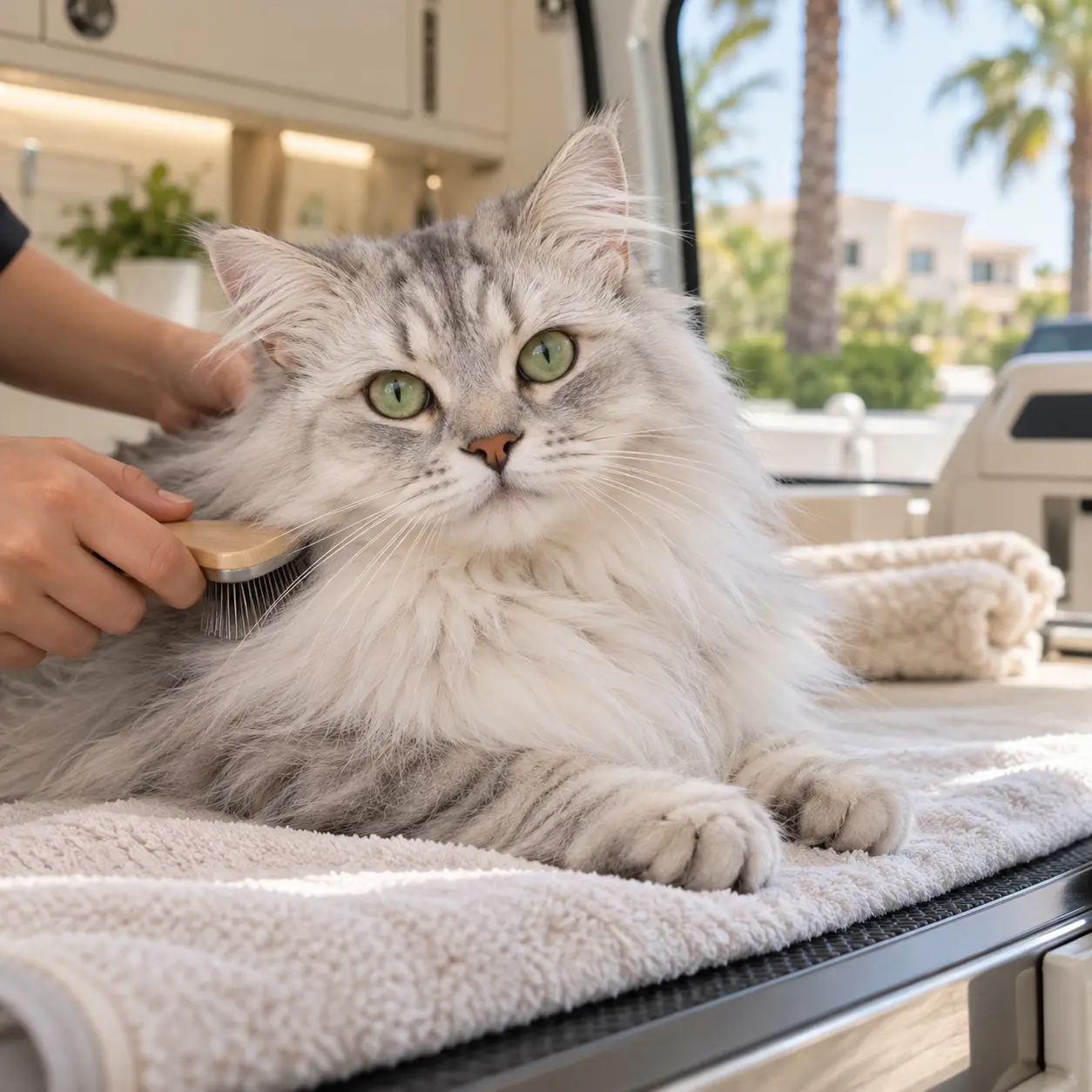
After a long beach visit, some dogs may be too tired or uncomfortable for another trip to a grooming salon. In these situations, mobile dog grooming allows routine coat cleaning to take place close to home.
However, dogs showing signs of pain, skin injury, or illness should receive veterinary attention before grooming.
Conclusion
Cleaning your dog’s paws after the beach is mostly about doing it in the right order: brush, rinse, dry and check, before anyone gets in the car. It keeps your dog comfortable and saves your car from months of hidden sand. And if the sand is deep in the coat or your dog’s skin looks irritated, a groomer can take care of what home cleaning can’t.
Frequently Asked Questions
How do I clean my dog after a beach visit?
Brush off loose sand, rinse your dog’s paws and coat with fresh water, and dry thoroughly, especially between the toes. If sand or salt remains trapped in the fur, a bath with dog-safe shampoo may be necessary.
Can I use baby wipes on my dog’s paws?
Dog-specific wipes are generally a better choice than baby wipes. Some baby wipes contain fragrances or other ingredients that may irritate your dog’s skin, particularly if your dog licks its paws afterward. Choose fragrance-free, alcohol-free pet wipes.
Do I need to bathe my dog after every beach trip?
No, a thorough freshwater rinse and proper drying are usually enough after a short beach visit. A full bath may be necessary if sand, salt, or other debris remains in the coat. Avoid frequent shampooing, which can irritate the skin.
Why does sand keep coming out of my dog’s fur after a bath?
Fine sand can become trapped deep in thick, long, or matted fur. Bathing without first removing loose sand may leave some grains behind. Gentle brushing before washing and thorough rinsing can help remove the remaining sand.
Is sand bad for dogs’ paws?
Sand is not usually harmful, but hot sand can burn paw pads. Trapped grains, salt, or sharp debris may also cause irritation or injury. Rinsing and inspecting your dog’s paws after sandy walks helps prevent discomfort.
How do you clean a dog’s paws after a walk?
For light dirt or dust, gently wipe the paws with a damp cloth or dog-safe wipe. If the paws are heavily soiled, rinse them with lukewarm water. Check between the toes and dry thoroughly to prevent trapped moisture.
Can you use dog paw wipes after every walk?
Yes, dog-safe paw wipes can be used after walks when needed. Choose fragrance-free, alcohol-free wipes specifically formulated for dogs. However, avoid unnecessary wiping if the paws are already clean, especially if your dog has sensitive skin.
How often should you clean your dog’s paws?
Check your dog’s paws after every outdoor walk and clean them whenever they are dirty or exposed to irritating substances. Light dust may only require wiping, while mud or sand needs rinsing. Excessive washing or shampooing can dry out the skin.
How do you clean muddy dog paws without a bath?
Soften dried mud with lukewarm water, then gently remove it using a damp cloth or a shallow container of clean water. Clean around the paw pads and between the toes, rinse away any remaining dirt, and dry thoroughly. A full-body bath is usually unnecessary.