How long should you wait after spay surgery before grooming your pet? Most dogs and cats should wait approximately 10–14 days before returning to bathing or full grooming, and only once their veterinarian confirms the surgical incision has healed properly. Some pets need longer, depending on their recovery.
Spaying involves abdominal surgery, so even if your pet seems energetic after a few days, the underlying tissues are still healing. Bathing, excessive movement, pressure around the abdomen, or stressful handling can interfere with recovery.
Understanding which grooming activities are safe, which should wait, and when to seek veterinary advice can help protect your pet while keeping them comfortable.
Why Should Grooming Wait After Spay Surgery?
Spaying removes the reproductive organs through a surgical procedure. The incision needs time to close and heal without unnecessary irritation.
Grooming too soon may cause several problems:
- Moisture exposure: Bathwater and shampoo can irritate the surgical area and increase infection risks.
- Physical pressure: Lifting, repositioning, or restraining your pet may put tension on healing tissues.
- Excessive movement: Struggling during grooming can potentially disturb stitches or reopen the incision.
- Skin irritation: Grooming tools and products may irritate sensitive tissue surrounding the wound.
Even if external stitches are not visible, your pet may have internal sutures that still require protection.
Veterinary aftercare instructions should always take priority over a general grooming schedule.
How Long After Spaying Can a Dog Be Groomed?
For most dogs, 10–14 days is a reasonable minimum recovery period before considering a full grooming appointment.
However, this is not an automatic clearance date. Your veterinarian must confirm that the incision has healed sufficiently and that your dog can tolerate normal handling.
When Can You Bathe a Dog After Spaying?
Avoid bathing your dog during the initial recovery period.
A bath can expose the incision to moisture, and shampoo or friction may irritate healing skin.
Wait until your veterinarian approves bathing, even if the incision appears closed.
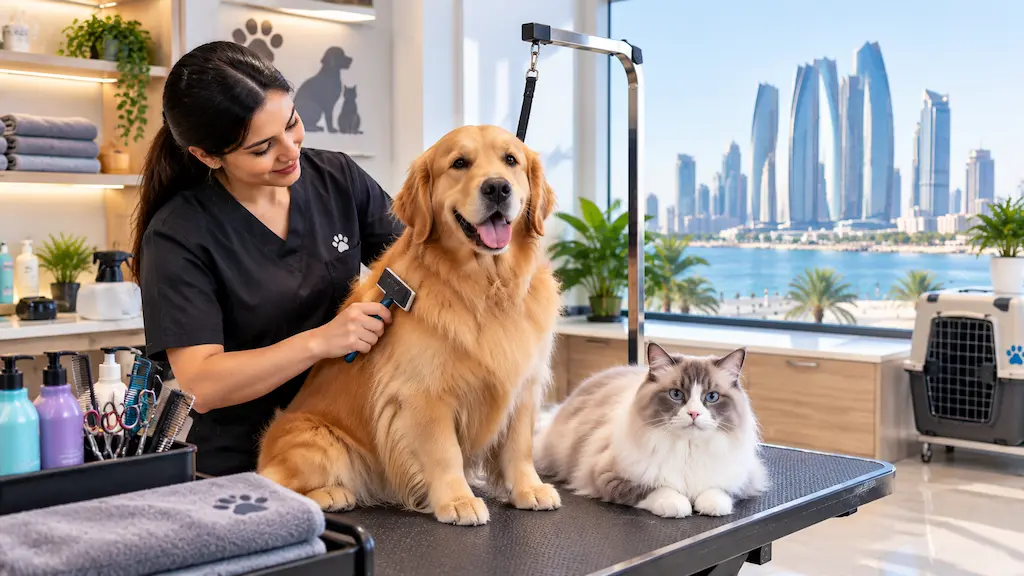
Once your dog has recovered, professional dog grooming in Abu Dhabi can help restore their usual bathing, brushing, and coat maintenance routine.
For general maintenance after recovery, grooming frequency depends on breed and coat type. Long-haired dogs, for example, often need more frequent brushing than short-haired breeds.
How Long After Spaying Can a Cat Be Groomed?
Most cats also need approximately 10–14 days of restricted activity and wound protection after spaying.
Cats are naturally good at maintaining their coats, so professional grooming is rarely an immediate priority after surgery.
During recovery, avoid unnecessary handling, bathing, or brushing around the abdomen.
Can Cats Groom Themselves After Spaying?
Normal self-grooming away from the incision may continue, provided your veterinarian has not advised otherwise.
However, licking, chewing, or scratching the surgical incision can introduce bacteria or damage the wound.
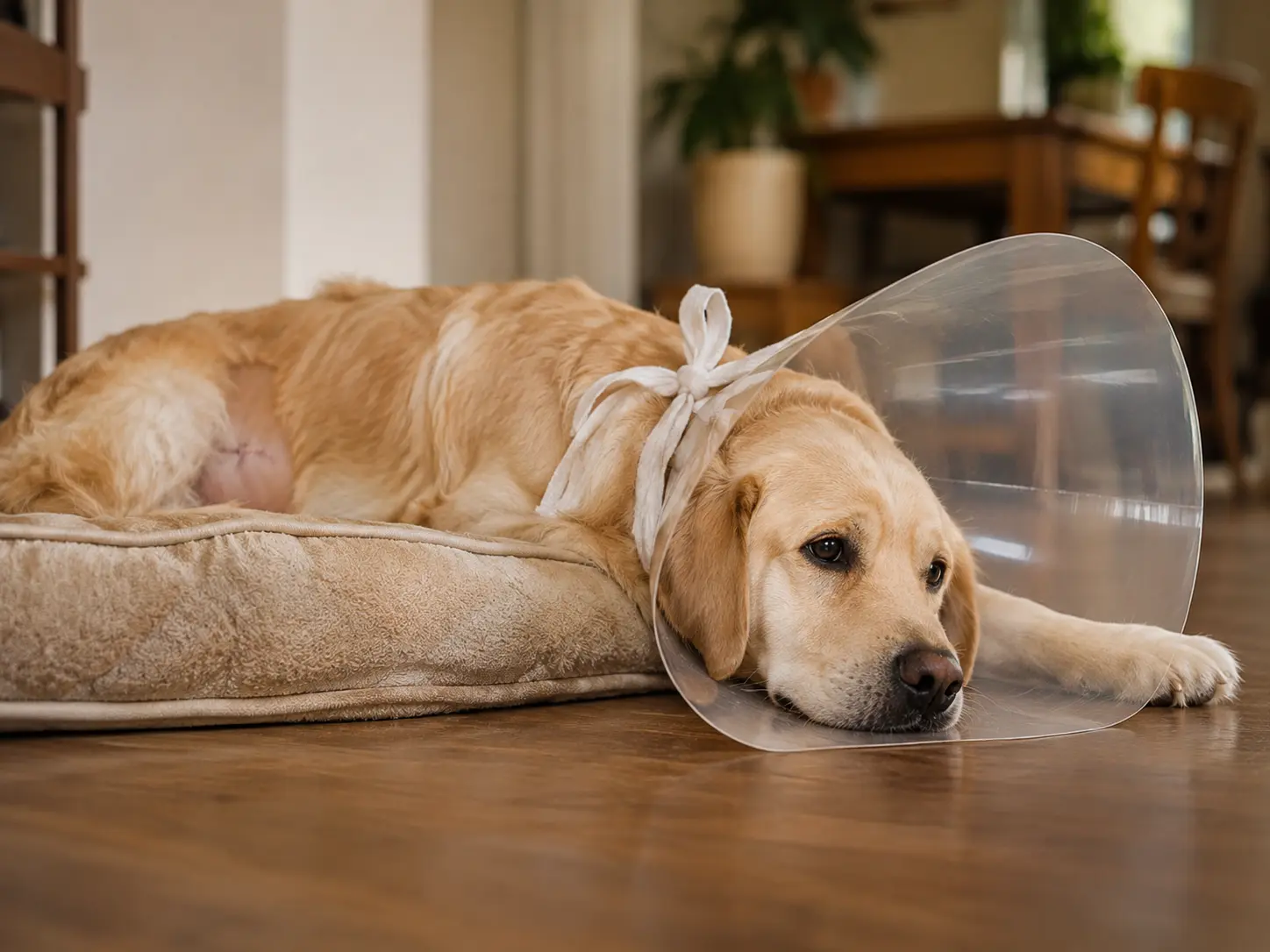
Your veterinarian may recommend an Elizabethan collar or recovery suit to prevent access to the incision.
Do not remove protective equipment simply to allow grooming unless your veterinarian approves.
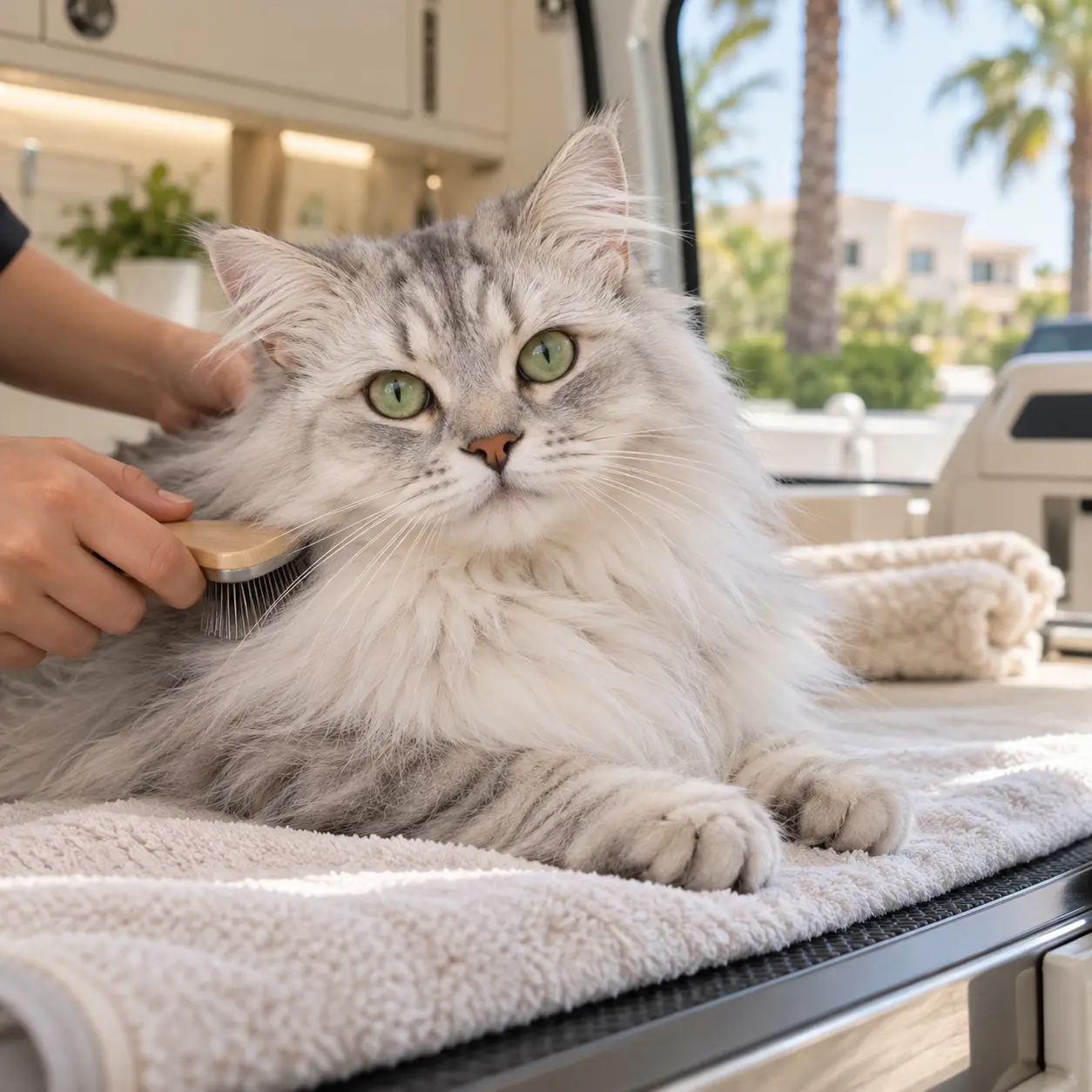
Once your cat has healed and received veterinary clearance, cat grooming in Abu Dhabi can help with coat maintenance, particularly for long-haired cats prone to tangling.
For everyday coat care after recovery, understanding the do’s and don’ts of cat grooming can help prevent unnecessary skin irritation and stressful handling.
What Grooming Can You Do During Spay Recovery?
Not every grooming activity carries the same risk. However, comfort and incision protection should always come first.
| Grooming activity | Recommendation after spaying |
| Full bathing | Wait until incision healing and veterinary clearance |
| Gentle brushing | Only away from the incision, if your veterinarian permits |
| Nail trimming | Usually postpone until clearance unless medically necessary |
| Haircut or clipping | Wait until your pet has recovered |
| Wiping paws | Gentle, local cleaning may be acceptable if the incision stays dry |
| Professional full grooming | Resume only after veterinary approval |
Can You Brush Your Dog or Cat After Spaying?
Light brushing on areas away from the abdomen may be possible if your veterinarian allows it and your pet remains comfortable.
Use a soft brush, avoid pulling the coat, and stop immediately if your pet appears uncomfortable.
Do not brush around the incision, apply pressure to the belly, or force your pet into positions that stretch healing tissues.
If your pet has developed painful mats near the surgical area, ask your veterinarian how they should be managed.
Can You Trim Your Pet’s Nails After Spaying?
Nail trimming does not involve the incision directly, but restraining a recovering animal can cause unnecessary stress and movement.
For routine nail care, waiting until veterinary clearance is generally the safer option.
If an overgrown or damaged nail requires urgent attention, contact your veterinarian rather than attempting a difficult trim at home.
How Do You Know When the Spay Incision Has Healed?
A healing incision should generally become progressively less red or swollen, with its edges remaining closed and dry.
Before resuming grooming, look for the following:
- The incision is fully closed.
- There is no discharge, bleeding, or unpleasant smell.
- Redness and swelling have resolved.
- Your pet is moving comfortably.
- Your veterinarian has confirmed recovery is progressing normally.
Important: An incision that looks healed from the outside may still have tissues recovering underneath. Appearance alone is not sufficient to approve bathing or professional grooming.
Warning Signs That Require Veterinary Attention
Contact your veterinarian promptly if you notice:
- Increasing redness or swelling
- Yellow, green, or bloody discharge
- An incision that opens or begins bleeding
- Persistent licking or chewing at the wound
- Unusual pain, weakness, or lethargy
- Repeated vomiting or refusal to eat
Severe weakness, collapse, difficulty breathing, or significant bleeding requires emergency veterinary care.
Never apply shampoo, antiseptics, powders, or other products directly to the incision unless prescribed by your veterinarian.
When Can Professional Mobile Grooming Resume?
Professional grooming should resume only after your veterinarian confirms that your pet has recovered sufficiently for bathing, handling, and normal grooming activities.
Before scheduling an appointment, consider:
- Veterinary clearance: Confirm that the surgical wound has healed.
- Comfort: Make sure your pet can stand, move, and tolerate gentle handling.
- Coat condition: Mention any matting or sensitive areas that developed during recovery.
- Medical history: Inform the groomer about the recent surgery and any remaining restrictions.
Once cleared, mobile pet grooming can help your pet return to their normal coat and hygiene routine at home in Abu Dhabi.
If your dog needs an adjusted grooming schedule after recovery, how often a dog should be groomed explains how coat type, breed, and lifestyle influence routine grooming frequency.
Final Thoughts
If you’re wondering how long to wait after spay for grooming, the general guidance is approximately 10–14 days, but the safest timing depends on complete incision healing and veterinary clearance.
Avoid bathing, intensive brushing, nail trimming that requires restraint, and professional grooming during the initial recovery period. Gentle coat maintenance away from the incision may be possible when specifically approved by your veterinarian.
Your pet’s recovery comes first. Once healing is confirmed, regular grooming can safely become part of their routine again.
Frequently Asked Questions
Can I groom my dog 7 days after spaying?
A full grooming session is generally too early at seven days. Most pets still need restricted activity and incision protection. Follow your veterinarian’s instructions.
Can I use waterless shampoo after spaying?
Avoid waterless shampoos, sprays, and other grooming products near the incision. Even products that do not require rinsing may irritate healing skin. Ask your veterinarian before using them during recovery.
What if my pet gets dirty before the incision heals?
For minor dirt away from the incision, ask your veterinarian whether gentle local cleaning is appropriate. If urine, faeces, or another substance contaminates the surgical area, contact your veterinarian for cleaning instructions.
Can my pet be groomed while stitches are still present?
Routine professional grooming should generally be postponed until the veterinarian confirms the wound has healed sufficiently. Do not assume internal or dissolvable stitches mean bathing is safe.
What if my pet needs grooming but the incision is not healed after 14 days?
Do not proceed with grooming. Contact your veterinarian for reassessment and follow their recommendations. Some pets need longer recovery periods.