Your indoor cat might spend most of the day sleeping on the sofa, watching birds through the window, or occasionally racing around the house. But even with a comfortable lifestyle, getting their nutrition right is essential.
Finding the best cat food for indoor cats isn’t simply about buying the most expensive bag or choosing a product labelled “premium.” Indoor cats need sufficient animal protein, balanced fats, essential nutrients, and calories that match their activity levels.
So, what makes the best dry cat food for indoor cats? The answer depends on your cat’s age, weight, health, and eating habits. Here’s how to choose confidently.
What Nutritional Needs Do Indoor Cats Have?
Indoor cats share the same essential nutritional requirements as outdoor cats. However, their energy needs may differ, particularly when they spend more time resting than playing.
1. Animal Protein for Muscle Maintenance
Cats are obligate carnivores. They depend on nutrients from animal sources, including taurine, an essential amino acid.
Choose a nutritionally complete cat food that provides adequate, digestible protein. Chicken, turkey, fish, and other animal ingredients can contribute to this requirement.
A higher protein percentage alone doesn’t guarantee better food. The overall nutritional balance and ingredient quality matter more.
2. Balanced Calories and Healthy Fats
Indoor cats that move less may burn fewer calories, making portion control particularly important.
Dietary fat supplies energy and essential fatty acids that support normal skin and coat function. However, calorie-dense food can contribute to weight gain when portions are excessive.
Look for calorie information rather than assuming a product labelled “indoor” or “light” automatically suits your cat.
3. Fibre for Digestive Health
Moderate dietary fibre can support normal digestion and stool quality. Some indoor cat formulas contain fibre blends designed to help move swallowed hair through the digestive tract.
However, fibre does not replace brushing or appropriate veterinary care for recurring vomiting.
Regular coat maintenance helps control loose fur. For practical care guidance, your cat’s hair may be falling out that explains the difference between normal shedding and changes that deserve attention.
How to Choose the Best Dry Cat Food for Indoor Cats
Before buying a new bag of kibble, examine these five important factors.
1. Check the Nutritional Adequacy Statement
Look for food described as complete and balanced for your cat’s life stage.
Depending on the product’s market, the label may reference AAFCO nutritional profiles or FEDIAF guidelines.
Avoid using complementary foods as your cat’s main diet unless a veterinarian specifically recommends them.
2. Read the Ingredients Carefully
Look for clearly identified animal ingredients and a manufacturer that provides transparent nutritional information.
Remember:
- Ingredient lists are ordered by weight.
- Meat meals and properly processed animal by-products can provide valuable nutrients.
- Grain-free does not automatically mean healthier.
- Unfamiliar ingredients aren’t necessarily harmful.
A trustworthy manufacturer should be able to explain its formulation, quality-control practices, and nutrient analysis.
3. Compare Calories Per Serving
Two dry foods can have similar ingredients but considerably different calorie densities.
Check the kilocalories (kcal) per kilogram, cup, or serving. This helps you calculate portions without accidentally overfeeding.
4. Consider Your Cat’s Life Stage
| Cat’s needs | What to look for |
| Indoor kitten | Complete growth formula with adequate energy and nutrients |
| Healthy adult | Balanced adult-maintenance food |
| Neutered, less-active cat | Appropriate calorie density and controlled portions |
| Senior cat | Easily eaten, nutritionally appropriate food based on health |
| Overweight cat | Veterinarian-guided calorie management |
| Cat with medical conditions | Diet selected with veterinary guidance |
Age alone should not determine whether a senior cat needs reduced protein or a specialised diet. Its health and body condition are more important.
5. Evaluate Skin and Coat Condition
Appropriate nutrition supports healthy skin and fur, but shedding and tangles still require physical care.
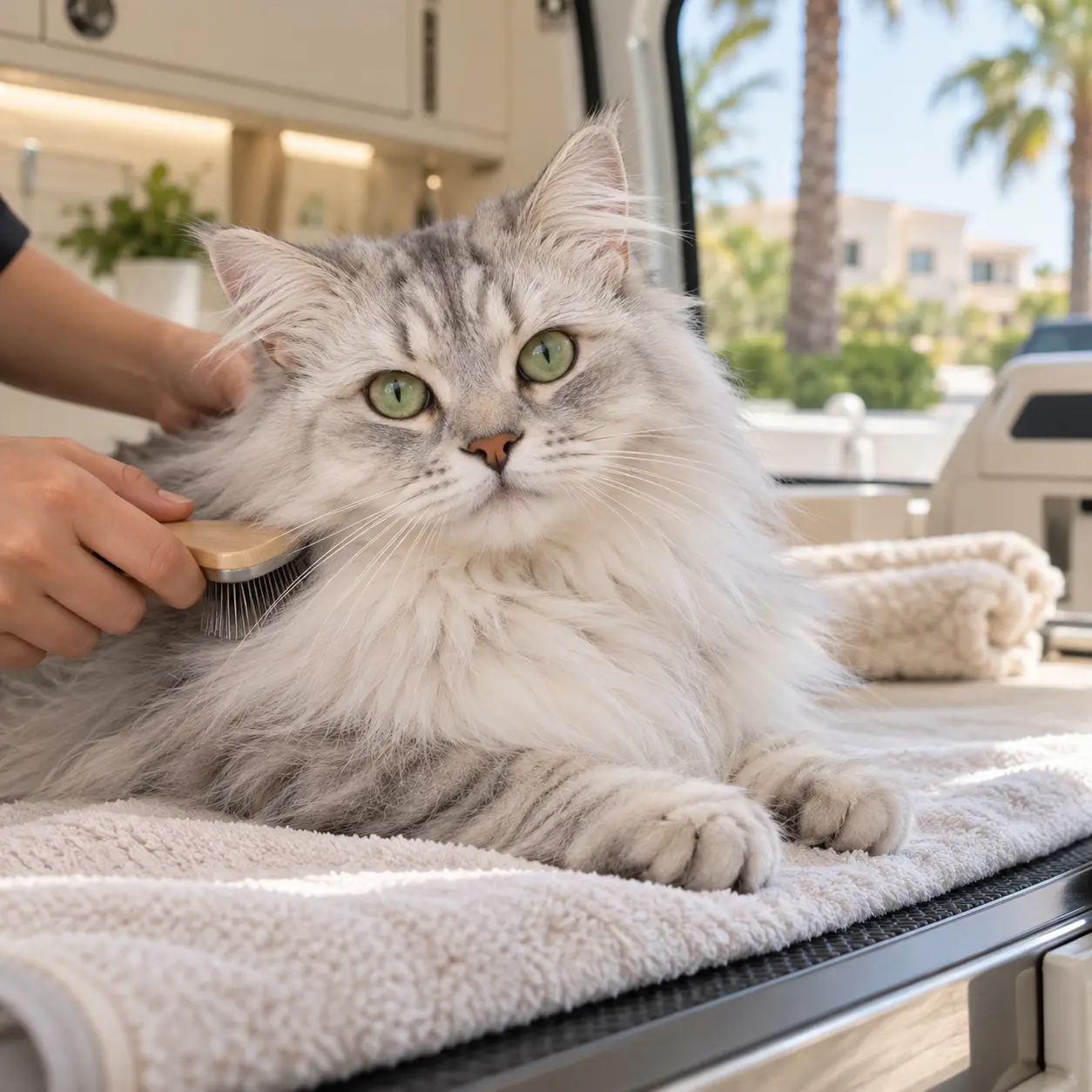
Routine brushing removes loose hair, while cat grooming in Abu Dhabi can help manage coat maintenance, particularly for long-haired cats that develop knots easily.
Persistent dandruff, bald patches, or excessive shedding should be assessed by a veterinarian rather than treated simply by switching foods.
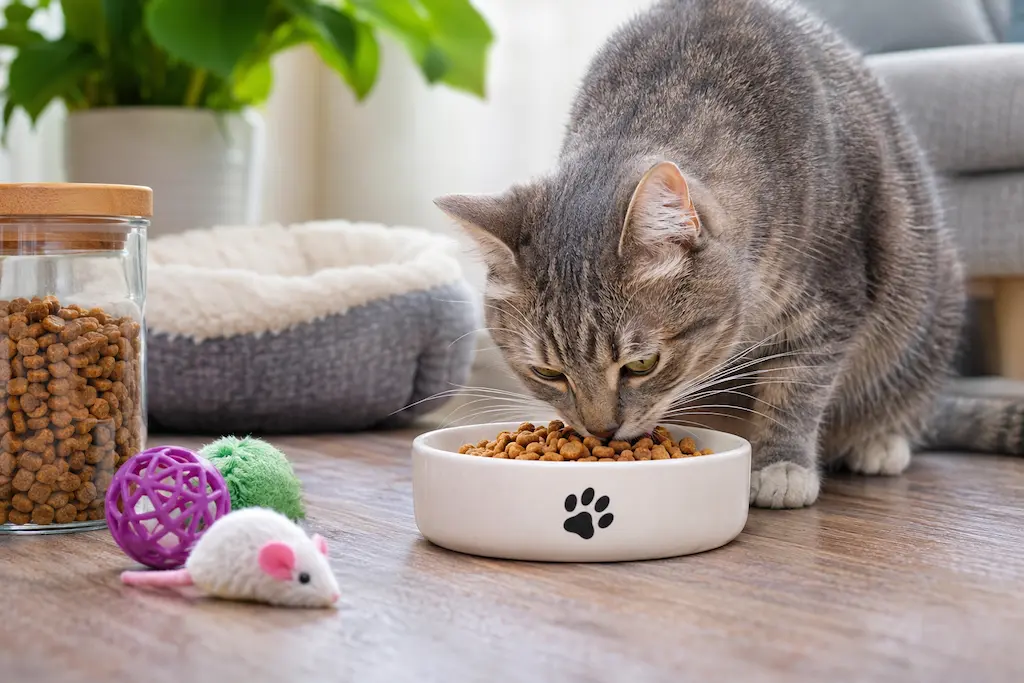
How Much Dry Food Should an Indoor Cat Eat?
There is no single correct portion for every indoor cat.
Daily food requirements depend on body weight, body condition, activity level, age, and whether your cat has been neutered.
For practical portion control:
- Start with the manufacturer’s feeding guide.
- Measure portions with a kitchen scale.
- Include treats in the daily calorie allowance.
- Divide food into regular meals when helpful.
- Monitor weight and body condition over time.
Avoid automatically refilling the bowl whenever it becomes empty. Unrestricted feeding can encourage overeating in some cats.
For cats that need to lose weight, ask your veterinarian to establish a safe calorie target. Sudden, severe food restriction can be dangerous.
Dry vs Wet Cat Food: Which Is Better?
Both wet and dry foods can provide complete nutrition when properly formulated.
| Dry food | Wet food |
| Convenient to store and portion | Provides substantially more moisture |
| Often more economical per calorie | May help increase total water intake |
| Useful for puzzle feeders | Often appealing to selective eaters |
| Requires particular attention to drinking water | Needs refrigeration after opening |
Is Mixing Wet and Dry Food a Good Idea?
For many healthy cats, a mixed diet is a practical option.
Wet food contributes moisture, while dry food offers convenience and works well in enrichment feeders.
Ensure both foods are nutritionally suitable and adjust their combined calories to avoid overfeeding.
Hydration tip: Provide clean water in accessible locations. Some cats prefer wide bowls or drinking fountains. Cats eating mostly dry food generally need to obtain more water through drinking.
Common Mistakes When Buying Indoor Cat Food
Avoid these common purchasing and feeding mistakes:
- Choosing food based only on packaging claims.
- Assuming grain-free food is always superior.
- Ignoring calories and portion sizes.
- Feeding adult-maintenance diets to growing kittens.
- Changing food abruptly instead of transitioning gradually.
- Buying oversized bags that may become stale.
- Assuming food alone can resolve every skin, coat, or hairball concern.
Good nutrition is only one part of responsible indoor cat care.
Cats also need play, stimulation, clean litter boxes, comfortable resting areas, and regular hygiene. pet grooming in Abu Dhabi can support routine coat and nail care as part of these wider needs.
If travel is stressful for your cat, mobile pet grooming offers a convenient way to maintain grooming routines without taking them to a salon.
Final Thoughts
Choosing the best dry cat food for indoor cats comes down to nutritional completeness, appropriate calories, suitable ingredients, and your cat’s individual requirements.
Look beyond attractive packaging, monitor body condition, maintain hydration, and adjust feeding as your cat’s needs change.
A well-chosen diet, combined with regular activity, grooming, and veterinary care, creates a strong foundation for a healthy, comfortable indoor life.
Frequently Asked Questions
Is dry food good for indoor cats?
Yes. Nutritionally complete dry food can be suitable for healthy indoor cats when fed in appropriate portions with adequate access to water.
Should indoor cats eat high-protein food?
Cats require sufficient high-quality protein, but the best protein level depends on the individual cat and its overall diet. More protein is not automatically better.
How do I know if my indoor cat is overweight?
You should generally be able to feel the ribs without pressing hard and see a waist from above. A veterinarian can assess body condition accurately.
How should I switch my cat to new dry food?
Introduce the new food gradually over approximately 7–10 days, increasing its proportion while reducing the old food. Some cats need a slower transition.
Does indoor cat food prevent hairballs?
Some formulas may support normal passage of swallowed hair, but no food can guarantee hairball prevention. Frequent vomiting warrants veterinary advice.