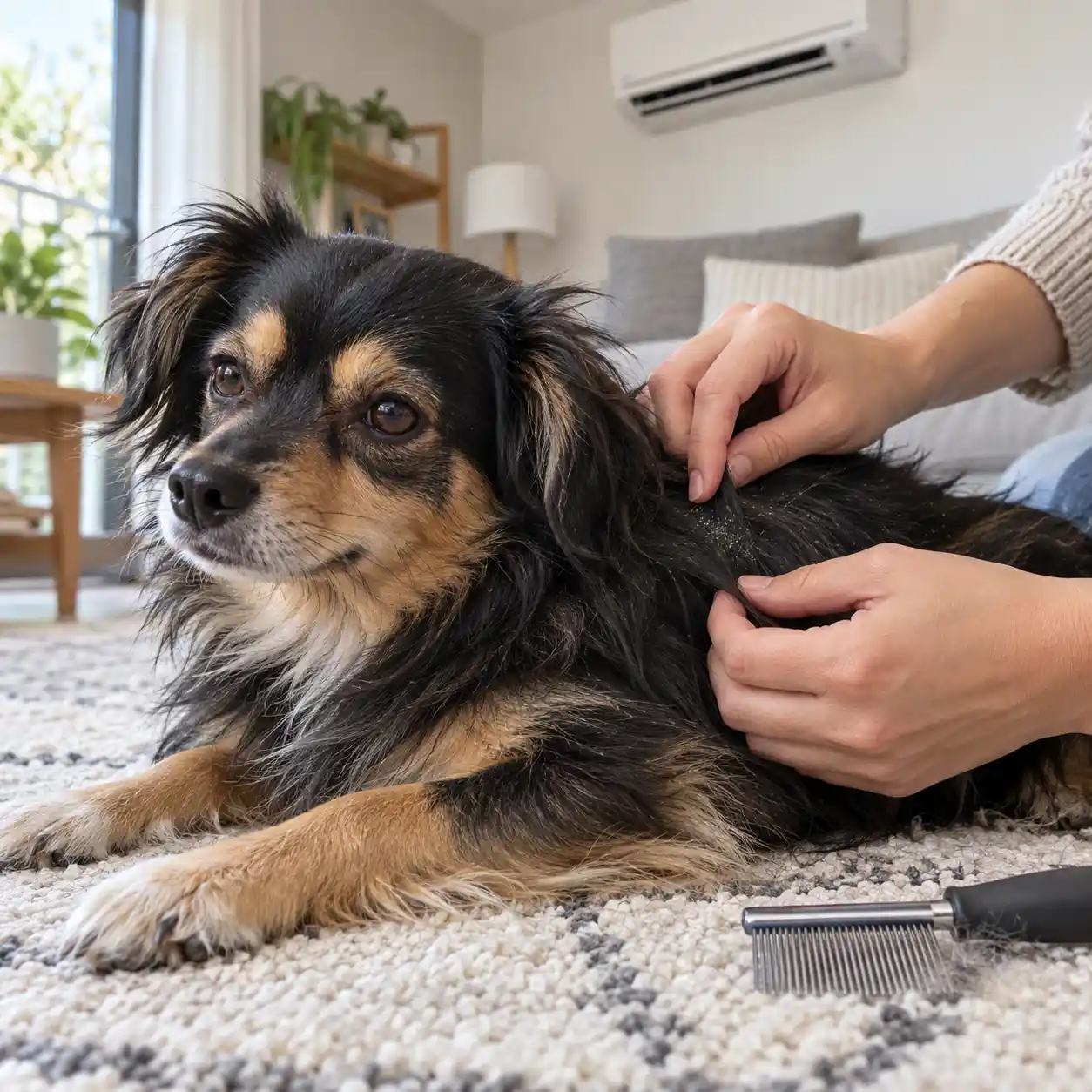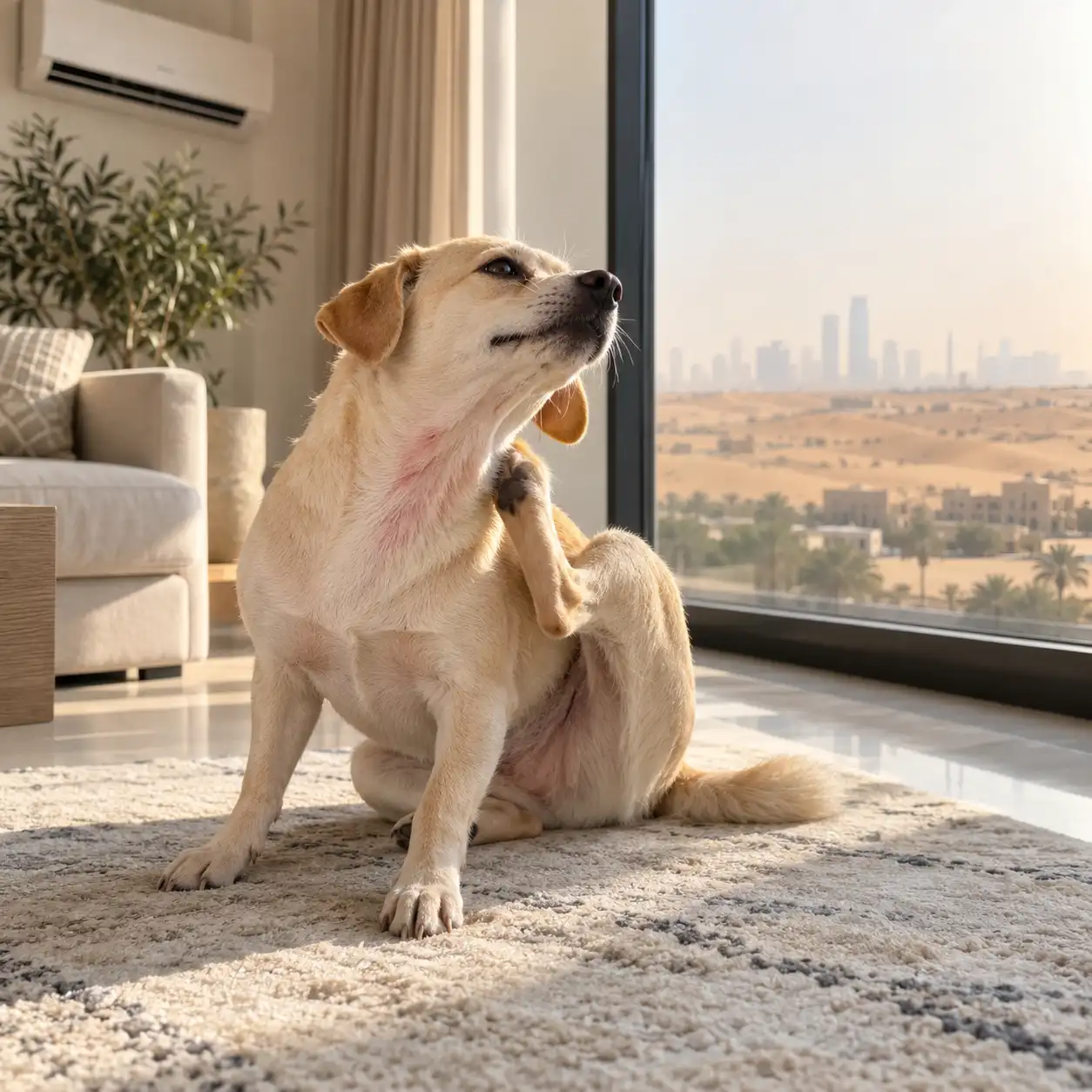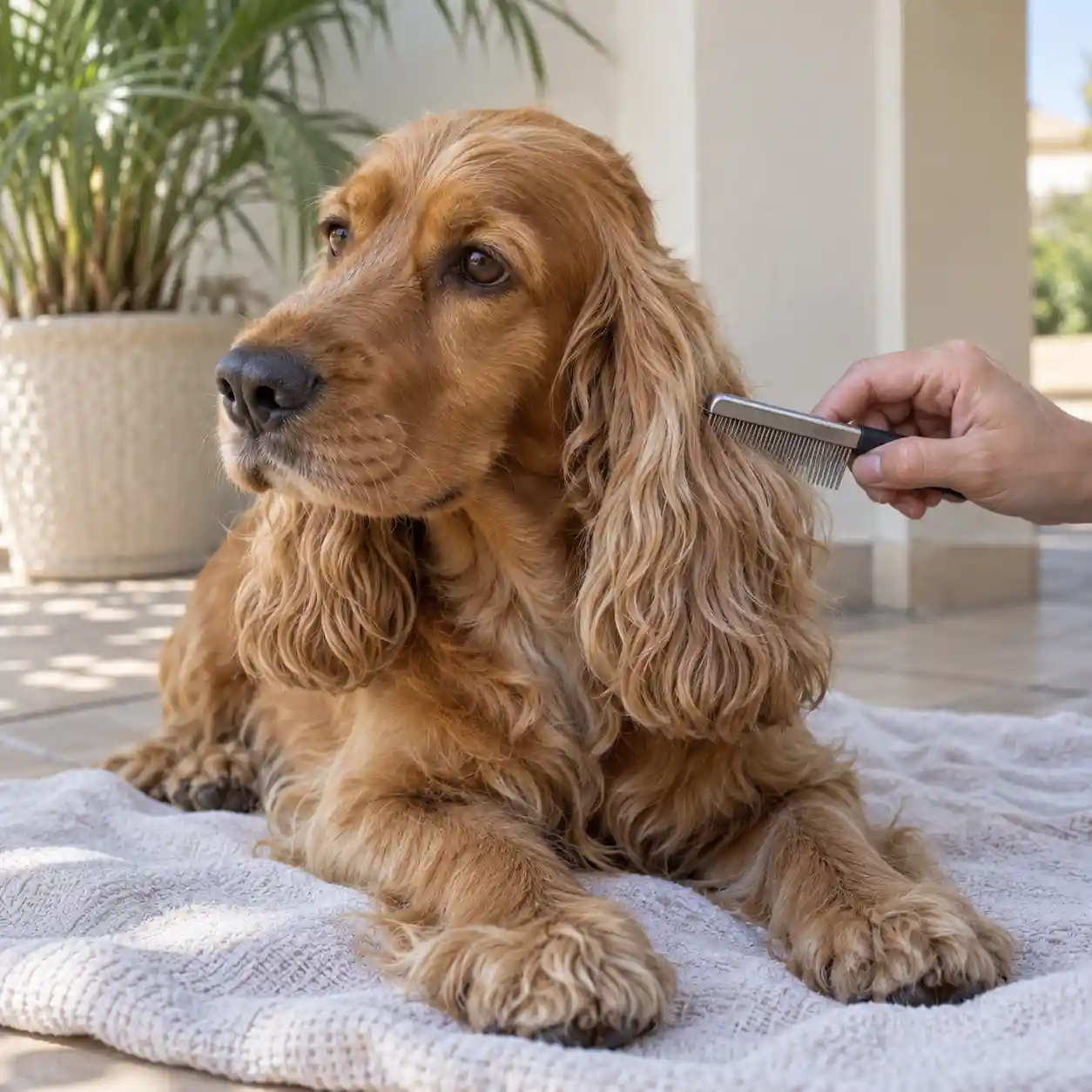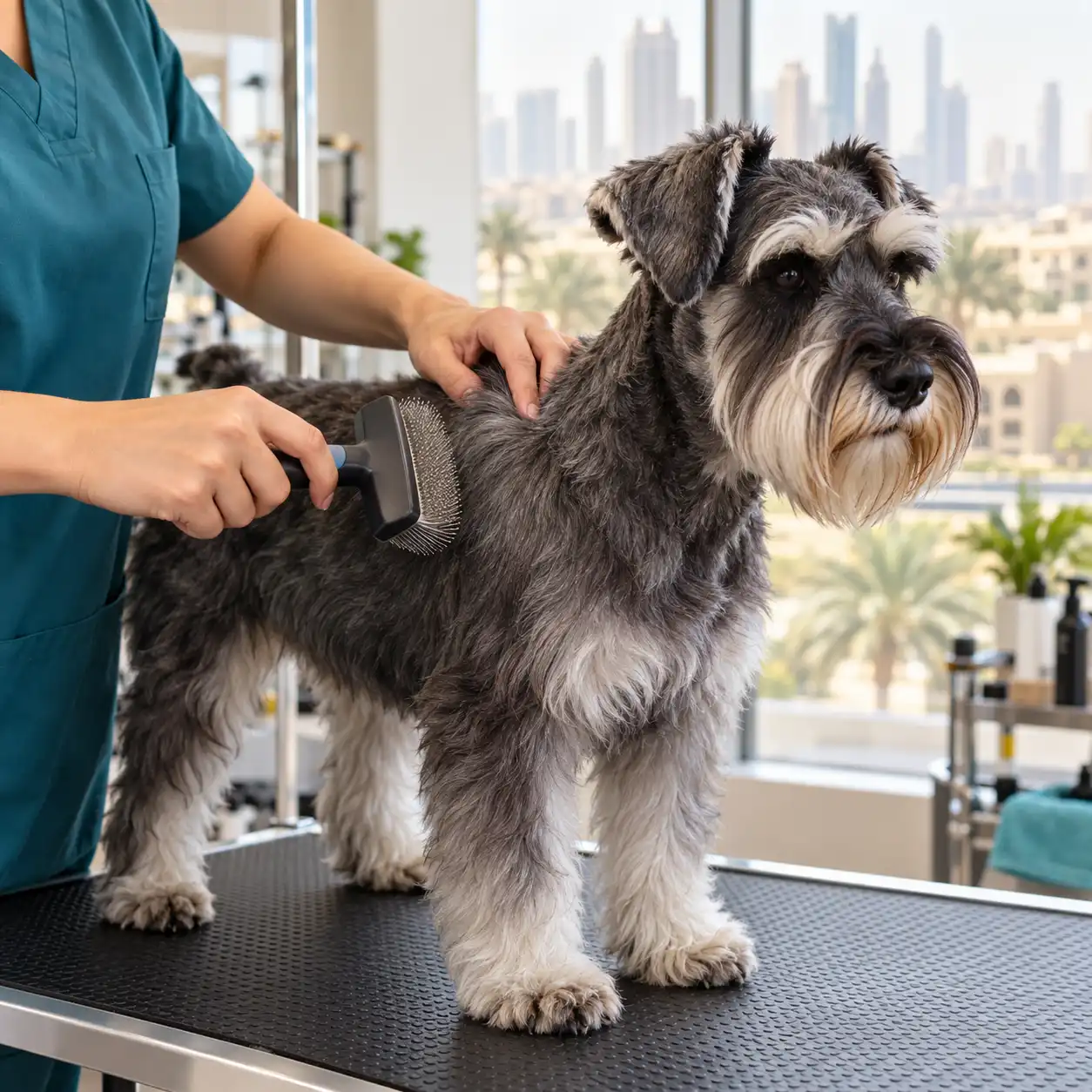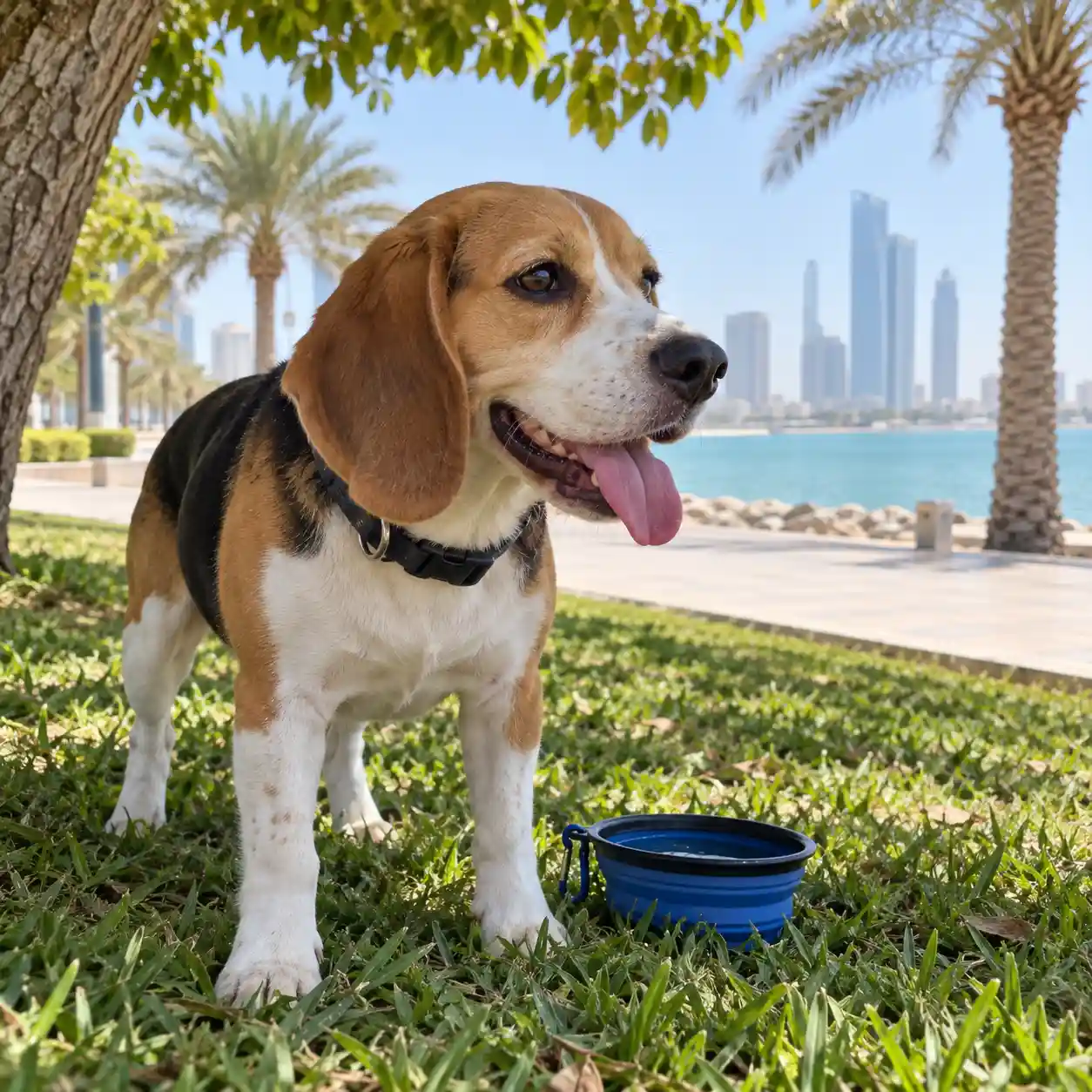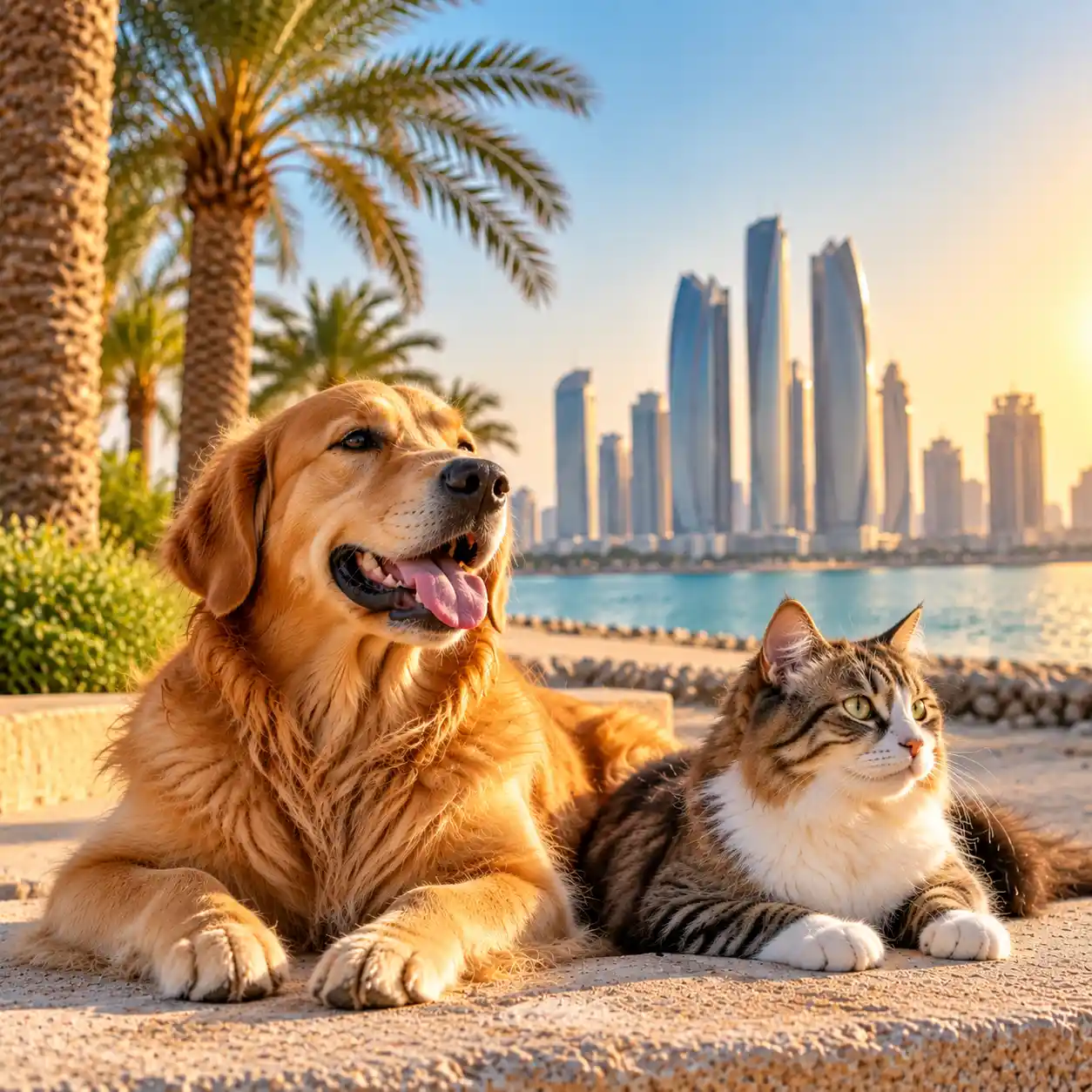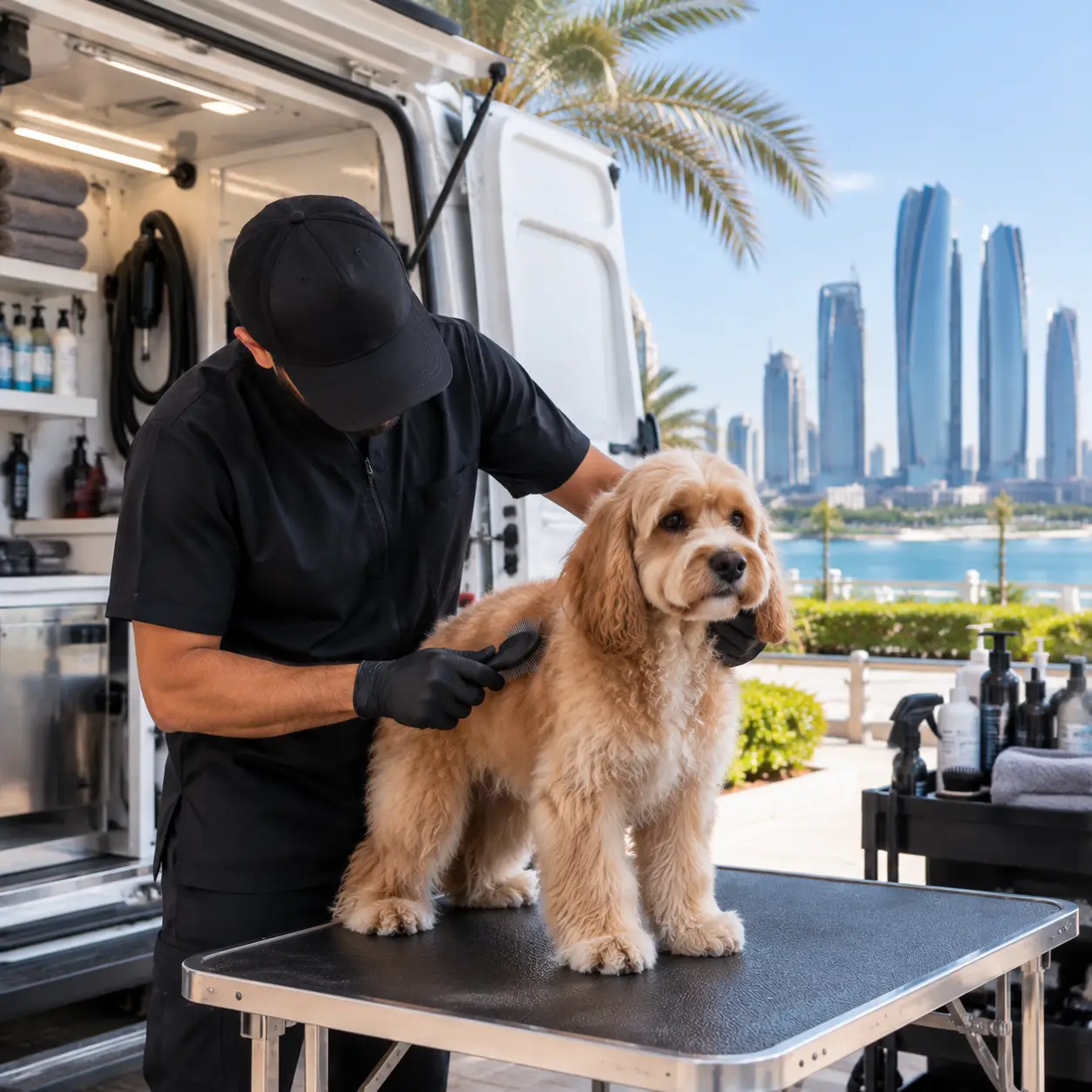
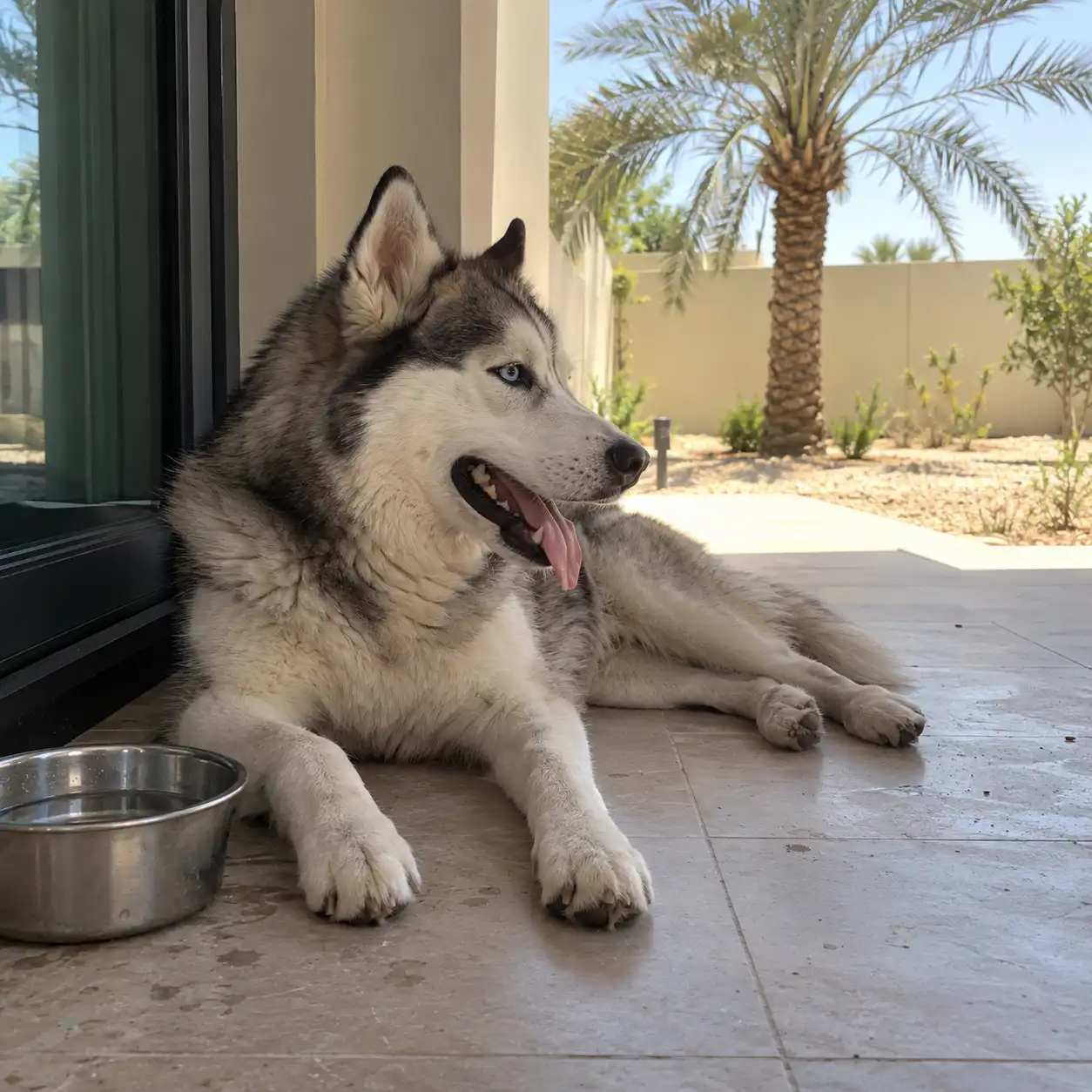
Huskies, Golden Retrievers, French Bulldogs and Persian cats are some of the most popular pets in Abu Dhabi, and also some of the breeds that find the local heat hardest. Anyone who has owned two different breeds in the Emirates has seen how desert weather affects different pet coats in completely different ways: one dog flops onto the tiles after five minutes outside while another trots along without a care. That does not mean the struggling breed cannot live happily here. It means its body and coat need a different kind of care. Two things decide most of the difference: the shape of the face and the type of coat.
Heat vs Coat Type: What Decides the Risk
Face shape. Dogs cool themselves mainly by panting, which depends on moving large amounts of air over moist surfaces in the nose, mouth and throat. Flat-faced (brachycephalic) breeds have shortened airways with less surface to cool and less room for air to move. Research on the effects of heat stress on dogs and cats keeps placing these breeds near the top of the risk list; a 2020 Royal Veterinary College study found brachycephalic dogs had roughly twice the odds of heat-related illness of dogs with normal-length muzzles. Flat-faced cats such as Persians and Himalayans face similar breathing limits.
Body size and weight. Larger and heavier bodies hold more heat and take longer to cool. The same study found heavier dogs at higher risk, and overweight pets of any breed struggle more.
Coat type. Coats differ widely in how much heat and moisture they hold close to the skin.
| Coat type | Examples | Main challenge in Abu Dhabi |
| Thick double coat | Husky, Malamute, Chow Chow, Samoyed | Dense undercoat traps heat and moisture |
| Medium double coat | Golden Retriever, German Shepherd, Labrador | Heavy year-round shedding, hot spots |
| Long, silky | Shih Tzu, Maltese, Yorkshire Terrier, Persian | Mats quickly in dust and humidity |
| Curly | Poodle, Doodles, Bichon Frisé | Holds moisture, mats close to the skin |
| Wiry | Schnauzer, many terriers | Moderate; needs clipping or stripping |
| Short, single | Saluki, Greyhound, Boxer, Arabian Mau | Easier to keep cool, more sun on the skin |
| Hairless | Sphynx, Chinese Crested | Sunburn and oily skin |
A thick coat is not simply “hotter.” A healthy double coat insulates in both directions, shielding the skin from the sun as well as holding in warmth. The real trouble starts when dead undercoat stays packed in place, blocking airflow and trapping damp heat against the body.
High-Risk Breeds
These breeds combine a demanding coat, a short face or a heavy build with a climate far from the one they were bred for.
Chow Chow. In the Royal Veterinary College study, Chow Chows had about 17 times the odds of heat-related illness compared with Labradors. A very dense double coat, a short muzzle and a solid build all work against them.
English and French Bulldogs. Bulldogs had about 14 times the odds and French Bulldogs about 6 times. Their deep skin folds also trap heat and moisture, which makes summer skin infections common.
Siberian Husky and Alaskan Malamute. Bred for Arctic cold, with some of the densest undercoats of any breed. They can manage in Abu Dhabi only with indoor living through summer, exercise in the coolest hours and regular, thorough de-shedding.
Pug and Shih Tzu. Both have short faces that limit cooling, and the Shih Tzu adds a long coat that mats easily in dust and humidity.
Saint Bernard, Newfoundland and other giant breeds. Heavy bodies and thick coats make it hard for them to shed heat quickly.
Persian and Himalayan cats. Flat faces, dense long coats and a strong tendency to mat.
Moderate-Risk Breeds
Golden Retriever and German Shepherd. Both carry medium double coats that shed heavily all year in the UAE and develop hot spots in humid months. German Shepherd grooming in this climate is mostly about keeping that undercoat moving out of the coat before it compacts.
Labrador. A short but dense double coat, and a breed prone to weight gain, which adds to heat risk.
Pomeranian. Small in size but carries a very thick, stand-off coat.
Poodles and Doodles. Curly coats hold moisture and mat close to the skin if they are not clipped regularly.
Maine Coon. A heavy, water-resistant coat built for cold winters, which becomes hard work in Gulf summers.
Lower-Risk Breeds
Saluki. Developed in the Middle East, with a lean body, long legs and a light, silky coat suited to desert heat.
Arabian Mau. A local street cat breed with a short, single coat well adapted to the climate.
Greyhound and Whippet. Thin coats and lean bodies shed heat easily, though their thin skin needs protection from strong sun.
Short-haired mixed breeds from local rescues are often well adapted too.
Lower risk means no risk. Every breed needs shade, water and exercise kept to the coolest hours from May to September.
Grooming by Coat Type
| Coat type | What works in Abu Dhabi | What to avoid |
| Thick or medium double coat | Regular professional de-shedding, drying fully to the skin | Shaving to the skin |
| Long, silky | Shorter practical trims, frequent brushing | Letting small tangles build into mats |
| Curly | Clipping every four to six weeks, brushing to the skin | Long coats through summer |
| Flat-faced breeds | Daily fold cleaning, early or at-home appointments | Midday car journeys to the groomer |
| Hairless | Regular gentle baths, sun protection | Long naps in strong window sun |
The urge to shave double-coated dogs every summer is understandable, but shaving a pet in summer removes the coat’s sun protection and can leave it growing back patchy or slowly.
Heavy-coated and flat-faced breeds gain the most from dog grooming in Abu Dhabi that is built around de-shedding, full drying, and heat-safe timing. Long-haired cats need patient, low-stress cat grooming in Abu Dhabi that stops mats forming close to the skin.
Frequently Asked Questions
Can a Husky live in Abu Dhabi?
Yes, but it needs indoor, air-conditioned living through summer, exercise only in the coolest hours, and regular professional de-shedding. It is a high-effort breed for this climate.
Which dog breeds cope best with UAE heat?
Lean, short-coated breeds with normal-length muzzles, such as the Saluki, cope best. Many local mixed breeds are also well adapted.
Are Persian cats suitable for the UAE?
They can live comfortably indoors with air conditioning, but they need daily combing and regular grooming to prevent mats and skin problems.