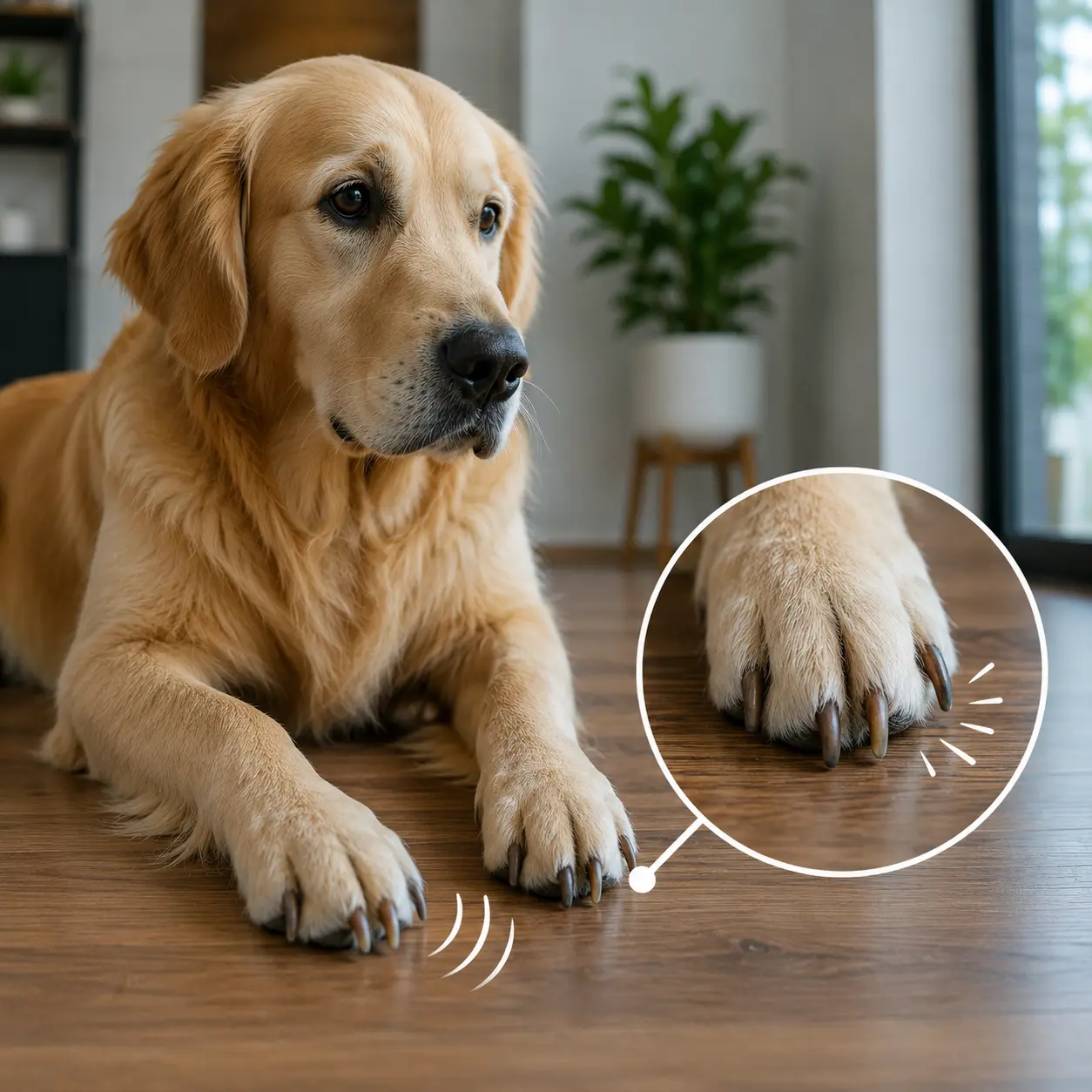
Have you ever wondered why you can hear your dog’s nails clicking on the floor every time they walk across the room? That familiar click, click, click may seem harmless, but it’s often a sign that your dog’s nails have grown longer than they should and are touching the ground before the paw pads.
While occasional clicking isn’t always a cause for concern, persistent noise shouldn’t be ignored. Overgrown nails can affect how your dog stands, walks, and distributes weight across their paws, potentially causing discomfort and affecting their natural movement over time.
So, what causes the clicking, how can you tell when your dog’s nails need trimming, and when should you consider professional dog grooming in Abu Dhabi? Let’s look at the signs and the safest ways to keep your dog’s nails at a healthy length.
What the Clicking Sound Actually Means
A dog’s nail should sit just above the ground when he’s standing normally. When it doesn’t, when it’s long enough to make contact with the floor first, every step sends a small shock up through the nail and into the toe joint.
That’s the click you’re hearing. It’s not a quirky habit or a breed trait. It’s physical contact that shouldn’t be happening, repeated with every single step.
Some dogs are naturally quieter walkers even with long nails, and some floors amplify the sound more than others, tile and hardwood carry it further than carpet. But the underlying cause is almost always the same: the nail has grown past where it should be.
How to Tell If It’s Actually a Problem
The sound alone is a reliable clue, but it helps to check visually too.
- Look at your dog standing still. If the nails clearly touch the ground, or curve toward the paw pad, they’re too long.
- Check the angle of the paw. Overgrown nails often push the toes into a slightly splayed position, rather than sitting flat and relaxed.
- Watch how he walks on hard floors. Sliding, hesitating, or an unusually careful gait on tile or wood can point to nails that are affecting his grip and balance.
- Feel for resistance when he stands. If you gently lift a paw and press it down, overly long nails will hit the ground at an odd angle instead of the pad landing flat.
If two or more of these show up alongside the clicking, it’s time for a trim, not just a “maybe soon.”
Why This Isn’t Just Cosmetic
It’s easy to think of nail length as a grooming detail, something that affects looks more than health. In practice, it affects a lot more than that.
When nails are too long, they force the toes to splay outward and push back into the toe joint with every step. Over time, that changes how a dog distributes his weight, often shifting it backward onto the rear legs to avoid the pressure up front. That shift in posture can strain joints that were never designed to carry that load, particularly in the hips and spine.
Long-term, unaddressed overgrowth is linked to a higher rate of joint strain and, in older dogs, can make existing arthritis noticeably worse. It also raises the risk of a torn or split nail, which is genuinely painful and sometimes needs veterinary treatment to manage safely.
None of this happens overnight. It builds gradually, which is exactly why the early clicking sound is worth paying attention to rather than dismissing.
What the Right Nail Length Actually Looks Like
As a simple rule, a dog’s nails shouldn’t touch the ground at all when he’s standing on a flat, hard surface. If you can see space between the nail tip and the floor, the length is reasonable.
Inside each nail is a blood vessel and nerve bundle called the quick. On light-colored nails, it’s usually visible as a pink line inside the nail. On dark nails, it’s much harder to see, which is why dark-nailed dogs are more prone to accidental over-trimming if you’re not careful.
The good news: the quick recedes over time with regular, gentle trims. That’s why frequent, small trims work better than occasional aggressive ones, each trim encourages the blood vessel to retreat slightly further back into the nail.
How Often Should You Trim?
Most dogs need a trim every three to four weeks, though this varies with lifestyle. Dogs that spend a lot of time walking or running on rough concrete or pavement wear their nails down naturally and may need less frequent trims. Dogs that mostly walk on sand, grass, or carpet, common for many Abu Dhabi pets given the heat and indoor lifestyle here, tend to get very little natural wear and often need trimming more consistently.
If you’re not sure whether it’s been long enough, the clicking sound itself is a fairly reliable built-in reminder.
Trimming Nails Safely at Home
If you want to handle it yourself, a slow, careful approach works best.
- Use clippers designed specifically for dogs, guillotine-style or scissor-style, never human nail clippers.
- Trim only the very tip, a small sliver at a time, especially on dark nails where you can’t see the quick.
- Stop and reassess after each small cut rather than committing to one long trim.
- Keep styptic powder on hand in case you nick the quick, it stops bleeding quickly and isn’t dangerous, just uncomfortable for your dog.
- Reward calm behavior with a treat during and after, this matters more than people expect for making future trims easier.
If your dog is extremely overgrown, anxious about paw handling, or has consistently dark nails you can’t confidently judge, it’s worth having a professional handle it rather than risking an injury.
When to Let a Professional Handle It
Some situations are genuinely better left to someone trained for it: nails that have gone untrimmed for a long time, a dog that won’t tolerate paw handling, or nails dark enough that the quick is impossible to judge safely.
For dogs that get stressed by car rides or unfamiliar environments, a mobile pet grooming in Abu Dhabi visit lets a trained groomer handle the trim at home, in a space your dog already feels comfortable in, without adding travel stress on top of an already nervous experience.
The Bottom Line
That clicking sound is small, but it’s your dog’s way of telling you something real: his nails have grown past where they should be. Catching it early keeps trims quick and simple, waiting usually means a harder, more overdue fix later.
Whether you handle it at home with regular small trims or bring your dog in for professional care, the goal is the same, nails short enough that every step lands the way it’s supposed to.
Ready for a Professional Nail Trim?
If your dog’s nails have gone past the point of a confident at-home trim, pet grooming in Abu Dhabi with Crazy Pets covers nail care as part of every full grooming session, at our salon or as a mobile visit to your door.
Frequently Asked Questions
Is it normal for a dog’s nails to click at all?
Not really. A healthy nail length shouldn’t reach the floor when your dog is standing, so consistent clicking on hard surfaces is a sign trimming is overdue, not a normal trait.
How do I know if I cut too much?
If you see a small amount of blood or your dog suddenly pulls his paw away, you’ve likely reached the quick. Apply styptic powder, keep him calm, and avoid trimming that nail again until it’s fully healed.
Can nails get too long even if my dog is active?
Yes, if your dog mostly walks on soft ground like sand, grass, or carpet rather than rough pavement, there’s little natural wear happening even with plenty of daily activity.
Do all dogs need the same trimming schedule?
No. Breed, activity level, and the surfaces your dog walks on all affect how fast nails grow and wear down, which is why some dogs need trims every three weeks and others can go longer.
Can overgrown nails cause long-term damage?
Yes, if left unaddressed for months or longer, they can contribute to altered gait, joint strain, and a higher risk of painful nail injuries, especially in senior dogs.