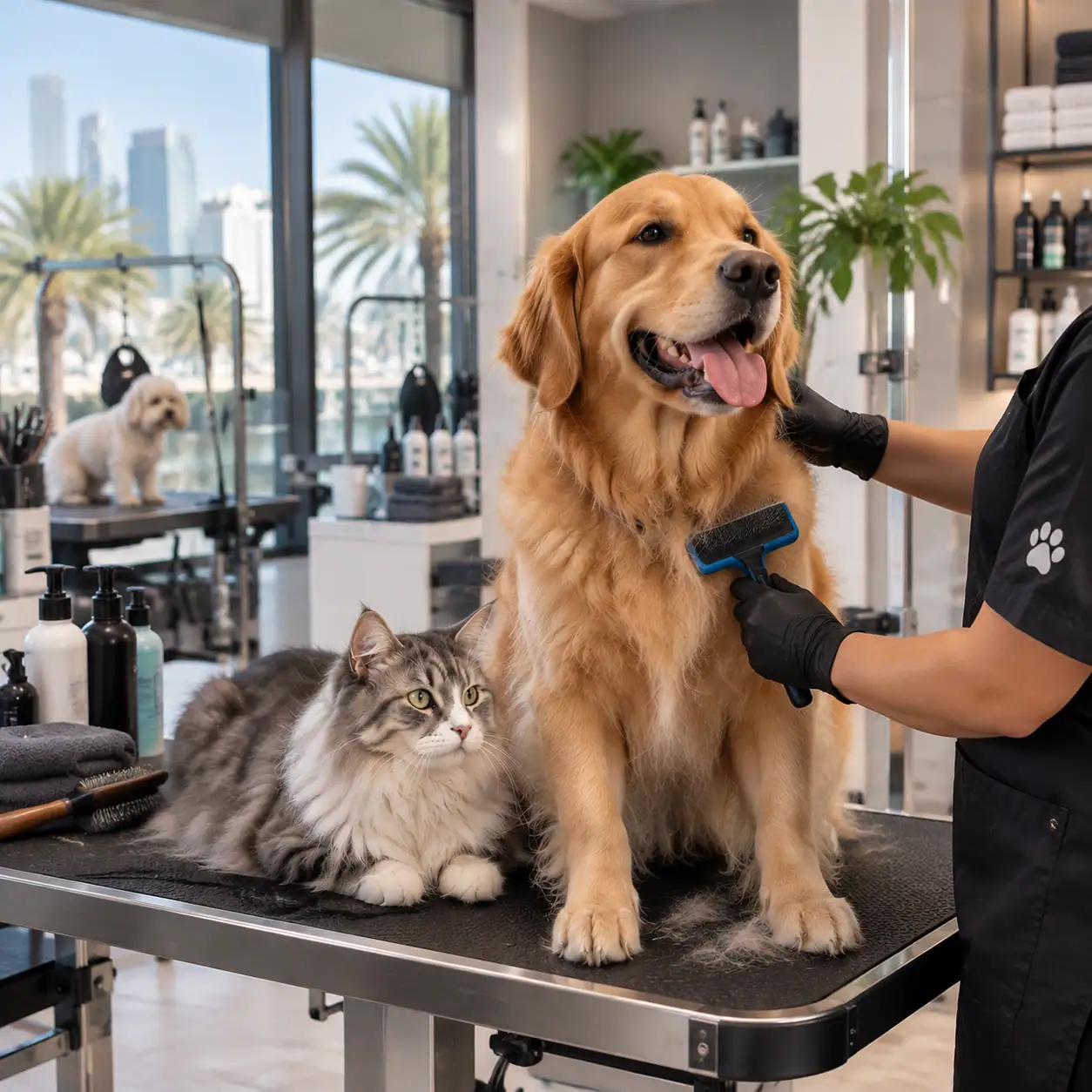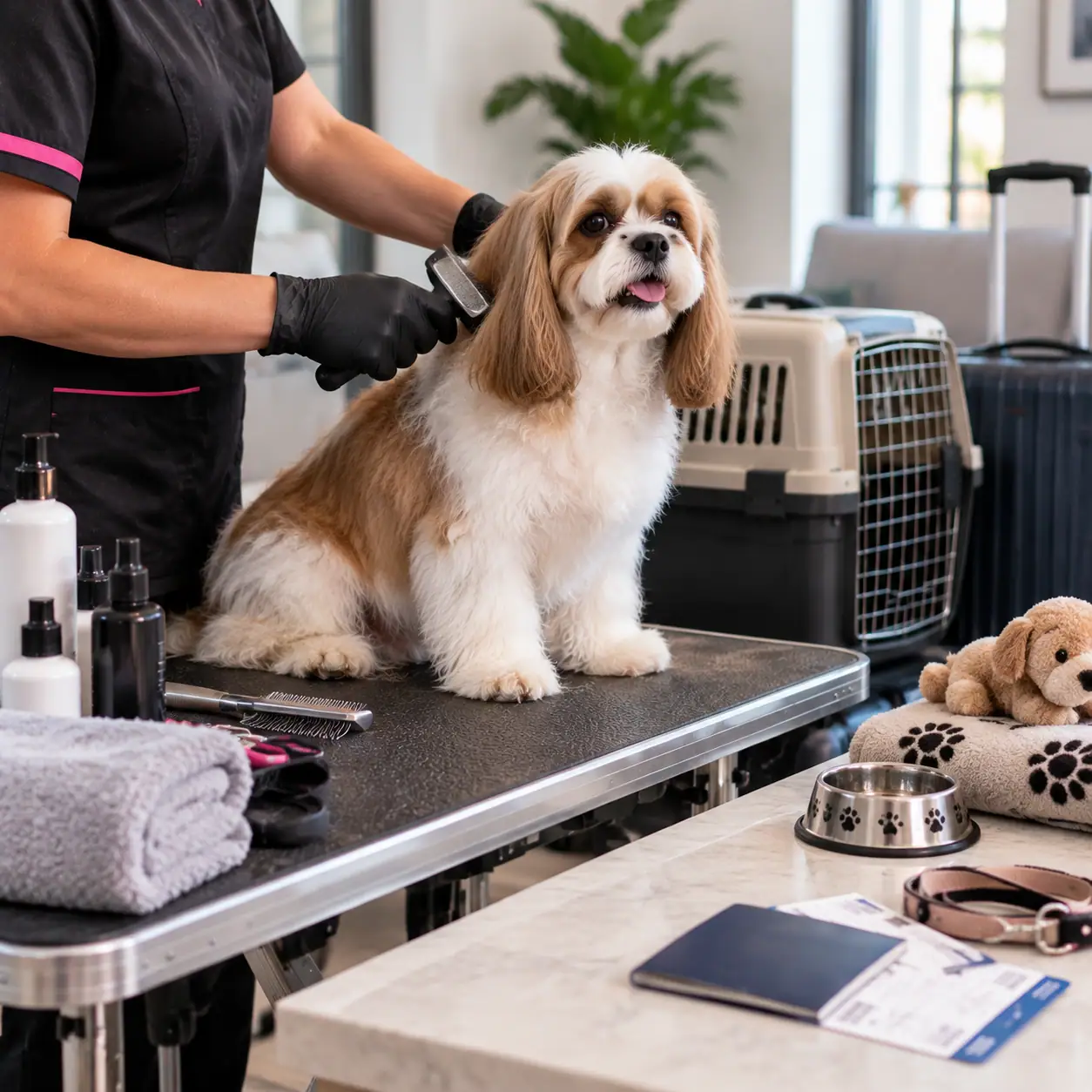
Your dog comes back from a short evening walk panting hard. Your cat, who never leaves the apartment, suddenly has dandruff along her back. These look like two separate problems, but they share one cause: the UAE climate. Abu Dhabi’s summer heat, sticky coastal humidity, fine desert dust and all-day air conditioning put steady pressure on your pet’s skin and coat. Most grooming advice online was written for cooler countries and never mentions this. At Crazy Pets, we see these climate-driven issues every week. They are the main reason professional pet grooming in Abu Dhabi has to work differently. This guide explains what the desert climate does to your pet’s body and how to adjust grooming to match.
How Abu Dhabi’s Climate Affects Your Pet’s Skin and Coat
Abu Dhabi puts five climate forces on your pet at the same time: heat, humidity, dust, sun, and air conditioning. Most countries have one or two of these. Here, pets deal with all five, often in a single day.
| Climate factor | What it does to skin and coat | What grooming needs to do |
| Extreme heat (45°C+ in summer) | Dense or matted coat traps body heat | Remove dead undercoat and prevent mats |
| Coastal humidity (often 80%+ on summer nights) | Moisture stays trapped against the skin | Dry fully to the skin and check skin folds |
| Dust and sand (shamal winds) | Particles rub the skin and dull the coat | Brush regularly and bathe properly |
| Strong UV (UV index often extreme in summer) | Burns thin-coated and pink-skinned areas | Keep enough coat length and protect exposed skin |
| Indoor air conditioning | Dry air causes flaky, itchy skin | Bathe gently and support skin moisture |
Heat. Dogs and cats have very few sweat glands, and those are mostly in their paw pads. Dogs cool themselves mainly by panting. Cats pant less and rely on licking their fur, because the saliva cools them as it evaporates. When the coat is packed with dead hair, heat has nowhere to go. A dog’s normal body temperature is about 38.3–39.2°C, so it doesn’t take much extra heat to push them into danger. We break down the warning signs and research on heat stress in dogs and cats in a separate guide.
Humidity. Coastal Abu Dhabi can feel like a steam room on summer nights. In thick or matted coats, moisture sits against the skin and doesn’t dry. That warm, damp pocket is where hot spots and yeast problems start, especially in ear canals and skin folds. The grooming strategies built around pet humidity and coat problems differ from those used for dry heat.
Dust and sand. Shamal winds push fine sand deep into the coat. It rubs against the skin like sandpaper, carries allergens, and makes brushing harder if it builds up.
Sun. UV exposure in the UAE is high for most of the year. Pets with white fur, thin coats or pink noses and ears burn more easily, and the coat is their main sunshade.
Air conditioning. Indoor pets face the opposite problem. Cooled indoor air is dry, and it slowly pulls moisture from the skin. Moving between 20°C indoors and 45°C outdoors also stresses the skin barrier. This is why skin sensitivity in indoor pets is so common in pets who barely go outside. Steady indoor temperatures and artificial light can also make pets shed all year instead of in two clear seasons. That makes air conditioning and dry pet skin a grooming factor that many owners never consider.
How Climate Affects Pet Skin and Coat Health
To groom well in a hot climate, it helps to know what is happening under the fur. Healthy skin and a healthy coat work as one system, and climate stress breaks that system in predictable ways.
The Skin Barrier
Your pet’s outer skin layer acts like a wall that keeps moisture in and germs out. In dogs, this layer is much thinner than in humans, and their skin pH is closer to neutral than ours. That’s why human shampoos can irritate pet skin.
Natural skin oils, called sebum, seal this wall and waterproof the coat. Dry AC air, dust and frequent harsh bathing all wear it down. Once the barrier weakens, the result is flaking, itching, and a higher chance of infection. This is how air conditioning turns into a grooming problem, not just a comfort issue.
Moisture, Yeast and Hot Spots
Warm, damp skin is the perfect home for Malassezia yeast and bacteria. When moisture gets trapped under a thick coat or a mat, the skin can break down into a hot spot. The medical name for a hot spot is acute moist dermatitis: a red, wet, painful patch that can spread within a day. Ears, armpits, skin folds and the base of the tail are the usual trouble zones.
The Shedding Cycle
Hair grows in phases: growth, transition and rest. Resting hair eventually falls out. In nature, daylight length and temperature tell pets when to shed, usually in spring and autumn. Indoor pets living under artificial light and steady AC temperatures lose those signals, so many shed a little all year. Understanding this cycle is the basis of effective pet de-shedding in hot climates.
The Coat as Insulation
A healthy coat traps a thin layer of air near the skin. That air layer slows heat moving in as well as heat moving out. This is why a well-maintained coat can protect a pet in hot weather, and why a matted one does the opposite.
Grooming Requirements for Dogs and Cats in Abu Dhabi
Dogs and cats deal with the same climate, but their bodies and habits call for different care.
Grooming Requirements for Dogs
Dogs spend more time outdoors, so they collect more sand, heat and sun exposure. Their main grooming needs are:
- Regular undercoat removal for double-coated breeds
- Paw pad and paw fur care after walks on hot pavement and sand
- Weekly ear checks, especially for floppy-eared breeds in humid months
- Full drying after every bath or swim
The biggest mistake we see is shaving a double-coated dog “for the summer.” Shaving removes the sun protection and the insulating air layer. In some dogs, the coat also grows back patchy or uneven, which is known as post-clipping alopecia. A proper session of dog grooming in Abu Dhabi should start with a coat check before any clippers come out. Heavy double coats need extra attention, as our guide on German Shepherd grooming explains.
Grooming Requirements for Cats
Cats groom themselves, but self-grooming has limits in this climate. Long-haired cats swallow more loose hair, which leads to more hairballs. Their fur also mats faster when humidity is high. Mats pull on the skin and trap moisture underneath, often in hidden spots like the armpits and belly. Owners of long-haired breeds can learn how to prevent mats in Persian cats at home. Once mats are tight against the skin, a professional cat grooming service is the safer choice than scissors at home.
Why Grooming Needs Differ by Pet
No two pets need the same routine, even in the same home. Coat, face shape, age, and lifestyle all change what grooming should look like.
Coat Structure
- Double coats (Husky, Golden Retriever, Pomeranian, most long-haired cats): need regular undercoat removal and should not be shaved.
- Continuously growing coats (Poodle, Shih Tzu, Maltese): can be trimmed shorter, but never down to bare skin.
- Short single coats (Boxer, Dalmatian): have less insulation, so skin and sun protection matter more.
We rank which breeds struggle most by pet coat type in hot climates in a separate guide.
Face Shape
Flat-faced breeds such as Pugs, Bulldogs, French Bulldogs and Persian cats struggle with heat no matter what coat they have. Their short airways make panting less effective. For these pets, keeping grooming sessions short and cool matters more than the haircut itself.
Age and Health
Puppies, kittens and senior pets control their body temperature less well. They need shorter sessions, gentler handling and more breaks.
Indoor vs Outdoor Lifestyle
Outdoor dogs deal mostly with heat, sand and sun. Indoor cats and small dogs deal more with dry air and all-year shedding. Moving between a cold villa and hot outdoor air several times a day adds to skin sensitivity, even in pets that seem to have an easy life indoors.
How Abu Dhabi’s Weather Changes Grooming Needs
The UAE doesn’t have four classic seasons, but it does have clear weather phases. Your pet’s grooming should follow them.
| Period | Main climate stress | Grooming focus |
| Summer (roughly June–September) | Peak heat and coastal humidity | De-shedding, full drying, ear care, paw care |
| Cooler months (roughly November–February) | Drier air and more time outdoors | Skin moisture, coat conditioning |
| Transition months | Dust, shamal winds, shedding shifts | Brushing frequency, dust removal |
Location also matters. Al Ain is inland and drier, with bigger day-to-night temperature swings and more dust. Coastal Abu Dhabi deals with heavier humidity, so moisture-related skin issues are more common there. We break down the month-by-month changes in our guide to seasonal grooming.
Signs Your Pet’s Grooming Routine Needs Adjustment
Your pet’s skin and coat will show you when the routine isn’t working. Watch for:
- Constant scratching, licking or chewing, especially at the paws, belly, or tail base
- Flakes or dandruff, which often point to dry indoor air or over-bathing
- Red, wet patches, a possible hot spot that needs quick attention
- A musty or yeasty smell, even soon after bathing. If your pet smells even after a bath, trapped moisture is a common cause
- Mats behind the ears, in the armpits or on the belly
- Heavy shedding that never seems to stop
- A dull, greasy or gritty coat from built-up dust and oils
- Panting or tiredness that starts faster than usual on walks
Important: hair loss, open sores, swelling, or ongoing itching should be seen by a vet before any grooming. Groomers often spot these problems first, but diagnosing them is a vet’s job.
Building a Climate-Appropriate Grooming Routine in Abu Dhabi
A good routine combines simple habits at home with professional care at the right intervals.
At-Home Grooming and Maintenance
- Brush more often in hot months. Double-coated dogs need brushing 3–4 times a week, and long-haired cats need it daily.
- Bathe with purpose, not frequency. Every 3–6 weeks suits most pets. Always use a pet-formulated shampoo.
- Dry down to the skin. Use a cool dryer setting, never hot. This is the single most important habit during the humid season.
- Check paws after every walk. Press the back of your hand to the pavement for seven seconds. If you can’t hold it there, it’s too hot for paws.
- Walk early or late. Early morning and after sunset are the safest times in summer.
- Protect exposed skin. Ask your vet about pet-safe sunscreen for pink noses and ear tips.
Professional Grooming
Most pets benefit from a professional groom every 4–8 weeks, depending on their coat. A professional session covers things that are hard to do at home: deep undercoat removal, safe mat removal, sanitary trims, nail care, ear cleaning, and a full skin check.
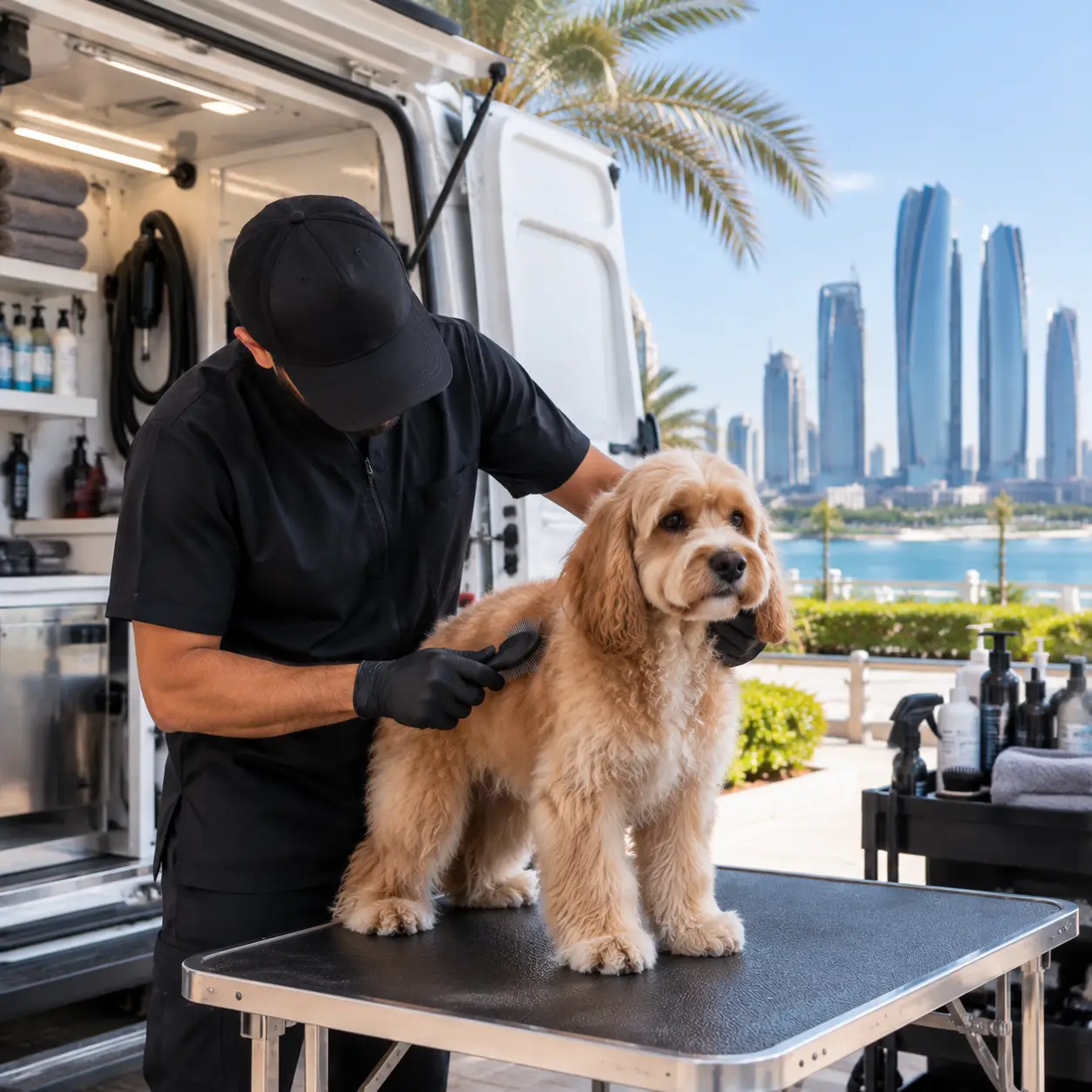
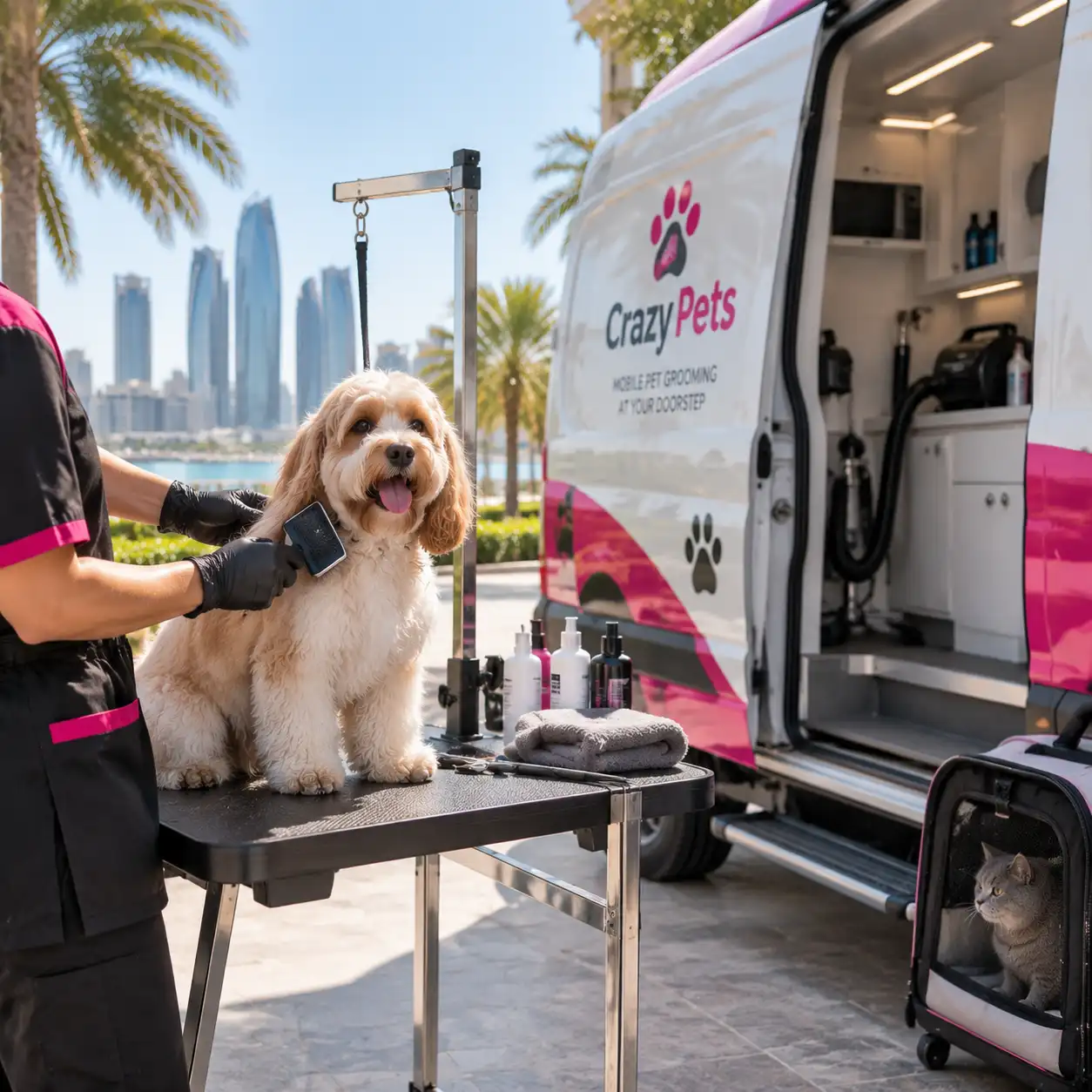
In summer, the trip to the groomer can itself raise a pet’s temperature. Mobile pet grooming in Abu Dhabi skips the hot car ride and the waiting room. Crazy Pets brings this service to homes across Abu Dhabi and Al Ain. Home visits also help nervous pets, and we offer calm, patient grooming for anxious cats who find salons stressful.
Frequently Asked Questions
How does the desert climate affect my pet’s skin?
Heat, humidity, dust, and dry indoor air weaken the skin’s natural barrier. The result can be dryness, itching, hot spots, or yeast infections. Regular brushing, full drying and gentle bathing help protect the skin.
Should I shave my dog to help with the UAE heat?
Usually not, especially if your dog has a double coat. Shaving removes sun protection and the coat’s natural insulation, and the fur may grow back unevenly. Professional de-shedding cools the dog more safely by removing only the dead undercoat.
How often should pets be groomed in Abu Dhabi?
Most dogs and cats need a professional groom every 4–8 weeks, with brushing at home in between. Double-coated and long-haired pets often need shorter gaps during the humid summer months.
Why does my indoor cat shed all year in the UAE?
Artificial light and steady air-conditioned temperatures disturb the natural signals that tell pets when to shed. Many indoor cats end up shedding a little all year. Regular brushing and professional de-shedding keep it under control.
Is mobile grooming better for pets in hot weather?
For many pets, yes. Mobile grooming removes the hot car journey and waiting time that raise stress and body temperature. It is especially useful for flat-faced breeds, senior pets and anxious cats.