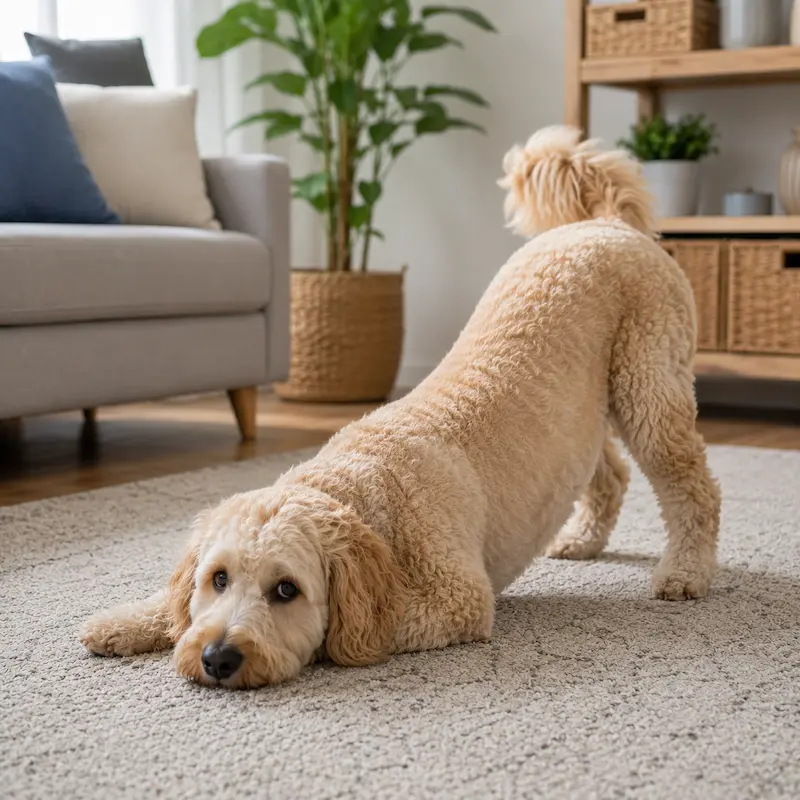
A client once brought her dog in, worried he had worms because he kept dragging his bottom across the floor. Turned out it was his anal glands, not worms at all. This mix-up happens a lot, so I want to explain what dog scooting on the floor actually means and how grooming helps.
I see this a few times a week in the salon. Most owners assume the worst, but the real cause is usually something a routine grooming visit can fix. If your dog scoots and you’re not sure why, here’s what’s usually behind it, and how our dog grooming service in Abu Dhabi handles it during a normal appointment.
What Scooting Actually Means
Scooting is when a dog drags its bottom across the floor or carpet, usually in a sitting position. It looks odd, and understandably worries a lot of owners. But it’s the dog’s way of relieving itching or discomfort in that area, not a sign of a serious illness in most cases.
The Most Common Cause: Full Anal Glands
Anal glands are two small sacs near a dog’s anus that release a scent marker when they go to the bathroom. In some dogs, especially smaller breeds, these glands don’t empty on their own and build up pressure. That pressure causes itching and discomfort, which leads to scooting.
This is the cause I see most often in the salon, by a wide margin. It’s also one of the easiest to fix. Expressing the glands, a simple process a groomer does by hand, releases the built-up fluid and clears the discomfort almost immediately.
Other Causes Behind Dog Scooting
Full anal glands are the top cause, but not the only one. A few others worth ruling out:
- Matted or long fur around the rear: Fur that gets matted or overly long around the tail and hindquarters traps dirt and moisture, which irritates the skin
- Dry, flaky skin: Skin irritation in that area can cause itching similar to gland discomfort
- Food sensitivities: Some dogs develop mild digestive irritation from certain foods, leading to itchiness after bowel movements
- Worms, in rare cases: This is what most owners assume first, but it’s actually one of the less common causes compared to gland issues
A groomer or vet can usually tell which of these is behind the scooting within a few minutes of checking the area.
How Grooming Fixes It
Regular grooming addresses most of the common causes directly.
Gland expression: During a full grooming session, groomers check and express the anal glands as a standard step, which prevents the buildup that leads to scooting in the first place.
Sanitary trimming: Trimming the fur around the rear keeps the area clean and reduces matting, moisture buildup, and the irritation that comes with it.
Skin and coat checks: A groomer handling the dog regularly is more likely to notice dry skin, irritation, or early signs of a problem before it becomes uncomfortable enough to cause scooting.
For dogs prone to gland issues, keeping to a consistent grooming schedule, usually every 4 to 6 weeks, prevents most scooting before it starts.
When Scooting Needs a Vet, Not Just a Groomer
Grooming solves most cases, but a few signs mean it’s time to see a vet instead:
- Blood or discharge near the anus
- A strong, persistent bad smell that doesn’t improve after gland expression
- Scooting that continues even after a recent grooming visit
- Visible swelling or redness in the area
These can point to an infection or a gland problem that needs medical treatment rather than routine grooming.
Making Grooming Easier at Home
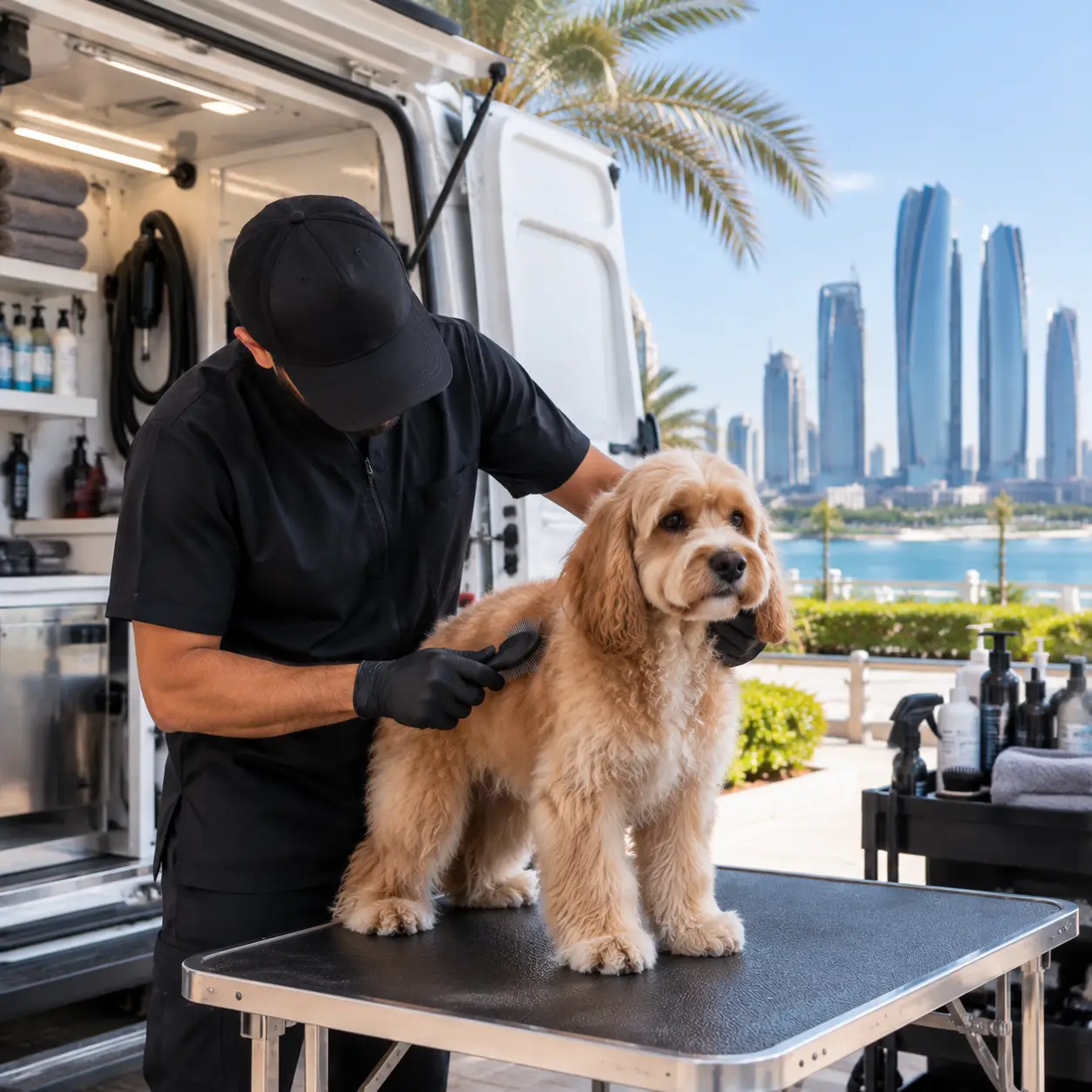
For owners who find it hard to get to a salon regularly, at-home visits are often the simpler option. Our mobile pet grooming service in Abu Dhabi covers gland expression and sanitary trims at your home, which keeps the schedule consistent without the back-and-forth of salon visits.
Keep Your Dog Comfortable with Professional Grooming in Abu Dhabi
Dog scooting on the floor looks alarming, but it’s usually a sign of full anal glands or fur irritation, both of which a regular grooming routine handles well. Keeping to a consistent schedule is the simplest way to stop it before it becomes a recurring issue.
If your dog has been scooting and it’s been a while since the last grooming visit, book an appointment with pet grooming in Abu Dhabi and we’ll check the glands, trim the area, and get your dog comfortable again.
Frequently Asked Questions
Is dog scooting always caused by anal glands?
No, but it’s the most common cause. Matted fur, skin irritation, and food sensitivities can also cause scooting, though anal glands are behind most cases seen in grooming salons.
How often should a dog’s anal glands be checked?
For dogs prone to gland issues, checking every 4 to 6 weeks during a grooming visit usually prevents buildup. Dogs without a history of problems may need it less often.
Can I express my dog’s anal glands at home?
It’s possible, but it’s easy to do incorrectly and cause discomfort or minor injury. Most owners are better off leaving it to a groomer or vet until they’ve been shown the correct technique.
Does scooting mean my dog has worms?
Not usually. Worms are one of the less common causes of scooting. A vet can confirm with a simple stool check if that’s a concern.
Will grooming stop scooting completely?
For dogs whose scooting is caused by gland buildup or matted fur, yes, regular grooming usually resolves it. If scooting continues after grooming, a vet visit is the next step.